



Welcome
Welcome to The CBA Guide. This Guide is meant to serve as an in-depth reference guide to the NBA’s CBA and Salary Cap rules.
You will find the all-in-one Master Guide below. If you prefer a section-by-section breakdown of the Guide, you can start here.
Searching The Guide
If you’re looking for a specific term, you can enter it in the search bar above (or hit [Command] + F and search through the entire Guide).
Citations
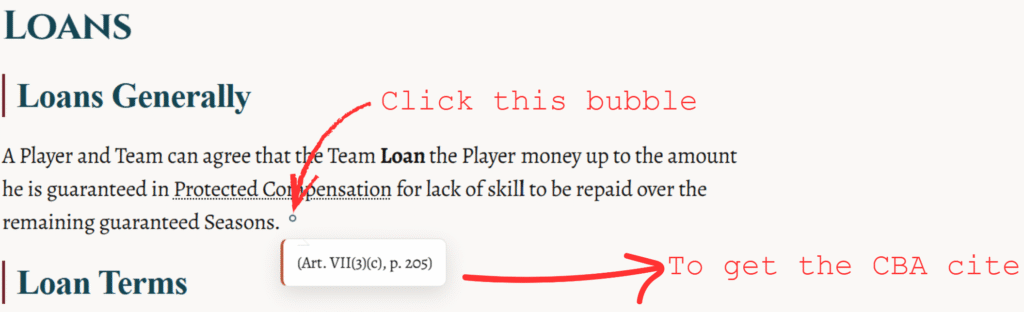
The majority of The Guide has citations to the sections and page numbers of the CBA. If you hover your mouse over the paragraph, and you see a bubble appear (or if mobile, tap on the paragraph to make the bubble appear). Click the bubble for the citation. Example below:
Resources
The CBA Guide includes additional resources, including the following:
- 2025-26 Salary Cap Amounts;
- Rookie Salary Scale;
- Minimum Salary Scale;
- Historical Salary Cap Thresholds;
- The Over 38 Calculator.
The Master Guide
Table of Contents
I. CONTRACT ANATOMY
II. TRANSACTIONS
A. Signings
E. Trades
v. Sign & Trade / Extend & Trade
III. THRESHOLDS
IV. DRAFT / PLAYER ELIGIBILITY
V. LEAGUE FINANCES
A. Calculating BRI, Designated Share and Salary Cap
VI. LEAGUE GOVERNANCE
VII. EXPANSION
A. Rules Governing Expansion Teams
VIII. LEAGUE CALENDAR
IX. DEFINITIONS
Limited Amendments to UPC
The terms of the UPC cannot be amended other than as expressly permitted in the CBA.
The CBA and the UPC has 10 Exhibits that can be included in the Contract as agreed upon by the Team and Player.
UPC Exhibits
Exhibit 1 – Compensation
Exhibit 1 identifies the different Compensation and Payment Arrangements in the Contract:
- Base Compensation;
- Deferred Compensation;
- Payment Schedule;
- Signing Bonus;
- Incentive Compensation;
- Options and Early Termination Options (ETO’s);
- Insurance Premium Reimbursements;
- No-Trade Provisions.
Exhibit 1A – Minimum Salary Contract
Exhibit 1A will expressly state if the Contract is a Minimum Contract (i.e. for the applicable Minimum Salary with no bonuses of any kind, other than potentially a Trade Bonus or Exhibit 10 Bonus).
Exhibit 1B – Two-Way Contract
Exhibit 1B identifies if the Contract is a Two-Way Contract.
Exhibit 2 – Compensation Protection
Exhibit 2 identifies any Compensation Protection (i.e. guaranteed salary).
Exhibit 3 – Prior Injury Exclusion
Exhibit 3 identifies if there is an injury excluded from any Compensation Protection, called a Prior Injury Exclusion.
Exhibit 4 – Trade Payments
Exhibit 4 identifies any Trade Payments, which is oftentimes called a Trade Bonus or a Trade Kicker.
Exhibit 5 – Other Activities
Exhibit 5 overrides the standard prohibited activities provision in the UPC, allowing the Player to participate in expressly identified activities.
The most typical is the right to play in pickup basketball games (that term being loosely defined), which is called the For the Love of the Game clause.
Exhibit 6 – Physical Exam
- Requires Player to pass a physical exam prior to the Contract taking effect.
- The Player must report for a physical exam designated by the Team (no later than the 3rd business day after the Contract is executed).
- The determination of whether the Player passes the physical exam is determined in the Team’s sole discretion in good faith.
- Team must provide notice of failure 6 days after physical.
Exhibit 7 – Conditioning Provision
Exhibit 7 replaces the standard Paragraph 7(b) in the UPC with a paragraph more favorable for the Player:
- UPC 7(b):
- Allows the Team to suspend a Player without pay if he is out of shape not as a result of basketball.
- Exhibit 7:
- Suspensions can only be successive one-week periods;
- Team must provide notice for each successive week;
- After each week, Player can appeal to an independent physician.
Exhibit 8 – Sign/Extend & Trade
Exhibit 8 identifies the Contract as a Sign-and-Trade or Extend-and-Trade, conditioned on the Contract being traded to a new Team within 48 hours of its execution.
Exhibit 9 – Training Camp Contract
Exhibit 9 identifies the Contract as a Training Camp Contract with no need to pay Base Compensation to the Player unless still in effect at the start of the Regular Season.
Exhibit 10 – Conversion Contract
Exhibit 10 identifies the Contract as an Exhibit 10 Contract with the ability to convert the Standard Contract to a Two-Way Contract prior to the Start of the Regular Season.
Promotional Activity Amendment
The Team and Player can also agree to delete the following paragraph from the UPC, or otherwise delete only the underlined portion:
“The Player agrees that, during any year of this Contract, he will not make public appearances, participate in radio or television programs, permit his picture to be taken, write or sponsor newspaper or magazine articles, or sponsor commercial products without the written consent of the Team, which shall not be withheld except in the reasonable interests of the Team or the NBA. The foregoing shall be interpreted in accordance with the decision in Portland Trail Blazers v. Darnell Valentine and Jim Paxson, Decision 86-2 (August 13, 1986).“
Introduction
Below are the different Contract Types a Player can sign:
- Standard NBA Contract;
- Two-Way Contract;
- Ten-Day Contract;
- Rest-of-Season Contract;
- Exhibit 10 Contract;
- Exhibit 9 Contract;
- Rookie Scale Contract.
Tyrese Martin of the Brooklyn Nets provides a timeline of how the different Contract Types can work.
9/20/2024 – Signs an Exhibit 10 Contract with the Nets as a UFA.
10/19/2024 – Exhibit 10 Contract is converted to a Two-Way Contract for the 2024-25 Season.
2/20/2025 – During the 2024-25 Season, Martin’s Two-Way Contract is converted to a 2-Year Rest-of-Season Contract with a Team Option for the 2025-26 Season.
6/28/25 – Nets exercise Martin’s Team Option for the 2025-26 Season.
Standard NBA Contract
Any NBA Contract signed is considered a Standard Contract unless it is a Two-Way Contract.
Ten-Day Contract
Ten-Day Contracts Generally
The Ten-Day Contract is a limited Contract allowing a Team to sign a Player for 10 days or 3 games.
It is typically used to fill the backend of the roster, particularly due to injury or for cost-saving measures.
Ten-Day Contracts can only be signed starting on January 5th, and Teams are limited to the amount of Ten-Day Signings based upon other Players on their Active and Inactive Lists at the time.
Dates of Eligibility
Ten-Day Contracts can be signed starting on January 5th of each Season.
Not eligible if the Contract would extend past the date of the Team’s last Regular Season game.
- Exception – A hardship waiver allows a 10-day Contract to be signed prior to January 5th, and would allow the Contract to run until the last day of the Regular Season if needed.
During the 2025-26 Season, the Pacers were permitted to sign Jeremiah Robinson-Earl and Cody Martin to 10-Day Contracts as their 19th and 20th Players on the Roster pursuant to the hardship exception.
Length
The longer of (i) ten days or (ii) a period encompassing three games played by the Team.
Salary
Apply the Minimum Salary, prorated over the number of days of the Contract.
On April 2, 2025, Elfrid Payton signed a 10-Day Contract with the Pelicans. Payton had 8 Years of Service at the time of signing.
Payton’s Minimum Salary for 8 YOS: $2,988,550
Payton’s Per-Day Minimum Salary: $17,175.57 ($2,988,550 ÷ 174 = $17,175.57)
Payton’s 10-Day Contract: $171,755.74 ($17,175.57 x 10 = $171,755.74)
Payton’s Earnings from 10-Day Contract: $171,756
Keep in mind, his Minimum Salary is subsidized to 2 YOS for Cap, Apron and Tax purposes:
Salary for 2 YOS: $2,087,519
Per-Day Subsidized Salary: $11,997.24 ($2,087,519 ÷ 174 = $11,997.24)
Payton’s 10-Day Contract Subsidized: $119,972 ($11,997.24 x 10 = $119,972.36)
Payton’s Salary for Team Salary, Apron and Tax: $119,972
Termination
Only written notice is required to terminate the Contract, with no Waiver procedure.
The Team cannot resign the Player until the term of the original Contract expires.
Amendment to Rest-of-Season Contract
While the Ten-Day Contract is in effect, the Team and Player can sign a Rest-of-Season Contract that goes into effect once the Ten-Day Contract expires.
Number of Ten-Day Signings
One Team cannot sign a single Player to more than two Ten-Day Contracts.
A Team is limited to the number of Ten-Day Contracts at one time, dependent on the number of Players it has on its Active/Inactive List, including the Ten-Day Contracts:
| Players on Active/Inactive List | Ten-Day Contracts Permitted |
|---|---|
| 12 | 0 |
| 13 | 1 |
| 14 | 2 |
| 15 | 3 |
Rest-of-Season Contract
Once the Regular Season begins, Players signing new Standard Contracts that are not Ten-Day Contracts are signing Rest-of-Season Contracts.
The Rest-of-Season refers to the remainder of the current Season, but the Contract can include future Seasons as well.
Oftentimes, the Player will be signed using the Minimum Exception. However, Teams that still have portions of their Mid-Level Exceptions or Cap Space available may entice Players to sign with them for more than their Minimum Salary.
In 2024-25, the Raptors signed Colin Castleton to a 2-Year Rest-of-Season Contract at the very end of the Regular Season on April 13th. Toronto used a portion of their remaining NTMLE to sign Castleton to a $100,000 salary for the rest of the Season, which was more than his applicable Minimum Salary. This gave Castleton more Compensation while giving Toronto team control over Castleton for the 2025-26 Season.
Salary will be prorated based upon the number of days remaining in the Season.
During the 2024-25 Season, Lonnie Walker signed a Rest-of-Season Contract with the 76ers that included a Team Option for the 2025-26 Season. His Minimum Salary was $2,613,120. With 52 days remaining in the season, his prorated salary was $780,932.
$2,613,120 (÷) 174 = $15,017.93 per-day Salary.
$15,017.93 x 52 = $780,932 pro-rated Salary.
Teams will optimize the Rest-of-Season Contracts later in the Regular Season to stay below a particular Cap/Tax/Apron threshold while satisfying minimum Roster requirements.
Entering the 2024-25 Season, the Knicks were pressed against the Second Apron where they were hard capped after acquiring Karl-Anthony Towns. They had signed Second Round Pick Ariel Hukporti to a Two-Way Contract at the start of the Season while carrying the minimum 12 Standard Contracts, which is only permitted for a limited time.
The Knicks later converted his Contract to a Rest-of-Season Contract to help get to the necessary 14 Standard Contracts. Had he signed at the start of the Season his Salary would have been $1,157,153. Waiting until November 4th, his salary was prorated to $1,064,049, saving them close to $100,000 in Team Salary.
Two-Way Contract
Two-Ways Generally
The Two-Way Contract allows a Player to play for both an NBA Team and its G League affiliate while not taking a Standard Contract Roster Spot.
The Team can convert the Two-Way Contract to a Standard NBA Contract.
The NBA Team has exclusive rights to the Player under a Two-Way Contract (unlike G League Contracts, which contain no exclusivity and any NBA Team can sign).
The Two-Way Contract is limited in the amount of games a Player can be on the NBA Roster, and only Players with 4 YOS or less are eligible to sign Two-Way Contracts, subject to exception.
Two-Way Contract Terms
Conversion Option
Every Two-Way Contract contains a Two-Way Conversion Option allowing the Team to convert it from a Two-Way Contract to a Standard Contract.
Can be converted after July 1 and must be converted prior to the start of the Team’s last Regular Season game.
The following occurs upon conversion:
- The term length will remain the same as the Two-Way Contract; and
- Player is paid his applicable Minimum Salary.
Negotiating a New Standard Contract
The Player and Team can negotiate a new Standard Contract, but such Contract may not include an Exhibit 10.
If executed, the Two-Way Contract is null and void.
In 2024-25, Oklahoma City signed Ajay Mitchell to a 1-year Two-Way Contract. The Team could have converted his Contract to a Standard Contract for the remainder of the Season. Instead, OKC and Mitchell agreed to a new 2-year Contract for more Salary than the Minimum. OKC used the Room MLE to sign Mitchell for over the Minimum Salary.
Salary
Players earn 50% of the Minimum Salary applicable to Minimum Salary for Players with 0 Years of Service.
Salary will be prorated should the Player not be signed for the entire Regular Season.
Length
The length cannot exceed 2 years and cannot include Options or ETO’s.
Payment Arrangements
Cannot include Loans, Bonuses, Incentive Compensation, Deferred Compensation or alternative pay schedules.
Compensation Protection
Maximum Two-Way Protection Amount
The Maximum Two-Way Protection Amount is $85,300, which increases each season in line with the Salary Cap.
- Exception – If Two-Way Contract signed after first day of Regular Season, Protection is limited to 50% Base Compensation.
Conditional Protection
Compensation Protection can be conditional up to 50% of Base Compensation based upon the Team not waiving the Player by a certain date on or after the start of the Regular Season.
Two-Way Limitations
Eligibility
Dates of Eligibility
Cannot be signed after March 4th.
Player Eligibility
Cannot sign a Player to a Two-Way Contract who has or could have 4+ YOS at any point during the Contract:
- Exception – Permitted if Player has 4 YOS and was credited with 1 or more YOS with which (i) he did not play in any game and (ii) was on a Team’s roster at all times from the first day of the Regular Season through the end of the last day of the Regular Season.
Team Eligibility
Cannot sign, convert or acquire a Two-Way Player if the Player was under a Two-Way Contract for any part of more than 3 Salary Cap Years with the same NBA Team.
Number of Two-Way Signings
Cannot have more than three Two-Way Contracts signed to the Roster at one Time.
Player cannot be on the Active List for more than 50 Games, which is prorated should he be signed after the start of the Regular Season.
A Team cannot have more than 90 Under Fifteen Games during the Regular Season.
- Calculating Under Fifteen Games: (i) The Team has fewer than 15 Players signed to Standard NBA Contracts and (ii) the number of Two-Way Players on the Active List for such game is the number counted toward Under-Fifteen Games (i.e. if there are 13 players signed to Standard Contracts and 2 Two-Way Players on the Active List for the game, then it counts as two Under-Fifteen Games).
Two-Ways and Team Salary
Two-Way Contracts do not count toward Team Salary.
Exhibit 10 Contract
Exhibit 10’s Generally
An Exhibit 10 Contract is a Standard Contract that allows the Team to convert the Contract to a Two-Way Contract (essentially the reverse of a Two-Way Contract).
Exhibit 10’s also allow a Team to sign a Player to a non-guaranteed Contract, but include a bonus, called an Exhibit 10 Bonus, discussed in more detail below.
Jazian Gortman signed an Exhibit 10 Contract with the Dallas Mavericks in the 2024 Offseason. Dallas converted his Exhibit 10 Contract to a Two-Way Contract prior to the Regular Season.
Conversion Option
If the Conversion Option is exercised by the Team:
- Becomes a Two-Way Contract;
- Paid Two-Way Salary;
- Exhibit 10 Bonus is rescinded;
- Conversion Protection Amount is triggered;
- All other terms remain in Contract.
After Conversion, it can be converted back to a Standard NBA Contract via the Standard NBA Contract Conversion Option contained in the Two-Way.
Timing
An Exhibit 10 must be converted to a Two-Way Contract prior to the first day of the Regular Season.
Unsigned Second Round Picks
If the Drafting Team signed a Second Round Pick to a Required Tender and subsequently waived the Player, the Drafting Team still has exclusive Two-Way rights to the Draftee until the Subsequent Draft.
Therefore, the Non-Drafting Team Signing him to a Standard Contract can’t convert him via Exhibit 10 to a Two-Way Contract because it will breach the exclusivity.
Number of Exhibit 10’s
No Team may sign more than 6 Contracts containing an Exhibit 10 at one time.
Exhibit 10 Contract Terms
Required Terms
Must be for 1 Season and for Minimum Salary.
Cannot provide for Bonuses other than an Exhibit 10 Bonus (below).
No Compensation Protection permitted other than the Exhibit 10 Conversion Protection Amount (below).
Conversion Protection
An Exhibit 10 Contract can have Compensation Protection (for lack of skill/injury/illness) that triggers at the start of the Regular Season if it’s not terminated and/or if it’s converted to a Two-Way Contract.
The Exhibit 10 Conversion Protection Amount can be between $5,000 and $85,300 (increases in line with the Salary Cap), but must match the Exhibit 10 Bonus amount, if an Exhibit 10 Bonus (discussed below) is contained in the Contract.
Exhibit 10 Bonus
Amount of Exhibit 10 Bonus
Can be between $5,000 and $85,300 (increases in line with the Salary Cap).
An Exhibit 10 Bonus does not count toward Team Salary.
How Exhibit 10 Bonus is Triggered
An Exhibit 10 Bonus is triggered when the following elements are satisfied:
- Waived prior to the Regular Season;
- Player signs with G League Team prior to the deadline to designate affiliated players;
- Assigned to the G League affiliate and timely reports;
- Provides 60-days of consecutive service (injury does not stop clock).
Trade of an Exhibit 10 Contract
If a G League Affiliate acquires an Exhibit 10 Contract via trade and the Contract contains Conversion Protection, but not an Exhibit 10 Bonus, then the Exhibit 10 is deemed to include an Exhibit 10 Bonus equal to the Conversion Protection Amount.
Exhibit 9 and Exhibit 10
A Contract can include both Exhibits 9 and 10. However, if a Contract is converted to a Two-Way Contract, then the Exhibit 9 is null and void.
Two-Way Conversion and Exhibit 10
If a Two-Way Contract is converted into a Standard Contract, the Standard Contract cannot include an Exhibit 10.
G League Rights
G League Rights Generally
The G League’ operates on universal 1-year Contracts for all Players. In determining which Team has priority to sign the Player in the offseason, there is an order of priority for assigning the Players, based on the type of “Rights” the Team may have to a Player.
Two of those are Returning Rights and Affiliate Rights.
- Returning Rights – Players who played the prior G League season with the G League Team; and
- Affiliate Rights -Players who participated in Training Camp with the G League Team’s affiliated NBA Team.
Returning Rights have preference over Affiliate Rights.
G League Rights and the Exhibit 10 Bonus
The Exhibit 10 Bonus is awarded to an Affiliate Player when he is waived by the NBA Team, and then is assigned to the G League affiliate Team.
What happens if another Team has Returning Rights to the Affiliate Player and therefore signs him using its priority over the Team with the Affiliate Rights?
The Player will be ineligible for the Exhibit 10 Bonus because he does not play for the affiliate G League Team.
Notice of Returning Rights
The NBA Team, when signing him to his Exhibit 10 Contract, is required to provide notice that a different NBA G League Affiliate holds his Returning Rights . This allows the Player to understand the risk that he may not play for the affiliate G League Team if his Exhibit 10 Contract is waived.
In the 2025 offseason, the Houston Rockets sign Player A to an Exhibit 10 Contract with an $85,300 Exhibit 10 Bonus.
Prior to the Regular Season, the Rockets waive Player A, with the intention to have him play with their G League Affiliate, the Rio Grande Valley Vipers, using their Affiliate Rights to sign him. This would earn Player A his $85,300 bonus should he play for 60 consecutive days.
However, Player A played the 2024-25 G League Season with the Austin Spurs, who have his Returning Rights and a higher priority to sign him over the Vipers. The Spurs sign him in the G League, and Player A loses out on his $85,300 (but should have had notice in his Exhibit 10 Contract with the Rockets that the Spurs had his Returning Rights).
Exhibit 9 Contract
Exhibit 9’s Generally
An Exhibit 9 Contract is a Training Camp Contract that allows a Team so sign a Player to its Roster without the need to pay any Base Compensation unless the Player makes the Regular Season roster.
The Exhibit 9 Contract allows the Player to compete in Training Camp for a Roster Spot while the Team bears no risk should they want to cut the Player prior to the Regular Season.
Note that no Player may attend training camp unless he is a party to a Contract then in effect. Exhibit 9 Contracts allow Teams to bring Player to Training Camp under a Contract with limited risk.
Exhibit 9 Contract Terms
Required Terms
Below are the required terms if a Contract includes an Exhibit 9:
- Must be for 1 Season in length;
- Provides for Minimum Salary (with no bonuses of any kind) or a Two-Way Salary;
- Does not provide for Compensation Protection of any kind.
Exhibit 9 Eligibility
Player Eligibility
A Team cannot sign a Veteran Free Agent to a Summer Contract if he last played for the Team unless (i) it is for 1 Season and (ii) provides for no more than the applicable Minimum Salary.
Team Eligibility
Team has no fewer than 14 Players signed to Standard NBA Contracts (this does not include Two-Way Contracts or Non-Guaranteed, Training Camp Contracts) on the Team’s Roster in respect of the upcoming Season.
One Team cannot have more than six Non-Guaranteed Training Camp Contracts.
Ex. 9 and Team Salary
An Exhibit 9 Contract will not be counted toward Team Salary until the start of the Regular Season (called a Summer Contract).
The Contract must be waived prior to the start of the Regular Season, or the Team must have Room to retain the Player’s Salary (likely using the Minimum Exception).
The Rookie Scale Contract
The Rookie Scale Contract is the Contract signed by all First Round Picks.
Compensation – Definition
Any compensation that is or could be earned or paid to a Player (including those whose contracts have been terminated).
Compensation Types
Generally
Below are the different types of Compensation (click to see rules applicable to each type):
Compensation Types and the CBA
Determining the Compensation Type is important, as each has different sets of limitations and are applied to different rules throughout the CBA.
Compensation Types – General Definitions
| Compensation Type | Definition |
|---|---|
| Base Compensation | Base Compensation is Compensation other than any bonuses of any kind. |
| Regular Salary | Regular Salary is Compensation earned by the Player for a year less Signing Bonuses and Incentive Compensation. |
| Salary | Salary is all Compensation earned by the Player for a year other than Unlikely Bonuses and subject to certain adjustments. |
| Incentive Compensation |
Incentive Compensation encompasses three types of incentives:
|
| Signing Bonus |
Signing Bonuses encompass three types of bonuses:
|
What’s Included in Player’s Salary
The CBA defines Salary as the following:
Include:
- Compensation earned by a Player with respect to such Season;
- Retired Player Payments.
Exclude:
- Unlikely Bonuses;
- Benefits.
Adjustments
Make adjustments to Salary if the below circumstances are applicable:
- Deferred Compensation;
- The “Over 38 Rule”;
- Signing Bonuses;
- Trade Bonuses;
- 1-Year Minimum Contracts;
- Restricted Free Agency (the “Gilbert Arenas Provision”);
- Excluded International Player Payments (EIPPA);
- Incentive Compensation;
- Suspensions;
- Loans.
Deferred Compensation
Deferred Compensation is included in a Player’s Salary for the Salary Cap Year encompassing the Season in which it was earned, not in the year it was paid.
The Contract shall identify the specific Season in which any Deferred Compensation is earned to allow for proper allocation in such Season.
The “Over 38 Rule”
General Rule
The Over 38 Rule is designed to frontload the Cap hit for a Team when an aging Player is signed to a multi-year Contract.
It’s meant to avoid a situation where a Player signs a multi-year deal, retires early, and gets paid not to play while the Team benefits from spreading the Cap Hit across more Seasons.
If you don’t want to work through the math behind the rule, you can use the Over 38 Calculator.
Roadmap of the Rule
The below subsections go into detail in applying the rule in the following steps:
Step 1 – Is there an Over 38 Contract triggering the rule?
Step 2 – Determine which years are Over 38 Years and Non-Over 38 Years.
Step 3 – Reallocate Salary at the beginning of the Contract.
Step 4 – Reattribute Salary throughout each Season of the Contract.
Determining When the Rule Applies
Is it an “Over 38 Contract”?
Generally, an Over 38 Contract is:
- A Contract, Extension or Renegotiation that is for 4+ Seasons at the time of Signing; and
- The Player is 38 as of October 1st for at least one of those Seasons.
Age Caveat
You’ll notice that all ages are based on the Player’s age as of October 1st of each Season, irrespective of when the Player is signed. There is one caveat:
If (i) a Player’s birthday is during the Moratorium Period, and (ii) signs the Over 38 Contract within 5 days after the Moratorium ends, then his age at the time of signing is deemed his age as of the prior June 30th (i.e. prior to his birthday).
Contract Length Breakdown
The length of the Contract is a key factor in determining if it’s an Over 38 Contract, but it is based upon the Player’s age and Bird Rights status.
| Age at Time of Signing (Season 1) | Season 2 | Season 3 | Season 4 | Season 5 | Season 6* |
|---|---|---|---|---|---|
| 34 | 35 | 36 | 37 | 38 | 39 |
| 35 | 36 | 37 | 38 | 39 | 40 |
| 36 | 38 | 38 | 39 | 40 | 41 |
| 37 | 38 | 39 | 40 | 41 | 42 |
Are there “Over 38 Years”?
Determining what Salaries to take and reallocate depends on whether the Player signed as a Full Bird Free Agent with his prior team or not.
If not a Full Bird Free Agent
If the Player is not a Full Bird Free Agent, then you take all the Salaries starting from the later of (i) the 4th Salary Cap Year of the Over 38 Contract or (ii) the first Year the Player is 38 as of October 1st.
These are the Over 38 Years and any years prior the Non-Over 38 Years.
Full Bird Free Agents
If a (i) Full Bird Free Agent signs with his Prior Team (ii) will be 35 or 36 at the time of signing and (iii) is not signed via Sign-and-Trade, then the following rules apply (note that if the age requirement is not reached, then apply the rule for Non Full Bird Free Agents above).
- 4-Year Contract – If it is a 4-year contract, then do not reallocate any Salaries.
- 5-Year Contract – If it is a 5-year contract, then only reallocate the Salary from the 5th Year.
Reallocating Salary
Reallocation At the Time of Signing
If there’s an Over 38 Contract with at least one Over 38 Year, then reallocate the Salary from the Over 38 Years across the Non-Over 38 Years at the time of signing.
To do so, you take the total Salary from the Over 38 Years, and redistribute it in proportion to the percentage of Salary of the Non-Over 38 Years.
| Age | Year | Original Salary | Over 38 Year? | Percentage | Cap Hit |
|---|---|---|---|---|---|
| 36 | Year 1 | $45,000,000 | No | 30.86% | $80,555,556 |
| 37 | Year 2 | $48,600,000 | No | 33.33% | $87,000,000 |
| 38 | Year 3 | $52,200,000 | No | 35.80% | $93,444,444 |
| 39 | Year 4 | $55,800,000 | Yes | – | – |
| 40 | Year 5 | $59,400,000 | Yes | – | – |
| Total | $261,000,000 | $261,000,000 |
You see that 2 years are Over 38 Years, totaling $115,200,000 in Salary. This Salary is then Reallocated based on the Percentage of the Non-Over 38 Years. As you can see, this Player would have a significant Cap Hit based upon this rule, making the signing a non-starter.
“Reattribution” through the Life of the Contract
When Does Reattribution Occur? – The Timing
The Reallocation above is not a fixed amount for the life of the Contract.
The remaining Salary will continue to be Reattributed if the Contract remains active throughout the life of the Contract.
However, Reattribution does not automatically occur each Season. Instead, you apply the following rule: Reattribution occurs on a July 1st if (i) the Over 38 Contract remains active and (ii) an Over 38 Year is within 2 years of such July 1st.
How Does Reattribution Occur? – The Math
If on July 1st, Reattribution is to occur, then the remaining Salary is aggregated in equal shares to each of the three or fewer Salary Cap Years.
| Yearly Reattribution Cap Hit | |||||||
|---|---|---|---|---|---|---|---|
| Age | Year | Original Salary | Year 1 | Year 2 | Year 3 | Year 4 | Year 5 |
| 36 | Year 1 | $45,000,000 | $80,555,556 | – | – | – | – |
| 37 | Year 2 | $48,600,000 | $87,000,000 | $60,148,148 | – | – | – |
| 38 | Year 3 | $52,200,000 | $93,444,444 | $60,148,148 | $40,098,765 | – | – |
| 39 | Year 4 | $55,800,000 | – | $60,148,148 | $40,098,765 | $40,098,765 | – |
| 40 | Year 5 | $59,400,000 | – | – | $40,098,765 | $40,098,765 | $40,098,765 |
| Total | $261,000,000 | $261,000,000 | $180,444,444 | $120,296,296 | $80,197,531 | $40,098,765 | |
The ‘Over 38 Calculator’
Use the Over 38 Calculator to do the math for you.
Signing Bonuses
Allocation Over Future Seasons
Despite being paid upon the signing of the Contract, the total amount of the Signing Bonus is prorated over the amount of years contained in the Contract (other than ETO’s) in proportion to the amount of guaranteed Salary each Season.
To the extent all future years are non-guaranteed, the entire Signing Bonus shall apply in the first applicable Salary Cap Year.
Signing Bonus Math
Below are the steps to take, particularly if you are dealing with partial non-guaranteed Seasons and require proration of the Signing Bonus.
It may be easier to see a visual of the step-by-step process by reviewing Example 3 below and clicking the figure that breaks down the math.
Signing Bonus Math Breakdown
Step 1 – Use Fractions and Add Numerators
For each season with guaranteed Salary, turn it into a fraction (x over 100) and add all the numerators together across all seasons (the numerator is the top number on the fraction for the non-math whizzes).
Step 2 – Find Percentage Each Season
Change the denominator from 100 to the total numerator obtained from step one, then find the decimal/percentage for the new fraction for that Season. This is the prorated amount for each Season.
Step 3 – Multiply Signing Bonus by Percentage
Multiply the total Signing Bonus by the prorated amount to find how much is applied to each season.
Example 1: Player signs a 4-Year Contract with a $4 million Signing Bonus, fully guaranteed without Options or ETOs. $1 million will be charged to each Season.
Example 2: Player signs a 4-Year Contract with a $4 million Signing Bonus, fully guaranteed with a Team Option. $1,333,333 ($4 million / 3 guaranteed seasons) will be applied to the first 3 seasons, and nothing to the fourth.
Example 3: Player signs a 4-Year Contract with a $4 million Signing Bonus with no Options or ETOs. However, the first season is fully guaranteed, the second season is 75% guaranteed, the third season is 50% guaranteed, and the fourth season is 25% guaranteed. The Signing Bonus will be applied as follows: $1.6 million in Year 1; $1.2 million in Year 2; $800,000 in Year 3; $400,000 in Year 4.
Trade Bonuses
If a Trade Bonus was triggered when a Player was traded, then the Trade Bonus is added to his Salary.
Visit the Trade Bonus page to determine how to calculate Trade Bonuses.
One-Year Minimum Contracts
Minimum Salary increases based on a Player’s Years of Service. To deter Teams from signing younger Players to save money and Team Salary, the CBA created a subsidy.
A Player who signs a 1-Year, Ten-Day or Rest-of-Season Contract for the Minimum Salary, the Player’s Salary is lowered to the Minimum Salary for a Player with 2 Years of Service, unless the Player has less than 2 Years of Service, at which point you just apply his applicable Minimum Salary.
The remaining portion of the Player’s Salary is then reimbursed out of the “League-wide benefits fund.”
In 2025-26, Larry Nance Jr. signed a 1-Yr Minimum Contract with the Cavs. He has 10 Years of Service in the League.
Compensation: $3,634,153 for 10 YOS;
Cap Hit: $2,296,274 for 2 YOS
Nance Jr. will earn $3,634,153, but the Cavs will have a Cap Hit of $2,296,274 added to Team Salary.
Note that when a subsidized Minimum Contract is waived mid-season, the subsidy is removed when calculating his Dead Salary. Visit the Team Salary page for details.
Minimum Exception vs. Minimum Salary Subsidy
Note the different requirements between the subsidy for 1-year Minimum Contracts and the 2-year Minimum Exception. Not all Players that fall into the Minimum Exception will have their Salary subsidized to that of a Player with 2 Years of Service.
Drew Eubanks signed a 2-year contract with Phoenix in the 2023 offseason. They were able to sign him over the Salary Cap using the Minimum Exception. However, because it was a 2-year deal, his Minimum Salary was for his 5 Years of Service ($2,346,614). Had he only signed a 1-year deal, that amount would have been subsidized for Salary, Apron and Tax purposes to a player with 2 years of service ($2,019,706)
RFA – The “Arenas Provision”
A Player’s Salary may be adjusted in Restricted Free Agency under what is now known as the Gilbert Arenas Provision.
If the Gilbert Arenas Provision applies to a Restricted Free Agent, then Salary is attributed in the following ways:
- New Team – If the Offering Team (i.e. the Prior Team does not match), then the average of all seasons is applied to the Team’s Salary Cap across all Seasons.
- Prior Team – If the Player remains on the same Team (i.e. Prior Team Matches Offer Sheet), then you apply each year to the Team’s Salary Cap as-is.
- Exception – If the Prior Team’s Team Salary and the average of the aggregate Salaries of the Player is under the Salary Cap, the Prior Team can elect to instead apply the average across all seasons.
- This election must be made at the time of Matching.
- Exception – If the Prior Team’s Team Salary and the average of the aggregate Salaries of the Player is under the Salary Cap, the Prior Team can elect to instead apply the average across all seasons.
Excluded International Player Payment Amounts (EIPPA)
EIPPA Generally
As part of an International Buyout, an NBA Team can pay a Non-NBA Team, organization, representative or person for the purpose of securing the right to enter into a Player Contract with a player who is participating in basketball professionally outside of the United States.
The CBA designates a certain amount a Team can pay that will not count as Salary. These designated amounts are the “Excluded International Player Payment Amounts” or EIPPA.
| EIPPA Amounts | |
|---|---|
| Salary Cap Year | Payment Amount |
| 2023-24 | $825,000 |
| 2024-25 | $850,000 |
| 2025-26 | $875,000 |
| 2026-27 | $900,000 |
| 2027-28 | $925,000 |
| 2028-29 | $950,000 |
| 2029-30 | $975,000 |
EIPPA and Salary
Any amount that exceeds the EIPPA is counted as Player Salary in the form a Signing Bonus.
If the amount does not exceed the EIPPA, then the payment is not considered Salary and therefore not added to Team Salary.
Incentive Compensation
All Incentive Compensation other than Unlikely Bonuses is included in Salary.
Suspensions
Salary that is not paid to a Player due to suspension does not reduce the Team’s Salary in any way.
Loans
If a Team provides a Loan to a Player, the difference between the interest rate of the Loan and the market interest rate shall be considered additional Salary.
Definition
Regular Salary is a type of Compensation, defined as Salary minus Signing Bonuses and Incentive Compensation.
Regular Salary – Uses
Below are the provisions in the CBA applying Regular Salary:
- Incentive Compensation Limits;
- Free Agent Cap Holds;
- Annual Increases and Decreases (separate from Incentive Compensation);
- Bird Rights Limits (separate from Likely/Unlikely Bonuses).
Definition
Compensation other than any bonuses of any kind.
Current vs. Deferred
Base Compensation includes Current Base Compensation (paid in the Salary Cap Year earned) and Deferred Base Compensation (paid at a later date).
Visit the Deferred Compensation page for additional restriction on terms.
Base Compensation – Uses
Below are the provisions in the CBA applying Base Compensation:
- Advance Limits;
- Compensation Protection;
- Minimum Contracts;
- Two-Way Contracts;
- Maximum Salary (last type of Compensation reduced);
- Reduction in Pay Due to Suspension;
- Proration Calculation of Signing Bonus when Calculating Salary;
- Deduction in relation to Loans;
- Calculation of Trade Salary;
- Pro rata reduction of Compensation Protection in a Buyout;
- Rookie Scale Salary Amounts;
- Qualifying Offer /Offer Sheet Requirements in Restricted Free Agency;
- Partial Waiver Claim Obligations;
- Trade Bonus Limits;
- Set-Off Calculation;
- Stretching of Protected Compensation.
Generally
What’s Included in “Incentive Compensation”
Incentive Compensation is the all-encompassing definition for three types of incentives permitted in Contracts:
- Performance Bonuses (Likely or Unlikely);
- Physical/Academic Achievements;
- Promotional Appearances.
Incentive Compensation and Salary
All types of Incentive Compensation are counted toward Salary other than Unlikely Bonuses.
Limitations for All Incentive Compensation
Below are limitations applied to all Incentive Compensation types. Note there are additional limitations depending on the type of Incentive Compensation (see below).
Amount
Incentive Compensation cannot exceed 20% of a Player’s Regular Salary each Season.
Percentage Increase/Decrease
The maximum percentage increase or decrease is always either 5% or 8%, and it depends on the type of Contract signed by the player.
The maximum percentage permitted will mirror that of his annual Salary (visit the Contract Limitations page for more detail).
When calculating the percentage increase/decrease, Incentive Compensation is calculated separately from the Player’s Salary.
Criteria Unchanged
The criteria of each bonus must remain unchanged year to year through a Contract.
Amendments
Original Term of Contract
A contract cannot be amended to modify the terms of Incentive Compensation absent a Renegotiation or Extension.
Renegotiations
If there is a Renegotiation, the new Contract may include Performance Bonuses even if they were not included in the Original Contract.
Extensions
Veteran Extensions cannot add Incentive Compensation if not included in the Original Contract.
A Rookie Scale Extension can include Incentive Compensation not contained in the Original Contract, but it can only be earned during the Extended term (see Jalen McDaniels example below).
Jaden McDaniels added a Performance Bonus of earning All-Defensive Team when he signed his Rookie Scale Extension in October 2023. McDaniels achieved All-Defense during the 2023-2024 Season (i.e. before the Extension kicked in in 2024-2025). Therefore, he was not awarded the Bonus. However, the Performance Bonus was then changed from Unlikely to Likely in 2024-2025 and counted toward Team Salary.
In-Season Tournament / Play-In Games
Any statistics accrued from the In-Season Tournament Finals Game or the Play-In Games are not factored into whether benchmarks are achieved, nor can Performance Bonuses be related to such games.
Prohibited Contracts
Incentive Compensation is not permitted in Two-Way Contracts or Minimum Contracts.
Performance Bonuses
Performance Bonuses – Generally
Performance Bonuses are a subcategory of Incentive Compensation, so the limitations applied generally to Incentive Compensation (explained above) apply to Performance Bonuses. Performance Bonuses then have their own requirements and limitations, explained below.
Requirements
Performance Bonuses have the following requirements:
- Incentive must provide for positive achievement;
- Must be based on specific numerical benchmarks or “Generally Recognized League Honors”;
- Must be based on official league statistics as published on NBA.com;
- Cannot relate to being on a team’s roster by a specific date or active for a certain amount of games.
The CBA contains a specific example explaining criteria types permitted and prohibited: If the Bonus is for the player exceeding 80% free throw shooting, it is permitted. However, if the Bonus is for the Player improving his free throw shooting percentage over the prior Season, it is prohibited.
Likely vs. Unlikely Bonuses
General Determination of Likely or Unlikely
All Performance Bonuses are considered either Likely or Unlikely, and such determination affects whether the Bonus is included in the Player’s Salary, and therefore applied to Team Salary for Salary Cap purposes.
A Performance Bonus is deemed Likely if it would have been achieved by the Team or Player in the preceding Salary Cap Year. Otherwise, it is deemed Unlikely.
Appealing the General Test
If the League or NBPA do not believe this accurately reflects the the nature of the Performance Bonus, they can request a “Basketball Expert” review the likeliness of the Bonus at the time of signing the Contract/Extension/Renegotiation.
The applicable standard for the Basketball Expert depends on the party appealing, who will carry the burden of proof :
- The League: If it is more likely than not that the bonus will be earned, then it is considered a Likely Bonus.
- The NBPA: If it is very likely that the bonus will not be earned, then it is considered a Unlikely Bonus.
The Expert’s ruling is final and unappealable as to how the Performance Bonus is treated.
What if No Preceding Season?
If there is no applicable preceding season (either the Player did not play or it is an Expansion Team), then the NBPA and League will agree on the likeliness.
If they cannot agree on the likeliness, then the Expert will conduct a hearing, but apply a different standard than a standard appeal: In this situation, the Expert simply determines whether the Bonus is likely to be earned or not likely to be earned.
Team Salary Pending a Likeliness Determination
While the appeal process takes place, the entire Performance Bonus is included in the Team’s Team Salary.
Performance Bonuses and Trades
When a Player is traded to a new Team and has team-related Performance Bonuses, those bonuses will be reassessed for likeliness based upon the Receiving Team.
During the 2022-23 season, Spencer Dinwiddie was traded from Dallas to Brooklyn. He had Performance Bonuses linked to achieving Round Two and the Conference Finals. Because Dallas had reached that achievement in 2021-2022, they were deemed Likely. Since Brooklyn was eliminated from the First Round of the Playoffs in 2021-2022, the Bonuses switched from Likely to Unlikely and no longer counted toward Team Salary.
Performance Bonuses Achieved Prior to Extension
When a Player adds a Performance Bonus as part of an Extension, but achieves the Performance Bonus during the original term of the Contract that did not include the Bonus, it is not awarded. The achievement will, however, change to Likely if it was originally Unlikely, and count toward Team Salary.
Jaden McDaniels added a Performance Bonus of earning All-Defensive Team when he signed his Rookie Scale Extension in October 2023. McDaniels achieved All-Defense during the 2023-2024 Season (i.e. before the Extension kicked in in 2024-2025). Therefore, he was not awarded the Bonus. However, the Performance Bonus was then changed from Unlikely to Likely in 2024-2025 and counted toward Team Salary.
Limitations for Unlikely Bonuses
Amount of Unlikely Bonuses
The CBA adds an additional limitation specifically on the amount of Unlikely Bonuses:
- Original Contract – Unlikely Bonuses cannot exceed 15% of Regular Salary for such Season.
- Extension – If the amount of Unlikely Bonuses in the Salary Cap Year in which the Extension is signed exceeds the 15% of the Player’s Regular Salary for that year, the Extension may provide for up to the same percentage of Unlikely Bonuses in the first year of the extended term.
- Renegotiation – Cannot increase Unlikely Bonuses in a Renegotiation if after such Renegotiation the amount of Unlikely Bonuses covered by the renegotiated contract exceeds 15% of the Player’s Regular Salary.
Room Requirement for Unlikely Bonuses
Although Unlikely Bonuses are not counted as Salary–and therefore don’t count toward the Salary Cap–a Contract cannot include Unlikely Bonuses if his Unlikely Bonuses plus his Salary would cause the Team’s Team Salary to exceed its Room.
When calculating Team Salary to determine if there is Room for a new Unlikely Bonus, you add in all Unlikely Bonuses included for all Players on the roster that might be paid that season.
This rule was put into place to close a loophole. Let’s say the Nets sign Durant and Kyrie in 2019 after winning 35 games. They could include the benchmark to win 36 games as a Performance Bonus in their contracts, and it would be considered “Unlikely” (absent an appeal) and therefore not count toward the Salary Cap, giving the Nets more Cap Space to sign players. This forces those Unlikely Bonuses to be included in Team Salary when stacking Unlikely Bonuses in free agency.
Physical/Academic Achievements
Requirements for Physical/Academic Achievements
Attendance/participation in off-season skill/conditioning program cannot exceed two weeks.
Must provide incentive for a positive achievement, cannot relate to a negative achievement.
Can be linked to achieving educational degrees or attending programs such as Summer League.
If bonus relates to attendance of certain programs (e.g. Summer League/conditioning programs), the Team must provide sufficient information and allow a reasonable opportunity for Player to attend.
Payment Despite Non-Attendance
The Team can still pay the Player a bonus linked to attendance when the Player did not attend under three circumstances:
- Waiver – The Team Waives the Player’s requirement to attend;
- Substitution – In lieu of the specified services, the Player trains/plays with his national team during the offseason;
- Illness/Injury – The player is unable to perform.
Generally
Generally, Contracts are not required to guarantee any Compensation owed.
Compensation Protection can be added to a Contract to guarantee all or a portion of a Player’s Base Compensation if the Contract is terminated prior to the expiration of its term.
There are different types of Compensation Protection:
- Lack of Skill;
- Basketball-Related Injury;
- Injury/Illness;
- Mental Disability;
- Death.
For categories 2 through 5, the Team must not have procured an insurance policy for the Player’s benefit.
Limitations
Increase in Protection
Subject to the exception below,the percentage of protected Base Compensation cannot exceed the percentage of unearned protected Base Compensation of any prior Season.
Note the additional limitation for Option Years discussed below.
Exception when Based on Conditions
The percentage of protected Base Compensation can exceed a prior Season if (i) the higher level of Compensation Protection is conditional and (ii) the condition cannot be satisfied until the completion of the Prior Season.
See allowable conditions below.
In 2022, the Pelicans signed Zion Williamson to a “Maximum” Rookie Scale Extension. However, his Compensation Protection throughout the Contract was riddled with conditions. First, Zion’s remaining three seasons became non-guaranteed when Zion missed more than 22 games in the 2022-23 season. He now can earn back guarantees if certain conditions are met, one of them being games played. If Zion plays 41 games, 51 games or 61 games, then his guarantees for the subsequent season increase to 20% at each benchmark. He also has weigh-in checkpoints and roster conditions.
Basketball-Related Injury
Compensation cannot be protected for both a Basketball-Related Injury and Injury/Illness.
Death Limitation
Limitation for death is $30 million.
Conditional Compensation Protection
Types of Conditions Permitted
Compensation Protection may have additional conditions, but only upon the following types of conditions:
- Increased protection if the Player is not waived by certain dates;
- Increased protection based upon achievement of Team/Player performance benchmarks or the player’s physical condition (applying same criterion rules for Incentive Compensation);
- Injury-specific conditions – Team can carve out specific injuries from the injury protection;
- Insurance – Dependent on the Team’s ability to obtain insurance, using best efforts, within a specific time, of a certain type/dollar amount.
In 2025, Jakob Poeltl signed an Extension through 2029-30. Each season was fully guaranteed except the 2029-30 season, which had Compensation for $5 million, that would increase based upon the following conditions: Starting in 2026-27, each season Poeltl played 1,400 minutes, the guarantee would increase $5 million. If he played 1,400 minutes and Toronto made the playoffs, the guarantee would increase another $2,433,333
Termination Prior to Condition
If a condition must occur prior to the trigger of any Compensation Protection, then the applicable protection is only effective if the contract is not previously terminated at the time the condition is satisfied.
Options and Compensation Protection
Termination Prior to Exercising of Option
Below are the rules that govern whether Compensation Protection remains in place in an Option Year when the Contract is terminated prior to the Option being exercised.
Team Options
Compensation Protection is only effective when the Option is exercised by the Team prior to the termination of the Contract.
Player Options
The Team and Player will negotiate whether the Protected Compensation in the Player Option year remains protected when the Contract is terminated prior to the Player exercising his Option.
The specific language to include in the Contract is contained within the CBA, and is set forth below:
- Remains Protected: “If this Contract is terminated by Team prior to Player’s exercise of the Option described in Exhibit 1 of the Contract, then Player shall be entitled to benefit from the Base Compensation protection provisions of this Exhibit 2 to the same extent if the exercise of the Option by Player had occurred prior to Team’s termination of the Contract.”
- Protection Extinguished: “If this Contract is terminated by Team prior to Player’s exercise of the Option described in Exhibit 1 of the Contract, then Team shall be relieved of any obligation to pay Player any Base Compensation with respect to the Option Year.”
Note if the Compensation Protection would be extinguished, then the Player cannot exercise his Option until the Team’s last game of the Season prior to the Option Year.
Terms of Protection Must Remain Unchanged
In an Option Year, the percentage and conditions of Compensation Protection must remain the same from the Prior Year.
In 2025, James Harden declined his 2025-26 Player Option to sign a new Extension with the Clippers. They wanted to sign a 2-year Extension with guaranteed salary in the first year, but only partially guarantee the second year along with a Player Option. They did this by only guaranteeing 31.4% of Year 1 of Harden’s Contract, but it became fully guaranteed on July 11, 2025–just 5 days after he signed the Contract. Since they did so, they were permitted to then only guarantee 31.4% of his Contract in Year 2 with his Player Option, along with the same July 11th roster condition.
Prior Injury Exclusion
The Prior Injury Exclusion is a carve out to Compensation Protection, where the right to receive Base Compensation is eliminated when the player’s disability or unfitness to play skilled basketball is due to the reinjury of a condition that existed prior to the execution of the Contract.
In 2025, Chicago signed Lonzo Ball to a Veteran Extension after dealing with a significant knee injury throughout his career. The extension included an Exhibit 3 Prior Injury Exclusion to protect the Team against reinjury of his knee.
Note that the Prior Injury Exclusion will not eliminate Compensation Protection for a Season when the Contract is terminated on February 1st or later.
Conduct Terminating Protection
A Player is not entitled to Compensation Protection if the termination of his Contract was based upon the following:
Activities Terminating Base Compensation
- Prohibited activities itemized in Exhibit 12 of Player’s UPC (which can be modified from Player to Player);
- Attempted suicide;
- Intentional self-inflicted injury;
- Abuse of alcohol;
- Use of any Prohibited Substance/controlled substance or abuse or prescription drug;
- Conduct during commission of felony for which he is convicted;
- Participation in any riot.
Breach
If the Player is in material breach of his Contract, he is not entitled to Compensation Protection.
Procuring Insurance
If the Player fails to assist in the Team’s procurement and processing of an insurance policy covering the type of Compensation Protection, then the Compensation Protection is not in effect.
The Universal “Cutdown” Date
Any Contract that is terminated for “lack of skill” from January 10th to the end of the Season is entitled to his full Base Compensation for the Season.
Therefore, if a Team seeks to terminate the Contract prior to the Salary being fully guaranteed, the Team must allow the Player to clear waivers prior to January 10th (i.e. he must be cut on January 8th).
Waivers and Buyouts
If a Player is waived, he is owed his full Protected Compensation, unless a Buyout agreement is reached with the Team, reducing all or a portion of the amount owed.
Visit the Waivers page for details.
Payment of Protected Compensation
Visit the Payment Arrangements page to view the payment schedule when a Team terminates a Contract when Protected Compensation remains owed, often called Dead Salary.
Generally
Summary of Payment Arrangements
The UPC contains a default Payment Schedule, where the Player’s Compensation is paid on semi-monthly installments over each Season.
Subject to limitations, the CBA has tools to allow the Team and Player to agree to different Payment Arrangements to receive his Compensation sooner, or defer payments to a later date. Those tools include the following (discussed in more detail below):
- Adjust the Payment Schedule – Can be paid twice as fast over the Salary Cap year, or extend payments over an 18-month period.
- Advances – Can receive a portion of his current Season’s salary earlier than the standard monthly payments.
- Signing Bonus – Can receive a portion of his total Contract as soon as it’s signed.
- Deferred Compensation – Player can defer his payments to be paid after the Season it’s earned.
- Loans – Team can lend a Player his guaranteed Salary to be repaid over the term of his Contract.
- Premium Reimbursement – A Team can reimburse a Player’s premiums paid toward term life insurance.
- Dead Salary – If a Player is waived, then the payment arrangement is altered for the remaining Protected Compensation owed.
Effect on Team Salary
When a Player is paid (via the Payment Arrangement), and how Compensation is treated as Salary for Team Salary purposes, have to be viewed separately.
Below are two examples:
- Trade Bonus – The entire amount of a Trade Bonus is paid to the player when traded, but the Trade Bonus is applied as Salary proportionately over the length of the Contract for Team Salary purposes.
- Deferred Compensation – A Team and Player can agree to Deferred Compensation, meaning a percentage of his Base Compensation earned in the current year is paid at a later date. For Team Salary, the amount is applied to the year he earns the Base Compensation rather than when he is paid.
Limitations Generally
No matter what tools the Team and Player want to use to alter the Payment Arrangement, 10% of a Player’s Salary (excluding Likely Bonuses and Trade Bonuses), must be paid in monthly installments agreed upon via the Payment Schedule below.
Due to this overarching limitation, when agreeing on payment arrangement terms, one must revisit this limitation and ensure the Player is receiving at least 10% Salary via a regular pay schedule after all Signing Bonuses, Advances, etc. are agreed upon.
Payment Schedule
Default Payment Schedule
The default schedule of payments is 24 equal semi-monthly payments beginning with the first payment on November 1st of each year covered by the Contract.
Payments continue on the 1st and 15th of every month until Compensation is paid in full.
Payment Schedule Adjustment
Allowable Terms
The pay schedule can be amended to 12 or 36 equal semi-monthly payments rather than 24, until the Compensation is paid in full.
Contract Limitations
Minimum Contracts and Two-Way Contracts cannot adjust the default payment schedule above.
Note that both these contracts do permit Advances (discussed in more detail below).
Advances
Advances Generally
In addition to adjusting the monthly payment schedule (above), a Player can negotiate receiving a certain amount of his current Season’s Compensation prior to the first payment on November 1st as an Advance.
Amount of Advance
The amount of an Advance depends on if the Contract is a Two-Way Contact, Minimum Contract, or any other Standard Contract.
Standard Contract (Non-Minimum)
The Maximum Advance Amount is the lesser of:
- 80% of the Amount of the Player’s Compensation that is protected; or
- 50% of the Player’s Base Compensation for such Season.
However, no more than 25% of the Player’s Base Compensation can be paid prior to the October 1st immediately preceding the first day of the Regular Season.
Minimum Contracts
If protected for lack of skill and injury/illness, then the Minimum Player Salary Advance Limit is the lesser of:
- 80% of the Player’s Compensation that is protected; or
- 7.5% of the Player’s Base Compensation for such Season.
The Advance will be deducted in full from the Player’s first installment of Base Compensation on November 1st, and then from the second installment if needed.
Two-Way Contracts
If protected for lack of skill and injury/illness, then the Two-Way Contract Advance Limit equals 50% of the amount of the Player’s Base Compensation the season that is protected.
The Advance shall be deducted in full from the Player’s first installment of Base Compensation on November 1st, and then from the second installment if needed.
Signing Bonus
Signing Bonuses Generally
Definition
A Signing Bonus allows a Player to be paid a portion of the total Compensation in his Contract up front, subject to restrictions.
Note that under the CBA, a Trade Bonus and payments in excess of the EIPPA are also defined as Signing Bonuses.
Signing Bonuses vs. Advances
Note that Signing Bonuses pay a percentage of all Compensation due under the entire Contract up front, while Advances pay a percentage of the Player’s current Season’s Compensation up front.
Amount of Signing Bonus
Original Contract or Extension
Signing Bonus cannot exceed 15% of the Compensation (excluding Incentive Compensation) called for by the Contract.
If it’s an Extension, it can’t exceed 15% of the Extended Term of the Contract.
Offer Sheets
No Offer Sheet may provide for a Signing Bonus exceeding 10% of Compensation (less Incentive Compensation).
Prohibition of Signing Bonus
Renegotiation
A Renegotiated Contract cannot contain a Signing Bonus unless accompanied by an Extension and would otherwise be permitted under the rules for Extensions.
Prohibited Contracts
Rookie Scale Contracts (other than an EIPPA) and Two-Way Contracts do not permit Signing Bonuses.
Extensions and Signing Bonus
A Signing Bonus can’t exceed 15% of the Extended Term of the Contract.
If a Signing Bonus is agreed upon in an Extension, it cannot be payable until the July 1st of the first year of the Extension, unless the Team is below the Salary Cap.
If the Team is below the Salary Cap:
- Signing is treated as a Renegotiate and Extend;
- Signing Bonus cannot exceed the Salary Cap for existing years;
- The first Season of the Extension cannot exceed 140% of the Renegotiated final Season;
- Paid in two installments:
- First, paid on a day prior to the Extended Term for an amount equal to the portion of the Signing Bonus allocated to the Salary Cap Years covered under the original term;
- Second, paid once the Extended Term is in effect, an amount covering the Extended Term.
Salary Proration
The Signing Bonus is paid up-front, but is allocated on a pro rata basis over the length of the Contract.
Visit the Salary page for more detail on Salary calculations.
Maximum Salary Adjustment
See Maximum Salary to learn how Signing Bonuses are adjusted when a Player’s Salary exceeds his applicable Maximum Salary amount.
Suspension – Return of Signing Bonus
If a Player is suspended for an intentional failure/refusal to perform under his Contract, the team is entitled to a return of a portion of the Signing Bonus.
Calculation: The number of games suspended divided by the total number of Regular Season games covered in the Contract (excluding Option Years).
Sign-and-Trades
Any payment made by the Signing Team (i.e. the Team sending the Player) shall be treated as a reimbursement via cash-in-trade of the Receiving Team.
Loans
Loans Generally
A Player and Team can agree that the Team Loan the Player money up to the amount he is guaranteed in Protected Compensation for lack of skill to be repaid over the remaining guaranteed Seasons.
Loan Terms
Amount
No Loan (including any existing loan) can exceed the Player’s Salary for then-current Salary Cap Year that is protected for lack of skill.
Repayment
Any loan must be deducted in equal amounts from the Player’s remaining Protected Compensation over the length of the contract that is fully protected for lack of skill (not including Options/ETOs).
Loan Reduction
If a loan is made at a time of the Season when the Base Compensation is less than what would be owed on the loan, the maximum loan amount for that Season shall be reduced appropriately.
Loan Forgiveness
If a Team forgives any loan, it is considered a Renegotiation and such rules will apply.
Interest Rate/Player Salary
The difference between the interest rate provided in the loan and the Target Rate shall be considered as the Player’s Salary.
- Target Rate – The Prime Rate plus 1% as of the date the loan is agreed upon, but never lower than 7% and never higher than 9%.
- Prime Rate – The prime rate reported in the “Money Rates” column or any successor column of the Wall Street Journal.
Limitations on Loans
Payment Schedule Requirement
The requirement to be paid 10% of the Season’s Salary in current Base Compensation in accordance with the allowable payment schedule still applies.
Contract Limitations
Two-Way Contracts, Rookie Scale Contracts, and Minimum Contracts are all prohibited from including loans.
Premium Reimbursement
Premium Reimbursements Generally
If a Player procures term life insurance for his benefit, the Team may reimburse him each season for the premiums paid.
Limitation
Amount
The amount of coverage for which the premiums are reimbursed cannot exceed the lesser of:
- Aggregate unearned Base Compensation (excluding Option Year); and
- $85 million less Aggregate unearned Base Compensation (excluding Option) Year protected for death.
The reimbursement shall not exceed the cost for 10-year guaranteed term coverage at preferred rates.
Minimum Contracts
Premium reimbursement is not permitted for Minimum Contracts that either (i) signed after the Regular Season or (ii) is not fully protected for lack of skill and injury/illness in first season of Contract.
Premium Reimbursement and Team Salary
The reimbursement of premiums does not count as Salary, and therefore does not contribute toward Team Salary against the Salary Cap.
Deferred Compensation
Deferred Compensation Generally
Definition
The Team and Player can agree that Compensation earned in a particular Season is paid after the May 1st of such Season, and is therefore considered Deferred Compensation subject to the rules below.
Note that the determination of whether Compensation is defined as “deferred” is only based upon the terms of the Contract (i.e. when does the Contract say the Compensation is to be paid), and not when the Compensation is actually funded or secured in any fashion.
Requirements and Limitations
Terms
No Contract can provide for Deferred Compensation exceeding 25% of the Player’s Compensation for such Season.
All Contracts shall specify the Season to which Deferred Compensation is attributable.
Salary Calculation
Deferred Compensation shall be included in a Player’s Salary in the Season it was earned, not in the year it was paid.
Visit the Salary page for more details on Salary calculations.
Contract Limitations
Two-Way Contracts are prohibited from including Deferred Compensation.
The “Over 38” Rule
The “Over 38” Rule is a separate type of Deferred Compensation rule applying to the calculation of a Player’s Salary.
Visit the Salary page for more details on when to apply this rule.
Dead Salary
If a Contract is terminated and includes Compensation Protection, then the Compensation remains owed to the Player as Dead Salary. There is an automatic Payment Schedule for Dead Salary discussed below called the Mandatory Stretch Provision.
Keep in mind this is when payments are made to the Player and has nothing to do with when/how the Compensation Protection affects Team Salary. Visit the Waiver page to review the Team’s ability to stretch Dead Salary for Team Salary purposes.
$500k or Less Owed
If $500,000 or less is owed in Protected Compensation, then the Player will be paid in accordance with the Payment Schedule already set forth in the Contract.
Each installment will equal the amount of Base Compensation that was due per pay period for the applicable Season immediately before termination until the aggregate amount due is paid in full.
More than $500k Owed
Current Season Paid per Terms of Contract
The Protected Compensation for the current Season (September 1st through June 30th) is paid in the same manner as above.
Remaining Seasons Paid in Equal Semi-Monthly Installments
The remaining Base Compensation is paid in equal amounts over the remaining Seasons (including any Player Option Year), plus one. If the waiver is made between September 1 and June 30, then the current Season is not included in the number of remaining Seasons.
The rescheduled payments are then paid in equal semi-monthly installments per the default payment schedule in the UPC.
This example is directly from the CBA:
Player signs a Contract with the following Protected Compensation:
Year 1 – $4 million
Year 2 – $4.3 million
Year 3 – $4.7 million
Year 4 – $5 million
The Player is waived on December 1st of Year 1. More than $500k is owed. Year 1 is the “current season” and is therefore paid per the terms of the Contract. The remaining $14 million is paid over 7 seasons (twice the remaining seasons, plus one) in equal amounts of $2 million. The payments are then made in semi-monthly installments under the default payment schedule in the UPC.
Team and Player Options
Options Generally
Options provide a right to extend a Contract. An Option can be a Team Option (allowing the Team to exercise the option and extend the Contract) or a Player Option (vice versa).
Other than Rookie Scale Contracts, which automatically provide two Team Options, the CBA only allows one Option Year in a Standard Contract.
Limitations
Below are the limitations for both Team and Player Options:
- Can only be for 1 Year;
- Salary (less Incentive Compensation), Likely Bonuses and Unlikely Bonuses cannot be less than the prior year;
- All other terms and conditions (including Compensation Protection) must remain unchanged from the prior year, other than the Player’s Payment Schedule;
- No Conditions – The Option must be a fixed right and not exercised/declined based upon a condition.
Exercise Period
Subject to the exceptions below, an Option must be exercised by 5:00 P.M. E.T. on the June 29th prior to the Season the Option covers.
- RFA’s – If (i) it is a Player Option and (ii) the Player would become an RFA if declined, then the Option must be exercised prior to June 25th;
- Rookie Scale Contracts – Rookie Scale Team Options must be exercised by October 31st the Season prior to the year the Option takes place.
Player Options and Compensation Protection – If Compensation Protection would be extinguished if the Contract is terminated, then the Player has to wait until the last game of the Season prior to the Option Year to exercise his Player Option.
Options and Compensation Protection
To see how Compensation Protection is treated when an Option is declined, visit the Compensation Protection page.
Early Termination Options (ETO’s)
Generally
An ETO gives a Player the ability to terminate the Contract early. This is different than an Option, which allows the Team/Player to extend the Contract for another Season.
Limitations
The ETO must only shorten the Contract one Year, and must shorten the 4th Season.
If a Veteran Extension is signed, the ETO must be eliminated (since it can only terminate the 4th Season).
If an ETO is exercised, then the Player is no longer eligible for an Extension.
If a Rookie Scale Extension is signed, an ETO can be added but can only take effect at the end of the 4th season of the extended term of the Contract.
The ETO must be a fixed right and not exercised/declined based upon a condition.
ETO Limitation Period
ETO’s must be exercised by 5:00 P.M. ET on June 29th prior to the Option Year.
Minimum Salary
Minimum Salary Generally
The CBA sets Minimum Salary Players can be paid. The amount is based on their Years of Service (YOS) in the League (other than Two-Way Contracts, which have a set Salary irrespective of YOS).
Player’s Applicable Minimum Salary
A Player’s “applicable Minimum Salary” is his Minimum Salary based the year of signing and his YOS at that time.
As an example, below is the Minimum Salary for the 2025-26 Season. If a Player were signing a Minimum Contract and had 2 YOS, his first year Salary is $2,296,274. Keep in mind that as you move through the life of the Contract, you move diagonally to find the applicable Minimum Salary for years 2 through 5 as applicable.
See the highlighted portion below for a Player with 2 YOS signing his Contract in 2025-26.
| YOS | Year 1 | Year 2 | Year 3 | Year 4 | Year 5 |
|---|---|---|---|---|---|
| 0 YOS | $1,272,870 | ||||
| 1 YOS | $2,048,494 | $2,150,917 | |||
| 2 YOS | $2,296,274 | $2,411,090 | $2,525,901 | ||
| 3 YOS | $2,378,870 | $2,497,812 | $2,616,754 | $2,735,698 | |
| 4 YOS | $2,461,463 | $2,584,539 | $2,707,612 | $2,830,685 | $2,953,760 |
| 5 YOS | $2,667,947 | $2,801,346 | $2,934,742 | $3,068,140 | $3,201,538 |
| 6 YOS | $2,874,436 | $3,018,158 | $3,161,876 | $3,305,598 | $3,449,321 |
| 7 YOS | $3,080,921 | $3,234,968 | $3,389,014 | $3,543,059 | $3,697,107 |
| 8 YOS | $3,287,409 | $3,451,779 | $3,616,151 | $3,780,524 | $3,944,896 |
| 9 YOS | $3,303,774 | $3,468,962 | $3,634,152 | $3,799,340 | $3,964,529 |
| 10 YOS | $3,634,153 | $3,815,861 | $3,997,570 | $4,179,277 | $4,360,985 |
Ten-Day and Rest-of-Season Contracts pay the Minimum Salary, but prorated over the number of days of the Contract.
The Contract intended to provide Minimum Salary will include an Exhibit 1A specifically stating that Compensation will equal Minimum Salary with no bonuses of any kind.
Click here for the Minimum Salary Scales since 2017-18.
Payment Arrangements
Bonuses
Exhibit 1A expressly states there are no bonuses of any kind in a Minimum Contract. The exceptions include:
- Trade Bonuses;
- Exhibit 10 Bonuses;
- EIPPA (explained below).
While the EIPPA is a Signing Bonus, it is permitted in a Minimum Contract, provided that the Salary still does not exceed Minimum Salary and the Contract makes clear its yearly allocation for each Season.
Advances
Permitted if the Minimum Salary is partially or fully protected for lack of skill/injury/illness.
Can be advanced up to the lesser of (i) 80% of the Compensation Protection amount or (ii) 7.5% of the Base Compensation.
Advance to be paid prior to November 1st and deducted from the first installment of Base Compensation due (and deducted from future installements if necessary)
Amending to Minimum Salary
A Contract is automatically amended on July 1st to ensure a Player’s Salary is not less than the applicable Minimum Salary.
Maximum Salary
Maximum Salary Generally
Regardless of any other rule allowing a Player to sign for a certain amount, the amount will always be adjusted down to his applicable Maximum Salary below.
A Player’s Maximum Salary depends upon his YOS and whether he reached the Higher Max Criteria. If he hits the Higher Max Criteria he jumps to the next percentage bracket, often called a “Supermax.”
Note that Maximum Salary refers to Salary plus Unikely Bonuses
Higher Max Criteria
Below are the conditions that can be met to reach the Higher Max Criteria:
- The Player either makes All-NBA or is the DPOY in (i) the immediately preceding season or (ii) in 2 of the 3 prior seasons; or
- Named MVP in 1 of the prior 3 seasons.
Note that a Rookie Scale Extension can condition the increase in percentage on hitting the Higher Max Criteria after signing the Extension in the 4th year before the extended term starts. However, the Veteran Extension requires the Higher Max Criteria be reached before the signing of the Extension.
Keep in mind, to receive the above League Honors, a Player must reach Minimum Game Threshold. If not, the Player is excluded from receiving the League Honor.
Maximum Amount
Below is the Maximum Salary + Unlikely Bonuses a Player can receive based upon his YOS.
| 1 to 6 Years of Service | ||
|---|---|---|
| Standard Maximum |
Higher Maximum |
Criteria for Higher Maximum |
| 25% | 30% |
|
| 7 to 9 Years of Service | ||
| Standard Maximum |
Higher Maximum |
Criteria for Higher Maximum |
| 30% | 35% |
|
| 10+ Years of Service | ||
| Standard Maximum |
Higher Maximum |
Criteria for Higher Maximum |
| 35% | N/A | N/A |
Amending an Extension with Maximum Salary
Oftentimes a Contract is signed at a time when the Player’s Maximum Salary in the future is not known, and has to be adjusted.
The Player’s Salary will be adjusted on July 1st to equal the Maximum Salary. The following categories will be reduced in the following order until the Maximum Salary is reached:
- Signing Bonus – The Signing Bonus will be reduced first. Signing Bonus for the future seasons is reduced on a pro rata basis.
- Incentive Compensation – Any Incentive Compensation will be reduced second. Future seasons will be amended to abide by maximum increase/decrease limitations.
- Base Compensation – Base Compensation will be reduced last. Future seasons will be amended to abide by maximum increase/decrease limitations.
Increase and Decrease Limitations
Percentage Limitation
Generally
Below are the limitations based upon the Transactions executed:
| Transaction | Percentage Limitation |
|---|---|
| Full Bird or Early Bird Free Agents | 8% |
| All Other Free Agent Signings | 5% |
| Sign-and-Trades | 5% |
| Extend-and-Trades | 5% |
| All Other Extensions | 8% |
| Renegotiations | 8% |
| Maximum Qualifying Offer | 8%* |
| *8% raises required | |
The 8% increase/decrease is not available if a Team uses another Exception to sign a Player even though Full or Early Bird Rights are available.
A Team has Early Bird Rights to a Player, but 175% of his Prior Salary is less than his value. The Team therefore uses the NTMLE to sign him to a $14 million starting Salary. Since the Team used the NTMLE, the increase/decrease limitations are 5%, rather than the 8% permitted if Early Bird Rights were used.
Calculation
The maximum increase/decrease is a fixed amount determined by calculating the percentage of Year 1. It is not compounded over future years.
In 2025, Mikal Bridges received a 4-Year, $150 million Extension with the Knicks. His Year 1 Salary was $33,482,145 and he received his maximum raise of 8% ($2,678,571) each Season to reach the $150 million total.
If an Extension is signed stating that Year 1 Salary is based upon a percentage of the Salary Cap, then the annual increase/decrease can also state the percentage rather than a specific dollar amount. The Contract will then be amended to the fixed amount on July 1st of the extended term when the amount is known.
Limit Each Compensation Type
The increase/decrease limitations are broken into the following Compensation types:
- Salary, exclusing Incentive Compensation;
- Regular Salary;
- Incentive Compensation – Each individual bonus may only be increased/decreased by the applicable limit;
- The criteria for earnning any Bonus must also be unchanged from year to year.
The rule means that you look at increase and decrease limitations within each Compensation type rather than as a whole. Therefore, if a Player receives $10 million in Regular Salary in Year 1 with $2 million in Performance Bonuses with 5% maximum raises, then you apply the 5% to $10 million Regular Salary and 5% to the $2 million Bonuses separately, rather than a combined $12 million.
Without splitting Compensation types for the increase/decrease limitations a Team can manipulate Team Salary year to year. For example, a Team can offer $20 million in Base Compensation with $2 million in Unlikely Bonuses (which don’t count toward the Salary Cap) in Year 1, then in Year 2 increase Regular Salary to $23,100,000 (5% of all Compensation) while dropping Unlikely Bonuses to $0.
Decreases Prohibited in Option Years
If there is an Option Year in a Contract, the Player’s Salary (less Incentive Compensation), Likely Bonuses and Unlikely Bonuses cannot be less than the prior year.
Contract Length
The minimum and maximum Contract length will depend on the Transaction type and the Exception used, if applicable.
Below is a full list of all CBA rules that require a minimum of maximum term length.
If one of the rules below do not apply, then the maximum term length is 4 Seasons.
Note for Extensions, count 1 full Season for the year the Contract is being signed, even if the Extension is signed on the last day of the Salary Cap Year.
| Signings | ||
|---|---|---|
| Signing Type | Minimum Years | Maximum Years |
| Rookie Scale Contract | 4 (including 2 Team Options) | 4 (including 2 Team Options) |
| Later-Signed 1st Rd. Picks | 3 (excluding Option Year) | 4 |
| Qualifying Offer | 1 | 1 |
| Maximum Qualifying Offer | 5 | 5 |
| Offer Sheet | 2 (3 if Maximum QO offered) | 4 |
| Two-Way Contract | N/A | 2 |
| 10-Day Contract | N/A | 10 days; or 3 games played |
| Extensions | ||
| Extension Type | Minimum Years | Maximum Years |
| Rookie Scale Extension | 5 (if Salary > 25%) | 6 |
| Veteran Extension | N/A | 5 |
| Designated Veteran Extension | 6 | 6 |
| Trades | ||
| Trade Type | Minimum Years | Maximum Years |
| Sign-and-Trade | 3 (excluding Option Year) | 4 |
| Extend-and-Trade | N/A | 4 |
| Exceptions | ||
| Exception Type | Minimum Years | Maximum Years |
| Full Bird | 1 | 5 |
| Early Bird | 2 | 4 |
| Non-Bird | 1 | 4 |
| Disabled Player Exception | 1 | 1 |
| Bi-Annual Exception | 1 | 2 |
| NTMLE | 1 | 4 |
| TMLE | 1 | 2 |
| Room MLE | 1 | 2 |
| Minimum Exception | 1 | 2 |
No Future Contracts
Every Contract must cover at least the then-current (or upcoming Season), and a multi-year Contract cannot skip Seasons.
No Decrease in Salary
A Team and Player may not negotiate a decrease in Salary or Incentive Compensation covered by an existing Contract.
However, Compensation Protection may be reduced (via a Buyout) and an Option Year can be declined and the Salary can then be reduced in the same Season of the declined Option Year.
Triggering UFA Status
Finishing a Contract
If a Player is in the final Season of his Contract and he is not subject to Restricted Free Agency, then he becomes a UFA as of July 1st following his final Season.
Other UFA Methods
Other than finishing an existing Contract, a Player may become a UFA in other ways, including:
- A Prior Team’s right to match (“ROFR Rights”) are relinquished during Restricted Free Agency;
- Player clears Waivers;
- Draft Rights are relinquished;
- Player is undrafted.
Key Dates
Signing Dates
While a Player becomes a UFA on July 1st, he cannot sign a Contract until after the July Moratorium.
Negotiation Dates
A UFA can negotiate with his Prior Team (if he finished the Season on the Team’s Roster) after the NBA Finals.
A UFA can negotiate with any other Team beginning on 6:00 P.M. Eastern on June 30th before he becomes a UFA on July 1st.
Methods of Signing a UFA
Team’s Capable of Signing UFA
While a UFA is free to sign with any Team, each Team is limited by its current financial situation.
Teams can sign a UFA using the following methods:
- Cap Space;
- Salary Cap Exception available to Sign UFA:
- NTMLE ($14,104,000);
- TMLE ($5,685,000);
- Room MLE ($8,781,000);
- BAE ($5,134,000);
- Minimum Exception ($1,272,870 to $3,624,153);
- Sign-and-Trade;
- Bird Rights for Prior Team only (if applicable).
If a Player is valued above the NTMLE amount, then his only options are signing with to a Team with sufficient Cap Space or signing with his Prior Team if they have Bird Rights either to stay with his Prior Team or via Sign-and-Trade to a new Team.
Contract Limitations to UFA
A UFA is also limited as to the Contract terms he can sign with any Team.
Those limitations are contained within the rules for each Contract Type, as well as general Contract Limitations applied universally for Salary, Term Length and increase/decrease limitations.
The RFA Process
Step 1 – Qualifying Offer
If the Player is subject to Restricted Free Agency, then the Team he last played for (Prior Team), has to make a Qualifying Offer (QO) to retain its Right of First Refusal (ROFR or Matching) rights to the Player.
Step 2 – RFA makes a decision
- Sign QO: Play under the terms of the 1-Year QO;
- New Deal with Prior Team: Sign an entirely new agreement with Prior Team;
- Sign Offer Sheet: Sign an Offer Sheet with another Team (Offering Team), giving the Prior Team the right to match.
Step 3 – Prior Team Makes a Decision (only if Offer Sheet signed)
If RFA signs an Offer Sheet, the Prior Team has to decide whether to Match the Principal Terms of the Offer Sheet or let him sign with the Offering Team.
Players Subject to RFA
The following Players are subject to the RFA process:
- First Round Picks finishing their 4th Year of a Rookie Scale Contract;
- Two-Way Players that spent 15 days on an NBA Roster during the Regular Season in the last Season of the Contract;
- All other Players that have an expiring Contract and have 3 or fewer YOS in the League.
Qualifying Offers
A Qualifying Offer (QO) is a standard offer the Prior Team has to make to an RFA by the deadline to keep him from becoming an Unrestricted Free Agent (UFA) and losing Matching rights.
Key Dates
Deadline to Trigger RFA
A QO must be made by 5:00 PM on June 29th to trigger the Player’s RFA Status.
If a QO is not timely made, then the Player will become a UFA instead, removing him from the entire RFA process and allowing him to sign with any Team.
A Team can make a QO anytime after the NBA Finals.
Deadline to Accept QO
The Player has until October 1st to accept the QO, unless the Team extends the deadline which is permitted through March 1st.
The Team can extend the deadline multiple times, so long as it doesn’t extend past March 1st.
Deadline to Withdraw QO
The Team can unilaterally withdraw the QO by July 13th, and can withdraw the QO with the Player’s consent after July 13th.
The Player immediately becomes a UFA upon withdrawal of the QO.
If the withdrawal occurs after July 13th, then the Team is deemed to have Renounced its Free Agent rights to the Player.
QO Terms – Standard Contracts
Below are the minimum requirements for QO when the RFA last played on a Standard Contract.
Salary Requirement
The Rookie Salary Scale contains the amount of the QO applicable to each Draft Pick.
However, instead of using when the Player was selected, you adjust based on whether the Player meets the Starter Criteria.
See table below for the adjustments based on (i) where the Player was drafted and (ii) if he met the Starter Criteria.
Starter Criteria
The Player meets Starter Criteria if he meets one of the following:
- In his 4th Season, he either (i) started 41+ games, or (ii) played 2,000 minutes; or
- During his 3rd and 4th Seasons, he averaged (i) starting 41+ games or (ii) 2,000+ minutes played in the Regular Season.
| Starter Criteria Met? | Pick Number | Salary to Apply |
|---|---|---|
| Yes | 1 to 9 | Apply Salary of the Player’s Draft Pick |
| Yes | 10 to 30 | Apply Salary of 9th Pick |
| Yes | 31 to 60; Undrafted* |
Apply Salary of 21st Pick |
| No | 1 to 14 | Apply Salary of 15th Pick |
| No | 15 to 30 | Apply Salary of the Player’s Draft Pick |
| No | 31 to 60; Undrafted |
Greater of:
|
Step 1 – Find Applicable Salary Based on Starter Criteria
Determine based on the Player’s draft position and whether he meets the Starter Criteria, which 3rd Year Salary to use for the RFA (use table above).
Step 2 – Apply percentage raise for the 4th Year Salary
For the Pick Number applied, increase 3rd year salary with the applicable percentage for the 4th Year Option using the Rookie Salary Scale for his Draft Year.
Step 3 – Apply Applicable Raise
For picks 1 through 30, increase the Year 4 Salary by 20%.
For picks 31 through 60 (and undrafted), keep Year 4 Salary as-is.
Step 4 – Apply the applicable QO Increase
Take the number from Step 3 and increase the amount by the applicable QO percentage in the Rookie Scale. This is your QO Amount.
Other Required Terms
Below are the additional requirements that a QO must contain:
- Length – Must be for 1 Year;
- Protection – Full Compensation Protection for lack of skill/injury/illness;
- Payment Arrangement – Must be default payment schedule;
- Physical Exam – A Physical Exam contingency is permitted in the QO;
- Other Terms – All other terms must be unchanged from the prior Seasons.
In 2025, Cam Thomas signed his 1-Year Qualifying Offer with the Nets after an inability to come to terms on an Offer Sheet with another Team. The Nets offered additional compensation should Thomas waive his inherent No Trade Clause that attached to his Qualifying Offer, but Thomas signed the Qualifying Offer to have control over where he plays next.
The Maximum Qualifying Offer
Generally
Along with the QO above, the Team can get right to the point and offer the Maximum Qualifying Offer to Players finishing their Rookie Scale Contracts. This is offered simultaneously with the QO.
Terms of Maximum QO
The required terms of a Maximum QO are the following:
- Salary – Maximum Salary in Base Compensation (no Bonuses);
- Increases – 8% Increases required;
- Length – 5 Seasons;
- Protection – Full Compensation Protection for lack of skill/injury/illness;
- Options – No Options/ETO’s permitted.
Withdrawal and Acceptance
The Maximum QO can only be withdrawn if the standard QO is also withdrawn (i.e. can’t withdraw the Maximum QO and keep the standard QO).
Player can accept the Maximum QO or the standard QO.
Terms for Two-Way Contracts
Below are the requirements for QO when the RFA last played on a Two-Way Contract.
2-Year Two-Way
If the Player finished a 2-Year Two-Way Contract, or played the last two consecutive Seasons under a Two-Way for the same Team, then the following QO is required:
- Amount – Base Compensation for his applicable Minimum Salary;
- Protection – Compensation Protection for lack of skill/injury/illness for $102,000 for the 2025-26 Season, to be increased in line with the Salary Cap.
All Other Two-Ways
The QO is for the Two-Way Salary amount with the maximum amount of Compensation Protection allowed for Two-Ways.
- Exception – If the Player is no longer eligible for a Two-Way Contract, then the QO is the same as that for the “2-Year Two-Way” above.
Offer Sheets
Requirements
An Offer Sheet must be submitted to the Offering Team by March 1st.
The Offer Sheet must contain the following:
- Length:
- Standard QO – Minimum 2 Seasons (excluding Option);
- Maximum QO – Minimum 3 Seasons if Maximum QO (excluding Option);
- Two-Way – Cannot be for a Two-Way Contract;
- Room – The Offering Team must have Room to sign the Offer Sheet, and retain the Room throughout the entire process.
The requirement that the Offering Team have Room throughout the entire RFA process, along with the dates of the RFA process, is the reason why RFA’s don’t get many suitors. Teams do not want to tie up Team Salary in an Offer Sheet just to have the Prior Team match, while the Offering Team loses out on other Players in free agency at the same time.
Offer Sheet Withdrawn
An Offer Sheet can only be withdrawn if consented to by the Player, Offering Team and Prior Team.
If withdrawn, any Team has the ability to sign the Player to another Offer Sheet as if the prior Offer Sheet was never signed.
Deficient Offer Sheets
If the substance of the QO does not satisfy the requirements above, notice must be provided to the League and the Team will have 5 business days to cure the deficiency without the QO being deemed untimely or insufficient.
Principal and Non-Principal Terms
The Principal Terms of a Contract are:
- Term length;
- Payment Arrangements (Signing Bonus, Base Compensation, Deferred Compensation and Payment Schedule);
- Incentive Compensation, limited in the following way:
- Team Performance – Deemed “Likely” for both Offering Team and Prior Team;
- Bonuses based on League Honors;
- Any Allowable Amendments (i.e. Compensation Protection, Trade Bonus, etc.).
In the 2023 offseason, the Jazz signed 76ers RFA Paul Reed to a 3-year, $23 million Offer Sheet. One savvy term contained in the Offer Sheet was Compensation Protection in Years 2 and 3, conditioned on advancing past the first round of the Playoffs. Because Compensation Protection is a “Principal Term” it’s a condition the 76ers have to match, and the Jazz knew the 76ers were far more likely to meet the condition than the Jazz at the time. The 76ers still went ahead and matched the Offer Sheet. (the 76ers ended up not advancing in the Playoffs, Reed’s Contract was therefore non-guaranteed and he was subsequently waived and claimed by Detroit on Waivers).
The “Arenas” Provision
The Arenas Provision will only apply when the RFA has 1 or 2 YOS.
When this is the case, Year 1 of an Offer Sheet is limited to the NTMLE (with adjustments in Year 3 and 4).
Below are the details of the limitation and how it affects Team Salary when applied.
Salary Limitations/Adjustments
Below is a year-by-year breakdown of the Arenas provision:
Year 1 Limitation
The Salary (plus Unlikely Bonuses) in the First Year of the Offer Sheet cannot exceed the amount of the NTMLE for the applicable Year.
Year 2 Limitation
The Second Year is limited to a 5% raise from Year 1.
Year 3 Maximum Adjustment
If Years 1 and 2 of the Offer Sheet are the maximum provided above, then Year 3 can be up to the Maximum Salary the Player would have earned in Year 3 had he been offered his Maximum Salary since Year 1.
The Offering Team must have Room in Year 1 equal to the average aggregate Salaries of all four Years.
Year 4 Limitation
If Year 3 is for the Maximum Salary permitted above, then Year 4 is limited to a 4.5% increase from Year 3.
Calculating a Maximum Arenas Offer
Below are the steps to calculate a Maximum Arenas Offer and how much Cap Space a Team needs to make the offer.
For all Players subject to the Arenas provision, their Maximum Salary is 25% of the Salary Cap. For 2025–26, this is $38,661,750.
How much could the Player earn in Year 3 if earning a Maximum Salary starting in Year 1 (with 5% maximum raises).
For 2025–26, this amount is $42,527,925.
Year 1 – $14,104,000 (NTMLE Amount for 2025–26)
Year 2 – $14,809,200 (5% raise from Year 1)
Year 3 – $42,527,925 (Maximum Salary for Year 3)
Year 4 – $44,441,682 (4.5% raise from Year 3)
The Maximum Arenas Offer is a 4-Year, $115,882,807 Contract.
The Room needed by the Offering Team for Year 1 is the average of all four years:
$28,970,702
Calculating Maximum Arenas Offer Based on Cap Space
We know a Team can make the Maximum Arenas Offer above if they have $29 million in Cap Space. But a Team can offer up to this amount.
So what happens if a Team has less than the $29 million in Room? How do we calculate the Maximum Arenas Offer the specific Team can make?
First, Years 1 ($14,104,000) and 2 ($14,809,200) are the fixed maximum amounts that must be made. We also know that Year 4 will be based on a 4.5% raise of Year 3. The key is taking the Team’s Cap Space and working backwards to find Year 3.
Assume Year 1 Cap Space of $26,000,000
$26,000,000 × 4 = $104,000,000
$104,000,000 − $14,104,000 − $14,809,200 = $75,086,800
(So Years 3 & 4 must total $75,086,800)
$75,086,800 ÷ 2.045 = $36,717,262
$36,717,262 × 1.045 = $38,369,539
Year 1 – $14,104,000
Year 2 – $14,809,200
Year 3 – $36,717,262
Year 4 – $38,369,539
Total = $104,000,001
$104,000,001 ÷ 4 = $26,000,000
Effect on Team Salary
Offer Sheet Not Matched
If the Prior Team does not match the Offer Sheet, then the Offering Team will apply the average of the aggregate of each Season’s Salary across all Years.
Offer Sheet Matched
If the Prior Team excercises its ROFR and matches, it depends on the Prior Team’s Team Salary at the time.
If the Prior Team’s Team Salary and the average of the aggregate Salaries is above the Salary Cap, then the Player’s Salary remains the same as in the Offer Sheet.
If the Prior Team’s Team Salary and the average of the aggregate Salaries is below the Salary Cap, then the Team may elect to apply the average of the aggregate Salaries across all Years or keep it the same as the Offer Sheet.
The election must be contained within the ROFR exercise notice.
ROFR Notice (i.e. Matching)
If an Offer Sheet is signed by the RFA, then the Prior Team has the right to Match the Principal Terms of the Offer Sheet by timely issuing an ROFR Notice.
Deadline to Match
The deadline to match the Offer Sheet depends on the time the Offer Sheet was received by the Prior Team.
If received during the Moratorium Period, the deadline is 11:59 P.M. ET on July 7th.
If received after the Moratorium Period:
- Received prior to 12:00 P.M. ET – Due by 11:59 P.M. ET the following day;
- Received after 12:00 P.M. ET – Due by 11:59 P.M. ET on the second day following receipt.
Room Requirement
To match an Offer Sheet, the Prior Team can use Room, Bird Rights or the Minimum Exception provided the amount is sufficient to cover Salary plus Unlikely Bonuses.
Effect if Offer Sheet is Matched
Player Contract Signed
The Player and Prior Team will have entered into a Contract containing all Principal Terms (but not any Non-Principal Terms) in the Offer Sheet.
The Contract may not be amended in any manner for a period of one Year.
Restriction on Trade and Sign-and-Trade
The Prior Team cannot Trade a Player for one Year after matching the Offer Sheet without the Player’s consent, and can not trade the Player to the Offering Team for 1 Year, even if consent were provided.
The Prior Team cannot exercise the ROFR Notice as part of a Sign-and-Trade.
In the 2022 offseason, Ayton signed a 4-year, $132 million Offer Sheet with the Indiana Pacers. The Suns were required to match the Offer Sheet in order to keep Ayton, which they did. Ayton was then committed to Phoenix pursuant to a 4-year, $132 million Contract and had an implied no trade clause for the Season (and could not be traded to Indiana regardless of consent).
Effect of Not Matching
The Player and Offering Team are deemed to have entered into a Contract when the deadline for the Prior Team to match passes, or notice is provided the Prior Team is not going to match.
The Contract will be for all of the terms and conditions contained in the UPC attached to the Offer Sheet (including the physical exam contingency), and shall not be amended in any manner for one Year.
Relinquishing Matching Rights
The Prior Team can relinquish its Matching rights at any time except for when it cannot withdraw its QO without the Player’s consent (discussed above).
If Matching rights are relinquished, then the Team’s ROFR/Bird Rights to the Player are considerd Renounced, and the Player becomes a UFA.
Physical Exams During RFA Process
All three stages of the RFA process (QO, Offer Sheet, ROFR Notice) allow a physical exam contingency, but it gets tricky because a failed physical can take place after a Team’s rights have expired or been terminated. As a result, the rules below were put in place.
Qualifying Offer and Exams
If the Player fails the physical exam, then the Prior Team can withdraw the QO and it will be null and void.
Offer Sheet and Exams
Timeline of Physical in Offer Sheet
Must be conducted within 2 days of signing.
The Prior Team must notify of failure within 3 days, otherwise Player is deemed to have passed.
The Offer Sheet will be null and void if the physical is failed.
Matching Rights after Offer Sheet Voided
If the Offer Sheet is null and void because of the physical exam, the Prior’s Team’s rights depend on the status of its Matching rights:
If the Matching rights had already been termined for any reason, then the Prior Team can:
- Reinstate its Matching rights (provided the Prior Team still has the Room); or
- Decline its Matching rights allowing the Player to become a UFA.
If Matching rights have not yet terminated, the Prior Team can still match the Offer Sheet as if it’s in place, or take one of the two options above.
The Prior Team has 2 days to make its decision.
Exams After ROFR Notice (Matching)
Effect After Refusal to Submit to Exam
If the Player fails to submit to a physical within 2 days after the ROFR Notice, the Team can waive the contingency or withdraw the ROFR Notice within 2 days, resulting in the following:
- The Offer Sheet is now also deemed invalid and Player can’t sign with the Offering Team for 1 Year unless Prior Team’s Matching rights are relinquished (i.e. Player becomes a UFA);
- Player cannot enter into another Offer Sheet for the current Year;
- The Qualifying Offer deadline is deemed to have passed (so Player can’t just sign the QO);
- Player is prohibited from signing with the Prior Team unless he signed for the Principal Terms from the Offer Sheet within the later of (i) three months from the withdrawal of the ROFR Notice or (ii) January 15th of the current Year;
- If the Offer Sheet was made under the Arenas Provision, the Prior Team can still match using the same rules, and make the election with regard to Team Salary should it have sufficient Cap Space to do so.
Effect of Failed Physical After ROFR Notice
If the Player takes the physical and fails, then the Prior Team can waive the contingency and enter into the Contract, or withdraw the ROFR Notice, at which point the Offering Team and Player are treated as having a signed Contract per the Offer Sheet.
Other Rules
Failure to Sign Anything during RFA Process
If an RFA fails to sign the QO by the applicable deadline and an Offer Sheet by March 1st, then the Prior Team will continue to hold Matching rights over the Player for the next Season.
The Prior Team must then make another QO by June 29th of next Season to retain Matching rights for the Player, and the QO terms will be the same as the previous Season.
The same rules will apply each Season that the Player does not sign.
No Public Statements/Enticements
The Prior Team can’t make any public statement saying that they would match any Offer Sheet made.
No Team can offer consideration to another to submit or not submit an Offer Sheet or ROFR Notice.
Medical Disability
If the Player knows he’ll have a medical disability prohibiting him from performing during the season of the QO, then he cannot sign the QO without the Team’s consent, and the Team will continue their Matching rights over him through the following season.
Arbitration of Disputes
The System Arbitrator resolves all disputes that arise relating to the RFA process.
The dispute is submitted to the Arbitrator and resolved within 5 days.
Copies and Notice Requirements
Below are the requirements to deliver all copies of the documents to the necessary parties:
- Offer Sheet – Offering Team/Player gives to Prior Team. Prior Team gives to the League (same day). The League gives to the NBPA (promptly).
- ROFR Notice – Prior Team gives Notice to the Player. Prior Team gives Notice to the Offering Team (same day). Offering Team gives Notice to the League (promptly). League gives Notice to the NBPA (promptly).
The specific notice requirements are located at Art. XI(5)(t)-(u), p. 332.
The Process
Three pages in this Guide discuss a Player’s entry into the NBA:
- Eligibility – Discusses when/how a Player is eligible for the NBA, at which point he enters into the Draft Process in the year he is eligible.
- The Draft – Discusses what happens when a Player is drafted (or is undrafted), how his Draft Rights are attached, and how the Team retains his Draft Rights until he signs a Contract.
- Draft Pick Signings – This page discusses what types of Contracts a Draft Pick (or Undrafted Player) signs based on where they were drafted (or undrafted).
First Round Picks
Rookie Scale Contracts
If a Player is a First Round Pick, then the Player must sign a Rookie Scale Contract.
Term Length
Every Rookie Scale Contract is a 4-Year Contract with Years 1 and 2 guaranteed and two Team Options for Years 3 and 4 called Rookie Scale Team Options.
The Rookie Scale Team Option has to be exercised by October 31st the Season prior to the applicable Year.
If both Rookie Scale Team Options are exercised, the Player is an RFA entering the offseason of his 5th Season (unless he signs a Rookie Scale Extension prior to his 4th Regular Season).
If either Option is not exercised, he becomes a UFA. His Prior Team can still sign him over the Salary Cap. His starting Salary is limited to the Rookie Scale Team Option that was declined.
Salary
The “Rookie Scale Amount”
The Player’s Salary must be within a fixed range based upon where the Player was selected in the Draft (hence the term “Rookie Scale”). This is called the Player’s applicable Rookie Scale Amount.
You can find the Rookie Scale Salaries here.
Signing a Rookie Scale Contract is a Salary Cap Exception, allowing Teams to sign their First Round Picks over the Salary Cap.
The Player is to earn a minimum of 80% Base Compensation of the Rookie Scale Amount, and can negotiate Salary and Unlikely Bonuses up to 120%.
It is common practice for Teams to pay the Player the 120% unless there is a specific reason for doing otherwise.
In 2024, the Knicks signed Dadiet to his Rookie Scale Contract for only 80% Base Compensation in his first season. The reasoning came clear later that offseason when the Team traded for Karl Anthony-Towns and needed every dollar they could save to stay under the First Apron. Lessening Dadiet’s Salary saved the Knicks over $900,000.
The Rookie Scale
The Rookie Scale is a baseline amount set initially with the 2023-24 Season and increases in line with the Salary Cap each Season.
The Baseline Rookie Scale Amount is found in Exhibit B-1 of the CBA.
You can find the Rookie Scale Salaries here.
Events Changing Rookie Scale Amount
Forfeiture of Draft Picks
If a Team is required to forfeit its Draft Pick, then the Salary Scale is adjusted for the applicable Draft to remove the 15th pick’s Rookie Scale Amount. If multiple Draft Picks are forfeited, then the 16th pick is removed, followed by the 14th, continuing in that order.
Prorating Salary if Signed During Season
If a Player does not sign his Rookie Scale Contract until January 10th, his Salary will be prorated beginning January 10th, and will be reduced on a prorated daily amount (Rookie Scale Salary ÷ Regular Season Days = Daily Amount to Reduce).
Trade Bonus
Similar to Maximum Salary, if a Trade Bonus is triggered by a Rookie Scale Contract causing the Salary/Unlikely Bonuses to exceed 120%, then it’s reduced down to 120%.
Signing During Regular Season // Non-NBA Contract
If a Player has a Non-NBA Contract, he can sign his Rookie Scale Contract from February 1st through June 30th to be effective beginning the following Season.
The Player is to receive the Rookie Scale Amount for the Season when the Contract begins. The Contract will state the percentage of the Salary Cap the Draft Pick is to receive, rather than a fixed amount.
Note that a Player can sign his Rookie Scale Contract while still under a non-NBA Contract, provided it expires prior to the effective date of the Rookie Scale Contract.
Later-Signed First Round Picks
The applicable Rookie Scale Amount is the season in which the Rookie Scale Contract takes effect, and not the Season the Player is Drafted.
However, if a First Round Pick does not sign a Contract in the first three Seasons following his Draft, then the Team with Draft Rights can sign him to either of the following:
- Rookie Scale Contract for the Season signed ; or
- Base Compensation greater than 120% of the Rookie Scale Amount provided the Team has Room, and the Contract is for a minimum of 3 Seasons (excluding Options).
In 2014, the Suns drafted Bogdan Bogdanovic with the 27th pick. After acquiring his Draft Rights in 2016, the Kings signed Bogdanovic in 2017. The Rookie Salary Amount for the 27th pick in 2017 was $1,186,300. However, the Kings used Cap Space to sign Bogdanovic to a starting Base Salary of $9,412,280.
Loss of Draft Rights
If a Team loses the Draft Rights to the First Round Pick, then the Player will become a Rookie Free Agent free to sign with any Team.
However, the Team with Draft Rights is prohibited from signing the Player until after he signed a Player Contract with another Team.
Additional Terms
Payments Arrangements
The following rules apply regarding Payment Arrangements and Rookie Scale Contracts:
- Signing Bonus – Not permitted (other than EIPPA);
- Loan – Not permitted;
- Payment Schedule – Can agree to a more favorable Payment Schedule.
Compensation Protection
Must provide for Compensation Protection for lack of skill/injury/illness of 80% of the Rookie Scale Amount in Years 1 and 2.
The Team and Player can negotiate any other conditions and limitations on Compensation Protection so long as Years 1 and 2 are protected.
Changing Terms Year-to-Year
The terms and conditions shall be unchanged from Year 3 and Year 4 other than Payment Schedule, and Salary/Bonuses shall increase by the applicable percentage in the Rookie Salary Scale.
Second Round Picks
Teams that draft a Player in the Second Round have the option (not a requirement) to sign him over the Salary Cap using the Second Round Pick Exception.
However, the Team is not restrained to the Exception and its terms, and can sign a Second Round Pick using any method of signing a Player, similar to a UFA.
In practice, Second Round picks will typically be offered terms within the Second Round Pick Exception, the Minimum Exception, or a Two-Way Contract. Two-Way Contracts are more common the later into the Second Round a Player is drafted
Undrafted Rookie
If a Player was eligibile for the Draft and went undrafted, he becomes a Rookie Free Agent.
A Rookie Free Agent can sign with any Team immediately upon the conclusion of the Draft. Oftentimes, Players will ask not to be drafted toward the end of the Second Round so they become Rookie Free Agents and can freely sign with their desired Team.
There is no separate Exception to sign a Rookie Free Agent. The Team must use Cap Space or another available Exception to sign the Player, unless signing him to a Two-Way Contract.
In 2025, Caleb Love went undrafted in the Draft. At the start of the Salary Cap Year, as a Rookie Free Agent, he signed a Two-Way Contract with the Trail Blazers.
Trade Restrictions
The Draft Rights to a Player can be included in a Trade immediately when the Player is drafted. However, a Player that was drafted cannot be included in a Trade for 30 days after signing his Contract.
This does not include undrafted Rookie Free Agents, who fall into the rules for signing as any other Free Agent signing, which is the later of three months or December 15th.
When executing a Trade, the exchanging of Draft Rights count at $0 both as Incoming and Outgoing Trade Salary. If a the Sending Team needs more Outgoing Trade Salary to execute a Trade (and the Receiving Team can absorb the Incoming Trade Salary), then signing the Draft Pick before the Trade can create this additional Trade Salary. However, if the Teams were trying to execute the Trade during the Draft, the 30-day trade restriction will force the Trade into the next Salary Cap Year, which may affect the other Players’ Trade Salaries.
Both the time when an Extension can be signed and the allowable terms of the Extension depend on whether it is a Rookie Scale Extension or Veteran Extension.
Rookie Scale Extensions
Player Eligibility
Rookie Scale Extensions are only available to (i) Players currently playing under a Rookie Scale Contract and (ii) both Team Options have been exercised.
The Rookie Scale Extension rules are limited to Extensions off of Rookie Scale Contracts, and therefore are limited to First Round Picks.
Any Second Round Picks or Unsigned Rookie Free Agents coming off their rookie Contracts will apply Veteran Extension rules below.
When Extension Can be Signed
A Rookie Scale Extension can only be signed during the Second Option Year of the Rookie Scale Contract, from 12:01 P.M. ET on the last day of the Moratorium Period until 6:00 P.M. ET on the day prior to the start of the Regular Season.
In 2025, Players drafted in 2022 were eligible for Rookie Scale Extensions. For example, Chet Holmgren signed a 5-year, $239 million Rookie Scale Extension with the Thunder. Next offseason, First Round Picks drafted in 2023 will be eligible for Rookie Scale Extensions.
Players that do not sign a Rookie Scale Extension by the start of the Regular Season will become Restricted Free Agents in the offseason.
Because Bennedict Mathurin and Jaden Ivey didn’t sign Rookie Scale Extensions prior to the start of the 2025-26 Regular Season, they are examples of Players that will become Restricted Free Agents in the 2026 offseason.
Salary
Maximum Amount Permitted
The Salary can be any amount up to his Maximum Salary, which is 25% of the Salary Cap, unless he satisfies the Higher Maximum Criteria. If he hits the Higher Maximum Criteria, he can be offered up to 30% of the Salary Cap.
Conditional Amount for Higher Max Criteria
If the Player hasn’t hit the Higher Max Criteria at the time of signing his Rookie Scale Extension, the increase can be conditional on him achieving the Higher Max Criteria in Year 4 of his Contract.
The Conditional Language can jump from 25% to 30% simply for achieving Higher Max Criteria or have levels based upon what is achieved.
Starting Salary can be 25%, that will raise to 27.5% for Second Team All-NBA and 30% for First Team All-NBA, MVP or DPOY.
Ja Morant
Morant made All-NBA in Year 3, but didn’t achieve it for his Year 4 so he didn’t achieve the Higher Max Criteria and his starting Salary was set at 25%. Trae Young
Young hadn’t earned All-NBA in his first 3 Seasons, but he earned All-NBA in Year 4, jumping his starting Salary from 25% to 30%. Luka Doncic
Doncic achieved All-NBA in Year 2 and Year 3. Therefore, he already reached the Higher Max Criteria when he signed his Rookie Scale Extension and was given 30% starting Salary with no conditions needed.
Length
Maximum
A Rookie Scale Extension can cover up to six Seasons from the date the Extension is signed (i.e. including the current Season and any Option Year).
Minimum
If a Rookie Scale Extension provides for Salary over 25% then the Rookie Scale Extension must be for a minimum of five Seasons (including the current Season and any Option Year).
Raises
Increases and decreases of up to 8% are permitted.
If starting Salary of the Rookie Scale Extension is based on percentage of Salary Cap, then the annual increase/decrease can be identified as a percentage of the starting Salary.
Veteran Extensions
Eligibility
Contract Length Determines Eligibility
Whether a Player is Extension eligible typically depends on the length of his current Contract and when it was signed.
| Contract Length | Eligibility |
|---|---|
| 1 to 2 Years | Not Eligible |
| 3 to 4 Years | Second Anniversary of Signing* |
| 5 to 6 Years | Third Anniversary of Signing |
*Renegotiation Exception – If Contract was a Renegotiation increasing Player’s Salary by 10% or more, then eligibility is not until the third anniversary of signing.
“Full Bird” Requirement – A Player can only sign an Extension if at the end of the Contract he will qualify for Full Bird Rights.
Determining Signing Date and Years
If an Extension/Renegotiation is signed on October 2nd through the last day before the Regular Season, it’s treated as being signed on October 1st for Extension eligibility purposes.
Always include remaining Seasons of the Original Contract when calculating the amount of years in an Extension.
If the new Extension is extending a previously-signed Extension, then the number of Seasons used to calculate eligibility is the number of Seasons included in the most recent Extension.
When Extension Can be Signed
One Season Remaining
If only one Season remains on the Contract, the Extension can be signed anytime during the Regular Season.
- Exception – A Designated Veteran Extension must still be signed before the start of the Regular Season.
More than One Season Remaining
If more than one Season remains on the current Contract, then Veteran Extensions can only be signed between July 6th at 12:01 P.M. up to the date before the Regular Season begins.
Compensation
A Player eligible for a Veteran Extension is typically limited to an increase in Compensation based upon the last Season of the existing Contract, subject to few exceptions.
Compensation is then split into different categories when calculating the increase limitation: Salary and Performance Bonuses.
The General 140% Increase
Salary
Unless one of the exceptions to the rule applies below, a Player’s starting salary in Year 1 of his extended term can be the greater of (i) 140% of the Regular Salary in the last year of his Contract, or (ii) 140% of the EAPS for the Salary Cap Year in which the Extension is signed (or 140% EAPS less Incentive Compensation if included in Extension).
The 140% increase limitation poses risks for Players who are underpaid in their current Contract. If the 140% increase is still below market value, then the Team must allow the Player to reach Free Agency to sign the Player to a larger Contract, availing him to other bidders. Take, for example, Austin Reaves of the Lakers. In 2025-26, Reaves is earning $13.9 million in the final year of his Contract. The first year of his Extension is limited to $19.46 million, which is still below his market value. The Lakers will therefore have to allow him to reach Free Agency before trying to sign him to a larger Contract using Full Bird Rights.
Incentive Compensation
If the last Season of the original Contract included Incentive Compensation, then the first Season of the Extension can include 140% of the Likely and Unlikely Bonuses, respectively, in the last Salary Cap Year covered by the original term (see below regarding Non-Performance Bonuses).
In October 2024, Aaron Gordon signed an Extension with the Nuggets that starts in 2026-27. His Extension included maximum increases for both his Base Salary and his Incentive Compensation, broken down below:
| Season | Base Salary | Incentive Compensation |
Increase Amount |
|---|---|---|---|
| 2025-26 | $22,841,455 | $1,200,000 | |
| 2026-27 | $31,978,037 | $1,680,000 | 140% |
| 2027-28 | $34,536,280 | $1,814,400 | 8% |
| 2028-29 | $37,094,523 | $1,948,800 | 8% |
Adjustment for Certain Bonuses
When determining the Player’s maximum allowable Salary in a Veteran Extension, you add (i) bonuses for physical/academic achievement, and (ii) bonuses related to promotional appearances to Regular Salary, and exclude them from Incentive Compensation.
Maximum Salary Limitation
If 140% increase exceeds the Player’s Maximum Salary, he will be reduced to his applicable Maximum Salary.
In 2025, Luka Doncic signed a new Extension for his Maximum Salary of 30% of the Salary Cap. This is because a 140% salary in the final season of his existing contract would have exceeded the 30% maximum he is allowed.
Designated Veteran Extension (the “Supermax”)
If a Player is eligible for the Supermax, then he can avoid the 140% limitation and sign for 30% to 35% of the Salary Cap.
Supermax Eligibility
A Player is eligible for the Supermax if the following elements are met:
- Completed 7 or 8 YOS at time of signing Extension;
- Has 1 or 2 Seasons remaining on Contract (including Option Year);
- Remains on his first Team or was traded during his first 4 Seasons;
- Has achieved the Higher Max Criteria at the time of signing his Extension.
No Conditional Language for Supermax
Unlike Rookie Scale Extensions, Veteran Extensions don’t allow conditional language for a Player to reach the Higher Maximum Criteria after the Extension is signed like the Rookie Scale Extension does.
The Player, like Jaylen Brown above, must have reached the Higher Maximum Criteria prior to the signing of the Extension
Trade Restriction of Supermax Contract
Player cannot be traded for 1 Year after signing Supermax.
The Ten-Year Veteran Exception
If (i) a Player played for his current Team for 10+ Seasons and (ii) whose Salary declined in the final Season of his Contract, then his maximum allowable Salary can be the following:
The greater of (i) 107.5% of the average of the Regular Salaries for each Salary Cap Year covered by the original Contract beginning when it was entered into or extended, or (ii) 107.5% of the Regular Salary in the last Salary Cap Year covered by his original Contract.
If this amount is less than the 140% rule above, then the 140% rule can be applied instead.
Length
A Veteran Extension other than a Supermax must be between 2 and 5 Seasons from the date it is signed.
Supermax Contracts must be for six Seasons from the date it’s signed.
Raises
Any Extension can be for up to 8% annual increases/decreases.
Trades Limiting Extension Terms
Extend-and-Trade
The above Salary, length and raises are not allowed when signing an Extension as part of a trade (i.e. an Extend-and-Trade).
Extend-and-Trade terms are limited to 120% of Prior Salary, 4 Seasons in length and 5% raises.
Visit the Extend-and-Trade page for full details.
The Six-Month Prohibition
To prevent the possibility of extending a Player immediately before or after a Trade to workaround the Extend-and-Trade limitations, the following trade restrictions were put in place:
- If a Player is acquired via Trade, the Team cannot sign the Player for more than 4 Seasons and 120% of his Prior Salary for six months.
- And vice-versa, if a Player signs an Extension for more than 4 Seasons, 120% increase in Prior Salary, or 5% raises, then he cannot be traded for six months.
Options in Original Contract
Team and Player Options
An already existing Option can be exercised or declined when effectuating an Extension, provided the eligibility requirements above are still met.
To do so, the Contract will be amended to simultaneously provide for the exercising or non-exercising of the Option along with the execution of the Extension.
If the Option is declined as part of the Extension, then the Extension must cover a minimum of two Seasons, excluding Option Years.
Early Termination Options (ETO’s)
A Contract that has been shortened by exercising an ETO cannot be extended.
If the Extension is signed prior to exercising the ETO, then it must be eliminated.
Signing Bonuses and Trade Bonuses
Signing Bonuses
An Extension can include a Signing Bonus, but the date when it becomes payable is limited. Visit the Payment Arrangements page for details.
Trade Bonuses and Extensions
Trade Bonuses can be added, removed or adjusted in an Extension. Visit the Trade Bonus page for details.
Extend-and-Trade
See Extend-and-Trade Rules here.
Eligibility
Dates of Eligibility
A Player’s Contract cannot be renegotiated from March 1st through June 30th.
Player Eligibility
Only Player Contracts covering 4+ Seasons may be renegotiated.
Player becomes eligible on the third anniversary of the signing of the Contract, with the following exceptions:
- Extension – If the Original Contract was extended, then he is eligible on the third anniversary of the signing of the Extension.
- Prior Renegotiation – If the Original Contract was already renegotiated with an increase of 5% or more of Salary/Incentive Compensation, then he is eligible on the third anniversary of the Renegotiation.
- Trade Bonus Amended – If a Trade Bonus was waived/reduced, then the Player can’t renegotiate until six months from the Trade (or the dates above, if later).
Contract Terms
Compensation
Increase in Compensation
The Renegotiation can include an increase in Regular Salary and Performance Bonuses for the then-current Salary Cap Year.
The Renegotiation may provide for additonal Performance Bonuses that were not in the Original Contract.
The amount of Regular Salary and Performance Bonuses may not exceed the Team’s Cap Space at the time of Renegotiation.
Decrease in Compensation
A Renegotiation cannot decrease a Player’s Salary/Incentive Compensation.
With one caveat, the CBA prohibits any ability for a Player and Team to agree to lower the Player’s already agreed-to Compensation in an existing Contract, even if they would like to do so as part of a longer Extension.
The one caveat – If there is an Option. The Option can be declined and lesser Compensation can take the place of that Option Year, which would be executed as part of an Extension. For example, Draymond Green declined his $27.5 million 2023-24 Player Option to sign a longer term contract. The contract reduced his 2023-24 Salary to $22.3 while agreeing to an Extension that would pay him more over the long-term (4 years, $100 million thorugh 2026-27).
Renegotiations and Maximum Salary
The Maximum Salary rules apply, but a Player may not qualify for an increase in percentage of the Salary Cap based upon hitting the Higher Max Criteria.
Annual Raises
Each category that is increased (Regular Salary, Likely Bonuses or Unlikely Bonuses), must be increased for each remaining Season in the Contract.
The annual raises are limited to 8% for each category.
Signing Bonus Prohibited
Signing Bonuses are prohited as part of a Renegotiation unless part of a Renegotiation-and-Extend, discussed below.
Renegotiate-and-Extend
Generally
If the Player is eligible for both a Renegotiation and an Extension, then both can be signed simultaneously as part of a Renegotiate-and-Extend.
In addition to the obvious fact that the Player will earn more money in the last year of his Original Contract, the Renegotiate-and-Extend provision provides flexibility for a Team in two common scenarios.
Scenario #1 – Increases Extension Offer
Because the Extension rules limit most Extensions to a 140% increase of Prior Salary, a Team may not be able to offer a Player his actual value in an Extension if his Prior Salary is too low. A Renegotiation allows a Team to bump the last year of his Salary to increase the total amount offered in an Extension.
This is the more common scenario used to extend Players without the risk of them going to Free Agency (e.g. Jaren Jackson, Jr. in 2025).
Scenario #2 – Pay More Up-Front to Clear Team Salary in the Future
If a Team has Cap Space now, but knows other Extensions will significantly increase their Team Salary in the future, they can increase a Player’s Salary up-front and drop his Salary in future Seasons to lessen Team Salary for other signings. The Player will still earn the same amount, but will get more money up front. A win for both sides (e.g. Jonathan Isaac in 2024).
Decrease in Extended Term
Regular Salary
Salary less Incentive Compensation in the first year can decrease by up to 40% of the Regular Salary the the last year of the Original Contract (as renegotiated).
In 2024, Jonathan Isaac agreed to a Renegotiate-and-Extend with the Magic adding 4 Seasons to his Original Contract. The last year of his Original Contract increased from $17.4 million to $25 million. Year 2 then dropped from $25 million to $15 million, which is the maximum 40% decrease. While the Magic had plenty of Cap Space in 2024 to work with, the drop in Salary gives additional flexibility to plan for the Extensions of Franz Wagner and Paolo Banchero.
Incentive Compensation
If there is Incentive Compensation in the Original Contract and it was renegotiated, then Likely Bonuses and Unlikley Bonuses can each decrease by 40% in the first year of the extended term.
Trade Restrictions
There is not a Renegotiate-and-Trade rule in the CBA.
A Player who signs a Renegotiation cannot be traded for six months.
The Waiver Process
Below is a summary of how the Waiver process works:
- Team requests Waivers for a Player;
- Player is on Waivers for 48 hours, when another Team can claim his Contract;
- Player is either claimed (and Contract is assigned to the Claiming Team) or the Contract is terminated and he becomes a UFA;
- If the Player clears waivers (i.e. no one claims him) then he is due any amount of Protected Compensation remaining on his Contract, unless a different amount was agreed to in a Buyout.
Waiver Requests and Claims
Waiver Requests
A Waiver Request cannot be withdrawn during the 48-hour Waiver process. He is either claimed or the Contract is terminated.
Both the Roster Spot and the Non-Guaranteed Salary are freed up immediately upon request . This allows Teams to effectuate trades without having to wait the 48 hours.
July Moratorium does not prohibit Requests or Claims.
10-Day Contracts do not go through the Waiver Process and are terminated immediately.
Playoff Eligibility and Waiver
A Player must have been requested to be waived by March 1st to remain eligible for the Playoffs in the current Season when signed by another Team.
- Exception – Player is acquired by a Team whose Active List was reduced to 8 Players due to injury/illness.
Waiver Claim
Requirements
The Team must have an open Roster Spot and Room to sign the Player.
The Team must pay a fee to the League when making a claim.
Waiver Order
If multiple Teams claim a Player, the Team with the worst record wins the claim.
In the offseason and through November 30th of the Regular Season, use the prior Season’s record.
If Teams have an equal winning percentage, then the tiebreaker goes to the Team with the worst winning percentage among the tied Teams in regular season games played. If still tied, a coin toss determines the tiebreaker.
Effect of Claim
The Claiming Team assumes the entire Contract, similar to a Trade.
The Claiming Team cannot Trade the Player for 30 days during the season, or the first 30 days of next season if claimed in the offseason.
Partial Waivers
Partial Waivers-where a Team will claim a Player but only agree to pay a certain portion of his guaranteed Salary-is only permitted as part of the Fitness-to-Play Panel process.
Re-Signing After Waivers
If a Player is Traded and subsequently waived, the Sending Team cannot sign or claim the Player until the earlier of (i) 1 year following the date all conditions of the Trade were satisfied and (ii) July 1st following the last Season of the waived Contract.
If a Player and Team agree to a Buyout, then the Team cannot re-sign the Player until the later of (i) 1 year after the Contract was terminated and (ii) July 1st following the last Season of the Contract.
Dead Salary
Calculating Dead Salary
Base Compensation
If he clears waivers, the Player is still owed his Protected Compensation for the remainder of the Contract (subject to any Buyout agreed to, discussed below).
Unearned/unprotected Base Compensation and any Bonuses are not due to the Player.
The Universal “Cutdown” Date
Any Contract that is terminated for “lack of skill” from January 10th to the end of the Season is entitled to his full Base Compensation for the Season.
Therefore, if a Team seeks to terminate the Contract prior to the Salary being fully guaranteed for the Season, the Team must allow the Player to clear waivers prior to January 10th (i.e. he must be cut on January 8th).
Options and ETO’s
- ETO’s – Counted as guaranteed salary;
- Team Options – Not owed to the Player if cut prior to exercising Team Option;
- Player Options – Depends on language in the Contract. See Compensation Protection page for details.
Salary Calculation During Season
If the Player is waived during the Regular Season (before the universal guarantee date of January 10th), his Current Season’s salary is calculated as follows:
Step 1 – Divide Base Compensation by the number of days in the Regular Season to obtain Per-Day Salary.
Step 2 – Multiply the Per-Day Salary by the number of days that have elapsed since he cleared waivers. This is the Player’s Earned Compensation.
Step 3 – If his Earned Compensation is greater than his Protected Compensation for the Current Season, then the Earned Compensation is the Team’s Dead Salary. If it is less, then the Team’s Dead Salary is the amount of his Protected Compensation.
Base Compensation and the Minimum Salary Subsidy
Note that Base Compensation does not factor in the subsidization for a 1-Year Minimum Salary Player. Use the Minimum Salary applicable for the Player’s YOS. In other words, a Player with 6 YOS who signs a 1-Year Minimum Contract will be subsidized to the 2 YOS Minimum Salary for Cap/Apron/Tax purposes. However, if he is waived you use the full amount of his Minimum Salary.
Stretching Salary
Payment vs. Effect on Team Salary
Stretching Salary means spreading the Dead Salary across twice the remaining Seasons, plus one more Season.
The actual Payment Arrangement of the Dead Salary is automatically stretched.
For Team Salary purposes, the Team can elect whether to stretch the Dead Salary, or to keep the Dead Salary as it was originally allocated in the Contract.
Calculating Stretched Dead Salary
Election from July 1st to August 31st
Dead Salary stretched equally for twice the amount of Remaining Seasons, plus one (including the Current Season).
Election from September 1 through June 30th
Any Dead Salary for the Current Season shall remain unchanged. Any Dead Salary for Future Seasons will be stretched equally for twice the amount of Remaining Seasons, plus one (not including the Current Season).
Delayed Stretch
The Team can elect to stretch the Dead Salary at any point through the term of the waived Contract until September 1st of the last Season.
Limitation on Stretch Election
A Team’s Stretched Salary can only make up 15% of the Salary Cap for a particular Season.
Buyout
General Rule
A Buyout is a method of the Team and Player agreeing to reduce the amount of the Player’s Protected Compensation in exchange for his release.
The Buyout agreement can include language limiting or eliminating the Team’s right to Set-Off.
Buyouts and January 10th
On January 10th all non-guaranteed Base Compensation for the Season is fully guaranteed, so there is nothing to Buyout (unless the Player has future guaranteed Seasons). However, a Player can still agree to reduce the guaranteed Salary if he wants out of his current Contract to sign with a new Team.
Allocation of Buyout
If the Player and Team agreed on a Buyout (discussed below), then the total amount that was reduced will be reallocated pro rata over then-current and remaining Salary Cap Years based on the remaining Protected Compensation in each Salary Cap Year.
This math is without any Stretch election, discussed above.
Step 1 – Calculate the total Dead Salary after Buyout
First, determine how much of the remaining Protected Compensation (i.e. Dead Salary) after the Buyout. This is the New Dead Salary.
Step 2 – Calculate the Percentage of Original Dead Salary for Each Season
For all Seasons with remaining Protected Compensation, add together Original Dead Salary (prior to Buyout) and find the percentage of each individual Season. This is the Yearly Percentage.
In other words, if the total Dead Salary prior to Buyout is $10 million, and Year 1 has Dead Salary of $2 million, then the Yearly Percentage for Year 1 is 20%.
Step 3 – Reallocate New Dead Salary using Yearly Percentage
For each Remaining Season, multiply the New Dead Salary amount by the Yearly Percentage.
In January 2024, Rubio agreed to a Waiver and a Buyout, reducing his Dead Salary from $10,396,342 to $4,996,342. His remaining Dead Salary was originally as follows:
2023-24: $6,146,342
2024-25: $4,250,000
Total: $10, 396,342
Step 1 – Calculate the total Dead Salary after Buyout
The New Dead Salary is $4,996,342 million
Step 2 – Calculate the Percentage of Dead Salary for Each Season
The Yearly Percentage for 2023-24 is 59.12% (6,146,342 ÷ 10,396,342 = 59.12) and for 2024-25 is 40.88% (4,250,000 ÷ 10,396,342 = 40.88).
Step 3 – Reallocate new Dead Salary using Yearly Percentage
For 2023-24, the new Dead Salary after Buyout is $3,722,327 (0.5912 × 4,996,342 = $3,722,327), and for 2024-25 is $1,274,015 (0.4088 × 4,996,342 = $1,274,015).
Set-Off
If a Player (i) is waived by one Team (Prior Team), (ii) is owed Dead Salary by his Prior Team, and (iii) signs a new Contract with a new Team (Subsequent Team) during the term of the original Contract, then the Prior Team may be entitled to a Set-Off, reducing the amount owed in Dead Salary to the Player.
The Set-Off Amount is calculated using the amount of Compensation the Player earns in his Subsequent Contract and adjusting using the calculation below (the Prior Team can require the Player provide evidence of the Compensation earned in his Subsequent Contract).
Calculating Set-Off Amount
Below are the steps for calculating the Set-Off Amount:
Step 1 – Calculate Earned Compensation
Calculate the total Compensation earned by the Player during the Salary Cap Year from the Subsequent Contract to find the Earned Compensation.
Step 2 – Subtract Minimum Salary
Subtract the following amount from the Earned Compensation:
- If Rookie when waived: Subtract Minimum Salary for 0 YOS at the time the initial Contract was terminated.
- If Veteran when waived: Subtract the Minimum Salary for 1 YOS at the time the initial Contract was terminated.
Step 3 – Cut in Half
If Step 2 is a positive number, then multiply that amount by 50% to find the Set-Off Amount.
Deferred Compensation Adjustment
If the Dead Salary is unearned Deferred Compensation covering the term of the original Contract, then the Set-Off Amount is discounted by the Prime Rate at the time the agreement for Deferred Compensation was made.
Note the difference between calculating the Set-Off Amount, how the Set-Off is allocated, and how it effects Team Salary. Each are treated differently.
- Set-Off Amount – Calculated based on the term of the original Contract (regardless of any stretching of payments).
- Allocation – Once the Set-Off amount is known, is it equally spread across the stretched payments equally.
- Team Salary – Effect on Team Salary is solely dependent on if the Team elected to stretch the Dead Salary.
Allocation of Set-Off
Once the Set-Off Amount is calculated, is it allocated on an equal basis over the Mandatory Stretch Provision.
Effect on Team Salary
The Set-Off Amount will operate in line with the Team’s election to stretch Dead Salary.
If the Dead Salary is stretched, then the Dead Salary is reduced the same as the Set-Off Payments above.
If the Dead Salary is not stretched, then the Set-Off Amount will apply to the applicable Salary Cap Year.
Waiver of Set-Off Right
The Team can waive or reduce its right to a Set-Off as part of a Buyout agreement (discussed above).
Non-NBA Team and Set-Off Rights
The right to Set-Off also applies when the Second Team is a Non-NBA Team.
Compensation can include any non-cash compensation provided to a Player as identified within the CBA.
If the Player is paid by the Non-NBA Team on a net-of-tax basis, then his Compensation for the year is to be divided by 0.65 before beginning Step 1 above, unless the Player shows that taxes were not paid or exceed the actual amount paid.
A Team is not required to enforce its Set-Off right against a Player who signed with a non-NBA Team.
Unrecouped Set-Offs
If the Prior Team cannot deduct enough from ongoing payments to satisfy the Set-Off Amount, then the Prior Team can direct the Subsequent Team to withhold payment and pay the unrecouped amount to the Prior Team.
If there is still not enough to satisfy the Set-Off Amount, then the League and NBPA will work out an agreement.
Multiple Set-Off Rights
If the Player was waived multiple times resulting in more than one Team with Set-Off rights during a Salary Cap Year, then the initial Prior Team will take priority in recouping the Set-Off Amount, followed by the following Teams with Set-Off rights in succession.
Generally
This page addresses general Trade rules that may apply when executing a Trade. There are separate pages that address the following, more complex Trade topics:
- Traded Player Exceptions;
- Trade Salary (Trade Math);
- Trade Bonus;
- Sign-and-Trade / Extend-and-Trade.
Roster Spot Requirement
If a Team is acquiring more Players than it is sending out, then the Team must have an open Roster Spot to absorb the additional Player(s) prior to executing the Trade.
Note that a Team can request a Player to be waived and the roster spot will be opened before he clears waivers (they don’t have to wait).
Tradeable Assets
It’s important to note what counts as an “asset” in a Trade. This becomes particularly important in 3+ Team Trades when the Touch Rule comes into play and Teams just want to send something to another Team to satisfy the rule.
What is a Tradeable Asset depends on whether it’s a 2-team Trade or 3+ Trade.
Two-Team Trades
Must send and receive at least one of the following:
- Player Contracts;
- Draft Pick (protected up to 55 picks);
- Draft rights to an NBA Prospect;
- Swap Rights;
- Cash-in-Trade (must be $110,000).
3+ Team Trades
Must send and/or receive one of the following from two or more Teams:
- Player Contract;
- Draft Pick that actually conveys (can’t extinguish);
- Draft Rights to an NBA Prospect;
- Cash-in-Trade (must be $1,100,000 cash).
NBA Prospect
Defined as a Player (i) with a reasonable possibility of signing an NBA Contract during his career, or (ii) a starter/rotation Player in a reputable professional league.
Shall automatically be deemed an NBA Prospect if drafted in one of the three previous drafts.
Shall automatically be deemed a contributor in a reputable professional league if drafted in one of the five previous drafts.
Conditioned Draft Pick Time Limitation
A conditional Draft Pick will not be considered a tradeable asset if the following elements are met:
- Conditional pick is conveyed after 6:00 P.M. E.T. on the day prior to the first day of the Regular Season;
- The conditional pick is for the Draft Immediately following the Regular Season; and
- The obligation to convey the pick is extinguished if not conveyed in the upcoming Draft.
Team A trades its 2026 2nd Round Pick to Team B, provided that such pick is not among the top 55 picks in the 2026 Draft. If it falls in the top 55 picks, then Team A’s obligation to convey a 2nd Round Pick is extinguished.
If the Trade is consummated after 6:00 P.M. E.T. on the day prior to the start of the Regular Season, then this is not considered a tradeable asset and won’t satisfy the Touch Rule.
The Touch Rule
When three or more teams are included in a Trade, each team involved in the Trade must touch at least two other teams.
A touch is either sending or receiving one of the tradeable assets listed in the list above.
Hypothetical #1
Team A trades a Player Z to Team B. Team B trades a 2028 1st round pick to Team A. Team B trades a Player Y to Team C to have enough outgoing Trade Salary to satisfy a Traded Player Exception.
This would not satisfy the Touch Rule.
Team A: Touching Team B, but not Team C;
Team B: Touching Team A and Team C, satisfying the Touch Rule;
Team C: Touch Team A, but not Team B.
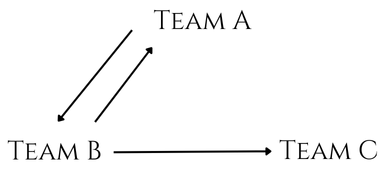
Hypothetical #2
The same trade as above, but now Team C sends a protected 2029 2nd round pick to Team A in addition to all other trade terms.
This now satisfies the Touch Rule.
Team A: Touching Team B and Team C;
Team B: Touching Team A and Team C;
Team C: Touching Team A and Team B.
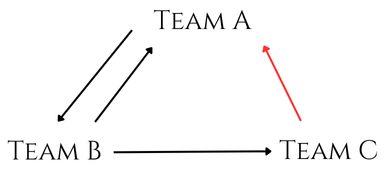
Example 1 one does not satisfy the touch Rule as each Team only touches one of the other Teams:
Team A: Received an asset from Team B, sen
In Example 2, Team C is now sending an asset back to A. Now the Trade does satisfy the Touch Rule, as each Team is touching the other.
Trading Draft Picks
Draft Picks Generally
Note that the trading of Draft Picks is different than trading the Draft Rights to a Player. Draft Rights are attached to a Player that has been drafted, but is not yet signed.
Trading future Draft Picks requires the Team to identify the specific year of the pick–with the exception of pick protection contingencies–and the Team must already hold the right to the pick (i.e. cannot identify a pick as one that may be acquired in the future).
Pick Protections
Pick Protections Generally
Teams may make the conveyance of a pick contingent on where the pick is ordered in the Draft, called pick protection.
If a pick does not convey due to protections, additional contingencies can be added for the conveyance of a different pick or picks in the future, so long as specific years are identified.
As part of a Trade, the Warriors conveyed to the Wizards its 2030 1st Round Pick, protected if it is picks 1 through 20. If it is picks 1 through 20, then the Warriors will instead convey a 2030 2nd Round pick to the Wizards.
Protections and the Stepien Rule
All protections must still satisfy the Stepien Rule, discussed in more detail below.
Protecting an Acquired Pick
A Team may add protections to a Draft Pick it had acquired from another Team in a prior Trade, subject to the following:
- The Team must hold the Draft Pick unconditionally; or
- The Team initially held the Draft Pick unconditionally, but entered into a separate Trade that had added pick protections.
For example, Team A acquires the 2029 2nd Round Draft Pick from Team B unconditionally. Then conveys it in the following way: “Team A conveys a 2029 2nd Round Draft Pick (Team B’s own) to Team C, provided that it is not among picks 31-45.”
In a subsequent Trade, the pick is conveyed in the following way: “Team A conveys a 2029 2nd Round Pick (Team B’s Own) to Team D, provided that it is not among picks 46-60.”
Deferral Options
One or both Teams to a Trade may be permitted to exercise a one-time option to defer the conveyance or the receipt of a pick for one year only.
In 2019, as part of the Anthony Davis Trade, the Pelicans received the right to the Lakers’ 2024 1st Round Pick, with an additional right to defer that right until 2025. The Pelicans did indeed defer the pick until 2025.
Both deferral and pick protections cannot be used at the same time.
The “Stepien” Rule
The 7-Year Rule
Both First and Second Round Picks can only be traded no later than the 7th Draft following the date of the Trade.
Missing Consecutive 1st Round Picks
A Team must never have the possibility to not have a First Round Pick in two consecutive Seasons. Therefore, if a protection creates the possibility, then it is prohibited.
A Team may own another Team’s Draft Pick to satisfy the Stepien Rule.
As of the 2025 Offseason, the Suns no longer have their own 2026 or 2027 First Round Picks. However, because they own the least favorable First of Utah, Cleveland and Minnesota in 2026, the Stepien Rule is satisfied.
Conditional Language to Satisfy Stepien Rule
If it is unclear if/when a Draft Pick is going to be conveyed because of pick protections, then the following language can be used to satisfy the Stepien Rule:
- “Team A conveys its own 1st Round Pick to Team B in the second Draft following the Draft in which Team A is required under the terms of [a prior trade] to convey its 1st Round Pick to [Team involved in prior trade].”
However, a Team can only have two of these types of conveyances in effect at one time.
The language is not permitted if the year of the conveyance could occur in violation of the 7-Year Rule.
Cash-in-Trade
Cash-in-Trade Generally
A Team can send and receive 5.15% of the Salary Cap as Cash-in-Trade each Salary Cap Year ($7,964,320 for 2025-2026).
Each amount that is sent and received are accounted for separately and added on throughout the Season (i.e. it is not the “net” amount sent and received).
Cash-in-Trade only effects the owner’s bottom line and has no effect on Team Salary.
Conditional Cash-in-Trade
When Cash-in-Trade is included in a Trade as an alternative to the conveyance of a potential Draft Pick, then the accounting for the Cash-in-Trade is for the year the Trade was consummated, not when the cash was exchanged.
For example, Team A and Team B agree to a Trade where Team B send Player to Team A. Team A agrees to send a 2026 1st Round Pick to Team B, but it is conditional on not being a lottery pick. If it is a lottery pick, then Team A instead gives $5 million to Team B. Although the money would be exchanged in 2026, the $5 million Cash-in-Trade would be accounted as sent and received in 2025.
If the conditional Draft Pick is subsequently traded again, you again account for the Cash-in-Trade at the time of the Trade.
Taking the example above, Team B then takes the conditional Draft Pick and trades it to Team C in 2025. Team B now has lowered the amount it can convey by $5 million and Team C has lowered the amount it can receive by $5 million. Nothing changes from the first Trade, meaning Team A still lowers the amount it can convey by $5 million and Team B lowered the amount it can receive by $5 million.
Payment of Bonuses
Depending on the type of bonus, the Sending Team or Receiving Team will be responsible for payment, which may be different than how Bonuses affect Team Salary (i.e. one Team may be responsible for paying a bonus while it’s added to the Team Salary of the other Team).
Signing Bonus
If a Signing Bonus is provided in a Contract as part of a Sign-and-Trade, then it is the responsibility of the Receiving Team. Any payment of the Signing Bonus by the Sending Team is considered a Cash-in-Trade and is governed by those rules.
Performance Bonus
Any Performance Bonus earned is considered the responsibility of the Receiving Team to pay.
The Teams can agree that the Sending Team pay all or a portion of the Performance Bonus, but any payment by the Sending Team is considered Cash-in-Trade and is subject to those rules above, and is accounted for at the time of the Trade, not when the Bonus is earned.
For example, Team A trades Player to Team B. Player has several performance bonuses in his contract reaching a total of $1 million. Team B is responsible for the payment of these Bonuses. Team A agrees to pay 25% of the Bonuses. Therefore, $250,000 is reduced from Team A’s allowable conveyance of Cash-in-Trade at the time of the Trade, and $250,000 is reduced from Team B’s allowable receipt of Cash-in-Trade at the time of the Trade, irrespective if the Player achieves the performance benchmarks.
Other Incentive Compensation
For other types of Incentive Compensation (i.e. conditioning, academic achievement, extra promo appearances), the Team that rostered the Player when the Bonus was earned is responsible for payment.
Similar to Performance Bonuses, the Teams can alter the payment arrangement, subject to the Cash-in-Trade rules.
Trade Bonus
Trade Bonuses are paid by the Sending Team, but are added as Team Salary to the Receiving Team (visit the Trade Bonus page to view how the Trade Bonus is calculated).
Again, Teams can agree to a different payment arrangement of the Trade Bonus, subject to the Cash-in-Trade rules.
Options – Conditioned to Trade
The Player and Sending Team can agree to amend a Contract to exercise or not exercise an Option provided that the Contract is traded within 48 hours of executing the amendment.
Effect on Bird Rights
Generally, when a Player is Traded, the Receiving Team retains the same Bird Rights the Sending Team had.
During the 2023-24 season, the Raptors traded Pascal Siakim to the Pacers. Since the Raptors had his Full Bird Rights, they transferred to the Pacers in the trade. That summer when Siakim became an Unrestricted Free Agent, the Pacers used Full Bird Rights to sign Siakim over the Salary Cap to a maximum contract at 30% of the Salary Cap.
Exception – Bird Rights do not transfer and he is treated as if signing as a Free Agent if the following elements are met:
- Signs a 1-year contract (excluding any Option Year);
- Would be a Full Bird or Early Bird Free agent under the Contract after completing such Contract; and
- Is traded to a new Team without exercising any applicable Option for the second year.
Because of this downgrade in Bird Rights, the Player receives an Automatic No Trade Clause (oftentimes called an “Implicit” No Trade Clause) upon the signing of his Contract, unless waived.
Limitations on Extensions
If a Team acquires a Player they must wait 6 months before signing him to an Extension that (i) covers 5 Seasons, (ii) provides for increases/decreases greater than 5%, or (iii) Renegotiates his current Contract.
This is to avoid working around CBA restrictions. Extend-and-Trade rules limit signing a Player to 5 Seasons and 5% raises. This rule restricts the “handshake deal” where the Player gets traded and then immediately signs to an Extension with more favorable terms.
Team Salary and Trades
The Receiving Team will acquire the entire Salary for the current Season and future Seasons of the Player’s Contract in the Trade.
The current Season’s Salary is not prorated if the Player is traded midway through the Season.
Resigning a Traded/Waived Player
If a Team trades a Player and the acquiring Team subsequently waives the player, the Sending Team can’t sign him to a new Contract until the earlier of: (i) 1 year following the date all conditions to the Trade were satisfied or (ii) the July 1 following the last Season of the player’s Contract.
Existing Financial Obligations of Sending Team
Prior to the the assignment of any Player Contract, a Team must divest itself of any financial arrangements with the Player other than any Loans or Compensation earned prior to assignment.
The Sending Team will be responsible for paying Salary through the day of the assignment unless he dresses for the Receiving Team on that day.
Trade of Exhibit 10 Contracts
If (i) a Team has a G League Affiliate, (ii) acquires by assignment an Exhibit 10 Contract, (iii) the Contract has a Conversion Protection Amount, but not an Exhibit 10 Bonus, then the Contract is deemed to include an Exhibit 10 Bonus in an amount equal to the Conversion Protection Amount.
Stacking Minimum Contracts
In certain scenarios, a Team is limited in the amount of Minimimum Contracts it can send out in an unbalanced Trade. This is addressed in the Traded Player Exception page.
Publicly Demanding a Trade
Any Player or agent who publicly expresses their desire to be traded shall be subject to a fine and/or suspension, with a maximum fine of $150,000.
No Trade Clause
Express No Trade Clause
A Contract may include a No Trade Clause only if the Player (i) has 8 YOS and (ii) has rendered 4+ YOS for the Team he’s entering into the Contract with.
If so, the Contract may contain a prohibition or limitation of such Team’s right to trade the Contract to another NBA Team.
Automatic No Trade Clause
A Player receives an Automatic No Trade Clause (oftentimes referred to as an “Implicit” No Trade Clause), thus requiring his consent to be traded, if his Bird Rights would be reduced as a result of the Trade.
The Player may elect to waive the Automatic No Trade Clause at the time of signing (or anytime during the life of the Contract).
In the 2023 offseason, D’Angelo Russell signed a 2-year, $37.4 million Contract with the Lakers. His Contract had a Player Option. Therefore, if traded he would subject to a reduction in his Bird Rights. Russell elected to waive his Automatic No Trade Clause at the time he signed the Contract. He was eventually traded to Brooklyn during the 2024-25 Season.
Bird Rights Reduction
Bird Rights are downgraded if the following elements are met:
- Signs a 1-year contract (excluding any Option Year);
- Would be a Full Bird or Early Bird Free agent under the Contract after completing such Contract; and
- Is traded to a new Team without exercising any applicable Option for the second year.
During the 2025 offseason, Cam Thomas was a Restricted Free Agent with the Nets. Reports indicated that Thomas was offered a 2-year deal and a 1-year deal for more money if he waived his Automatic No Trade Clause. Thomas opted to sign his $5.9 million Qualifying Offer to keep his No Trade Clause in place, ensure his Bird Rights were retained with the Nets, and allow himself to choose his destination if traded during the Season.
Trade Restrictions
Date Restrictions
July Moratorium
Trades cannot be made during the July Moratorium from July 1st through July 6th.
Trade Deadline
Trade Deadline Date
February 5, 2026
Trade Deadline Rule
No Trades can be executed from the second Thursday before the All-Star Game until after the Team’s Regular Season ends.
Playoff Teams cannot trade any Player on its Playoff Roster until the Team is eliminated from the Playoffs, but can Trade any other assets after the Regular Season.
During the 2025 Playoffs while making their run to the NBA Finals, the Pacers executed a Trade with the Pelicans, sending the Draft Rights to Mojave King and its 2025 1st Round Pick to the Pelicans in exchange for a return of its own 1st Round Pick in 2026. Because King was not on the Playoff Roster, the Pacers could trade him while still in the Playoffs.
Entering Option Year
If a Contract could be the last season of a Player’s Contract based on the exercise or non-exercise of the Contract (Option or ETO), then the Player cannot be traded after the Regular Season unless the Option is exercised or the ETO is declined.
Note an Option can be exercised as a condition to being traded, as discussed above.
In June 2023, Kristaps Porzingis had a pending Player Option for the 2023-24 Season with the Wizards. The Wizards could not trade him with the pending Option. Porzingis exercised his Player Option to allow the Wizards and Celtics to execute the three-team trade with the Grizzlies.
Sign-and-Trades
Any Sign-and-Trade must be completed prior to the Regular Season (for visit the Sign-and-Trade page for all rules on Sign-and-Trades).
Draft Picks
The deadline for trading the current Season’s Draft Picks is 2:00 P.M. ET on the day of the Draft.
Once the Draft begins, the Teams can begin trading the Draft Rights to the Players that are drafted.
Lottery picks cannot be traded from 6:00 P.M. ET the day before the Draft Lottery until the Draft Lottery concludes.
Transaction Restrictions
Below are the transactions that trigger a time restriction on trading a Player for a particular timeframe.
| Signings | ||
| Transaction | Details | Restriction |
|---|---|---|
| 1-Year Deal |
| Automatic No Trade Clause created unless waived |
| Bird Rights Contract |
|
The later of (i) three months or (ii) January 15th |
| Veteran Extension (other than Designated Veteran Extension) |
|
Six months |
| Renegotiation | N/A | Six months |
| Designated Veteran Contract or Extension | N/A | One Year |
| Restricted Free Agent | If Offer Sheet is matched | Team issuing Offer Sheet: One Year (consent not allowed); All Other Teams: One Year but Player can consent to Trade |
| Drafted Rookie Signing | Once Rookie is signed (but not the rights to the rookie prior to signing) | Thirty days |
| Two-Way Contract Signed | N/A | Thirty days |
| Any other Free Agent Signing Not Listed | N/A | The later of (i) three months or (ii) December 15th |
| Two-Way Converted to Standard Contract | N/A | The later of (i) three months or (ii) December 15th |
| Trades | ||
| Transaction | Details | Restriction |
| Trade | N/A | Sending Team cannot reacquire Player in same Season (restriction is eliminated if Player is traded again and waived by the third team) |
| Sign-and-Trade (non-base year compensation) | Acquired via Sign-and-Trade | The later of (i) three months or (ii) December 15th |
| Sign and Trade (“Base Year” Compensation Player) |
|
The later of (i) three months or (ii) January 15th |
| Acquired Using Exception | Restriction does not apply if:
|
Cannot be aggregated in another Trade for two months from initial acquisition. |
| Waivers | ||
| Transaction | Details | Restriction |
| Waiver Claim during Season | N/A | 30 days |
| Waiver Claim during Offseason | N/A | First 30 days of Regular Season |
Completing a Trade
Trade Call
Below are the steps for completing a Trade:
- Notify the League at least two hours before an impending Trade, if possible. League must be notified by 6:00 P.M. ET on Friday to perform a Trade Call on the weekend, otherwise it must wait until Monday (same rule applies for holidays).
- Prior to the Trade Call, the parties exchange necessary health information.
- All terms and conditions of the Trade are disclosed and agreed to during a conference call with the League.
- Follow up email confirming the terms will be sent by the Teams to the League.
- League will send an email confirming all conditions required for Trade to be consummated.
Physical Exam Contingency
Any Trade can be conditioned upon the Player passing a physical examination.
In 2024, Mark Williams was traded to the Lakers from the Hornets. However, he failed his physical exam, and as a result the Lakers rescinded the Trade.
Sometimes, rather than cancelling the Trade, Teams will adjust the terms based on the results of a physical examination.
In 2025, the Blazers initially had an agreement to send Anfernee Simons and two 2nd Round Picks to the Celtics for Jrue Holiday. After poor results from Holiday’s physical exam, the Blazers and Celtics agreed that the 2nd Round Picks would be dropped from the agreement.
Note that the Williams Trade above had no chance of altering the Trade because it was made right at the deadline. Once the physical exam results came back, they were past the Trade Deadline and therefore couldn’t alter the terms and execute a new Trade.
Trade of Team Personnel
The Trade of Team Personnel (e.g. a coach or G.M.) is permitted, but is limited to the Trade of future Draft Picks or cash, and is subject to the rules that apply to such Trades.
In 2013, the Celtics agreed to release head coach Doc Rivers from his current Contract to allow him to sign with the Clippers, in exchange for a 2015 1st Round Pick.
Generally
When executing a Trade, it is important to see where the Team lands after the Trade is executed. If the Team is over the Salary Cap, then a Traded Player Exception (TPE) is required to execute the Trade (if below the Salary Cap, no Exception is needed).
There are four different types of TPE’s. A TPE is only available if the Team’s Apron Team Salary falls below the applicable Apron Restriction.
The Salary Limit is how much Incoming Trade Salary (ITS) is permitted, which always depends on the Team’s Outgoing Trade Salary (OTS), other than the Room TPE. Visit the Trade Salary page to review how Trade Salary is calculated.
Aggregated TPE
| Apron Restriction | Second Apron |
| Outgoing Players | 2+* |
| Incoming Players | 1+ |
| Simultaneous | Simultaneous |
| Salary Limit | 100% Outgoing + $250k |
Expanded TPE
| Apron Restriction | First Apron | ||||||||
| Outgoing Players | 1+ | ||||||||
| Incoming Players | 1+ | ||||||||
| Simultaneous | Simultaneous | ||||||||
Salary Limit
|
|||||||||
Standard TPE
| Apron Restriction | First Apron (time limitation only)** |
| Outgoing Players | 1 |
| Incoming Players | 1+ |
| Simultaneous | Non-Simultaneous |
| Salary Limit | 100% Outgoing + $250k |
Room TPE
| Apron Restriction | Salary Cap |
| Outgoing Players | 1+ |
| Incoming Players | 1+ |
| Simultaneous | Simultaneous |
| Salary Limit | $250k over the Salary Cap |
* The Aggregated TPE doesn’t require 2 or more outgoing players, but the Standard TPE would be used if only 1 Player was outgoing, as the same incoming Trade Salary is permitted for both.
** The First Apron only limits the length of time a Standard TPE can be used (discussed below).
The “Traded Player Exception” Term Confusion
The term Traded Player Exception or a TPE is used by the media and the public differently than how it is used in the CBA.
In the CBA, the Traded Player Exception is the broad term referring to either the Aggregated, Expanded, Standard or Room TPE’s.
In the media, when they say a Team has a TPE, they are referring to the remaining money in Standard TPE that can be used to acquire another player without sending out additional Salary (this is discussed below).
Just know that when the media says something like “the Knicks have a $15 million TPE” they mean that the Knicks made a prior trade using the Standard TPE, which hasn’t expired yet. But in the CBA, a Traded Player Exception can refer to all of the different types of TPE’s.
Look Through the Lense of Each Team Separately
When determining if/how a Trade can work, you look through the lense of each Team separately, and optimize the Exceptions for each Team as best you can.
Not only do you look at each Team separately, but the Trade can be broken apart into multiple trades, so long as each separate Trade satisfies Trade Salary and the TPE’s.
One of the best examples of this was the Mikal Bridges trade to the Knicks. From the Knicks point-of-view, they gathered up all of the Outgoing Salary they could to make one trade using the Aggregated TPE. The Nets on the other hand, executed FIVE separate trades, to absorb salaries using different exceptions to generate separate Standard TPE’s that could be used in the future.
Review an article detailing this trade here.
Apron Salary vs. Trade Salary
Note the difference between Apron Team Salary and Trade Salary.
Trade Salary is used to determine if the Salary Limits for the applicable TPE is satisfied. Apron Team Salary is used to determine if a Team falls below the First or Second Apron, which then determines if certain TPE’s are available.
These calculations can be different.
In the 2025 offseason, Nikola Jovic signed a 4-year, $62.4 million Rookie Scale Extension with the Heat. The extended term begins in 2026-27. If he is traded prior to the 2026-27 Year, then he is “poison pilled” and his ITS is the average annual value of his Contract: $13,369,083. However, his Apron Salary is only $4,445,417.
Details of Exceptions
Summarizing the TPE’s
Before diving into the details of the TPE, it’s beneficial to see generally (i) what is limited when exceeding each Threshold and (ii) what is never limited in Trade.
Limitations When Exceeding Threshold:
| Threshold Exceeded | Limitation |
|---|---|
| Salary Cap | TPE required to execute Trade |
| First Apron | Can receive more Incoming Trade Salary than Outgoing Trade Salary |
| Second Apron | Cannot combine (“aggregate”) contracts in a single Trade to satisfy required Outgoing Trade Salary |
What is Never Restricted in Trade:
More OTS and ITS – Sending out more OTS than ITS will never, on its own, be a reason a Team cannot execute a Trade.
Receiving more Players than Sending Out – No TPE restricts a Team’s ability to acquire more Players than sending out (Roster requirements still must be met).
During the 2025 Offseason, the Suns were seeking to trade Kevin Durant’s $54.7 million Salary, and were a Second Apron Team. What they can do is acquire two $27 million Salaries for his outgoing salary. What they could not do, is aggregate Royce O’Neal’s $9.3 million and Cody Martin’s $8.1 million Contracts for one $15 million Contract, even though they are sending out more than they are receiving.
Standard TPE
Standard TPE
| Apron Restriction | First Apron (for time limitation only) |
| Outgoing Players | 1 |
| Incoming Players | 1+ |
| Simultaneous | Non-Simultaneous |
| Salary Limit | 100% Outgoing + $250k |
General Use
The Standard TPE is always going to be the TPE used when (i) there is one outgoing Player and (ii) the outgoing Player’s Trade Salary is more than the Incoming Trade Salary.
This is because there is no need for the Expanded TPE (don’t need to acquire more money than sending out) or the Aggregated TPE (don’t need to send out more than one Player).
Non-Simultaneous Trade
The major benefit to the Standard TPE is that it is non-simultaneous, which is not the case for any other TPE. The Team has 12 months (or less if over the First Apron) to complete the Trade.
What this means: The Team trades Player A for X amount of dollars more than the Incoming Trade Salary acquired. They now have a TPE for X dollars plus $250k. The Team has 12 months (or less if over the First Apron) to acquire additional players using this TPE without the need to send out more Outgoing Salary.
In 2020, the Celtics were able to obtain the largest TPE in history by sending Hayward via Sign-and-Trade to the Hornets. Because the Hornets were below the Salary Cap, they could have signed him outright. However, in the trade they absorbed his salary without any outgoing salary back to Boston in exchange for additional draft capital. A $28.5 million TPE was generated, allowing Boston to acquire Evan Fournier four months later. Similarly, Fournier was traded from the Celtics to the Knicks in a Sign-and-Trade creating yet another TPE, which was then used to acquire Derrick White.
The Time-Crunch Caveat
There is no Apron limitation to use the Standard TPE, generally. But if you are over the First Apron, your 12-month time limitation to use the TPE shortens to the following:
If the Standard TPE arose during the Regular Season, then it expires at the conclusion of the current Regular Season.
If the Standard TPE arose after the Regular Season and before the following Regular Season starts, then it expires after the day of that following Regular Season.
Aggregated TPE
Aggregated TPE
| Apron Restriction | Second Apron |
| Outgoing Players | 2+* |
| Incoming Players | 1+ |
| Simultaneous | Simultaneous |
| Salary Limit | 100% Outgoing + $250k |
* The Aggregated TPE doesn’t require 2 or more outgoing players, but the Standard TPE would be used if only 1 Player was outgoing, as the same incoming Trade Salary is permitted for both.
General Use
The Aggregated TPE is used to combine multiple players to add up to enough Outgoing Trade Salary to acquire a Player with a larger amount of Incoming Trade Salary.
It is limited in the sense that you can only acquire 100% Outgoing Salary + $250k of what you are sending out. If you are looking to acquire more Trade Salary than you are sending out, then you must use the Expanded TPE, which is only available to Teams below the First Apron.
The Magic used the Aggregated TPE to aggregate the Trade Salary of Kentavious Caldwell-Pope and Cole Anthony to create enough Outgoing Trade Salary to absorb the Incoming Trade Salary of Desmond Dane.
Note the Aggregated TPE is restricted to Teams below the Second Apron. So even if a Second Apron Team wants to aggregate players in one trade to obtain one player making less money, they can’t do so.
A Second Apron Team wants to trade Player A ($9.3 million) and Player B ($10.1 million), totaling $19.4 million, for one Player making $17 million to help cut costs. They can’t do so if they still are over the Second Apron after the Trade, because they are a Second Apron team restricted from aggregating Players in trade. Note, if it cuts enough Salary to drop the Team below the Second Apron, then they could use the Aggregated TPE, as it only matters where the Team lands after the trade.
Expanded TPE
Expanded TPE
| Apron Restriction | First Apron | ||||||||
| Outgoing Players | 1+ | ||||||||
| Incoming Players | 1+ | ||||||||
| Simultaneous | Simultaneous | ||||||||
Salary Limit
|
|||||||||
The Expanded TPE is the most flexible of the TPE’s, which is why it is only available to Teams below the First Apron.
It is the only TPE that allows more Incoming Trade Salary than Outgoing Trade Salary, and allows for more than one Player to be aggregated in Outgoing Trade Salary.
The amount of ITS allowed is dependant on the amount of OTS (see chart above). Note that the $8,527,000 cushion is increased in in line with the Salary Cap each season. The $8,527,000 figure is the amount for the 2025-26 season.
In 2024, the Thunder traded Josh Giddey’s $6.5 million Contract for Caruso’s $9.4 million using the Expanded TPE.
Room TPE
Room TPE
| Apron Restriction | Salary Cap |
| Outgoing Players | 1+ |
| Incoming Players | 1+ |
| Simultaneous | Simultaneous |
| Salary Limit | $250k over the Salary Cap |
The Room TPE simply allows Teams that are landing slightly over the Salary Cap a $250k buffer to execute the trade.
The Room TPE cannot be used simultaneously with another TPE.
A Team is able to use a the Expanded TPE other than the Room TPE if it chooses, even if the Team has enough Cap Space to execute the Trade using the Room TPE.
Additional Limitations to Exceptions
The $250k Cushion and the First Apron
Any time there is a $250k cushion referenced, that cushion is eliminated if the Team lands over the First Apron.
Future Aggregation of Acquired Player
If a Player was acquired using a Salary Cap Exception, then such Player cannot be aggregated in a subsequent trade for two months from the date of acquisition.
- Exception – Prohibition does not apply if (i) Player was acquired prior to December 17th and (ii) is subsequently traded on the Trade Deadline or the day before the Trade Deadline of the same Salary Cap Year.
In 2024, Dennis Schröder was traded from the Nets to the Warriors on December 15th using the Standard TPE. Because he was traded prior to December 17th, he could be aggregated in a trade on the Trade Deadline or the day prior to the Trade Deadline. He was then used in the trade for Jimmy Butler.
The “Stacking Minimum Contracts” Limitation
The CBA limits the ability for Teams to combine several Minimum Contracts to reach the applicable Outgoing Trade Salary needed to execute a Trade. Below is the specific rule.
A Team cannot trade more than one Minimum Traded Player if the following elements are met:
- Trade takes place outside of December 15th through the NBA Deadline;
- The Team is aggregating 3+ Contracts in Outgoing Salary;
- The number of incoming Players is less than the number of outgoing Players
Minimum Traded Player
Defined as a Player whose Contract provides for his applicable Minimum Salary for the current Season in which the trade occurs, unless the trade is after the Regular Season, at which point it is the Salary for the subsequent Salary Cap Year.
Disabled Player Exception Limitation
If a Team acquired a Player using the DPE, then they cannot use him as part of a Traded Player Exception.
Hard Capping at each Threshold
Discussed in more detail in the Aprons page, it’s important to note that when a Team uses an Exception that has an Apron limitation, the Team is then hard capped at that Apron and can’t go over it for the remainder to Season (and sometimes, the subsequent Season).
This is to prohibit teams from acting like a Team that’s below the First Apron, use an Exception that’s below the First Apron, to then just go over the First Apron afterward.
Because of this rule, Teams will make their best effort to avoid the Expanded TPE if possible to avoid the First Apron hard cap, particularly if their Apron Salary is close to the threshold.
In the Aggregated TPE example above, the Knicks could have simply sent Bojan Bogdonavic ($19,032,850) in exchange for Mikal Bridges ($23,300,000) using the Expanded TPE. Howevever, they wanted to get to the 100% outgoing salary and use the Aggregated TPE so they were not hard capped at the First Apron.
Salary can be adjusted solely for the Receiving Team, called Incoming Trade Salary, for the Sending Team, called Outgoing Trade Salary, or for both.
What Isn’t Salary?
There are a few Tradeable Assets and certain Contract Types that count as $0 in Trade Salary:
Asset Types
When any of these assets are included in Trade, they don’t have to be calculated as Incoming or Outgoing Trade Salary:
- Draft Picks/Swaps;
- Draft Rights;
- Cash-in-Trade.
Contract Types
- Two-Way Contracts;
- Minimium Exception Contracts – Any Contract that fits into the Minimum Exception counts as $0 in Incoming Trade Salary only.
Teams often use this rule to their advantage, as the Sending Team can increase their Outgoing Trade Salary by including Minimum Exception Contracts in the Trade, while none of those Contracts count as Incoming Trade Salary for the Receiving Team.
Not that the Stacking Minimum Contracts rule limits this to an extent.
Summary of Adjustments
| Type | Incoming/Outgoing Trade Salary Adjustment |
|---|---|
| Team-Related Bonuses | Both. Adjust on a Team-by-Team basis. |
| Non-Guaranteed Salary | Outgoing Trade Salary |
| Sign-and-Trade Using Bird Rights | Outgoing Trade Salary |
| Minimum Exception | Incoming Trade Salary |
| Rookie Scale Extensions | Incoming Trade Salary |
| Trade Bonus | Incoming Trade Salary |
Incentive Compensation Adjustment
A Team Related Performance Bonus is determined Likely or Unlikely based on the Team’s prior performance. If the Player changes Teams, the Bonus could then shift from Likely to Unlikely, or vice versa. This has to be accounted for in Trade.
When a Player is Traded, apply the likeliness test for each individual Team.
If it is a Likely Bonus for the Receiving Team, then include it in Incoming Trade Salary, but if it’s an Unlikely Bonus for the Sending Team, then exclude it for Outgoing Trade Salary (and vice versa).
In 2025, the Suns traded Kevin Durant to the Rockets for Dillon Brooks and Jalen Green. Durant’s Salary was $54,708,609. Green’s Salary was $33,333,333.
Brooks, on the other hand, had a $1 million Bonus related to reaching the First Round of the Playoffs. The Rockets achieved this the prior year. Therefore, his Salary for the Rockets was $22,124,110.
The Suns did not make the First Round the year prior, so the Bonus would not be triggered, and his Salary for the Suns is reduced to $21,124,110. This slight reduction is crucial, because the Suns were a Second Apron Team restricted from acquiring more Trade Salary than sending out. See the calculations below.
| Durant – $54,708,609 | ||
|---|---|---|
| Rockets Outgoing | Suns Incoming | |
| Green | $33,333,333 | $33,333,333 |
| Brooks | $22,124,110 | $21,124,110 |
| Total | $55,457,443 | $54,457,443 |
Outgoing Trade Salary Adjustments
The below circumstances adjust the Player’s Outgoing Trade Salary only:
- Non-Guaranteed Salary;
- Sign-and-Trade using Bird Rights.
Non-Guaranteed Salary Reduced
Calculating the Reduction
When calculating Outgoing Trade Salary you have to reduce the amount of non-guaranteed Salary depending on when the Trade is made during the Salary Cap Year.
| Stage of Season | Treatment of Salary |
|---|---|
| 7/1 until the Regular Season | Only include guaranteed Salary. |
| Regular Season through 1/7 | Prorate the earned Salary (take the full Salary and multiply by the remaining percentage of the Season remaining). |
| 1/8 to end of Regular Season | Treat all Salary as fully protected (i.e. no reduction). |
| After Regular Season through 6/30 | Take the lesser of (i) the Player’s Salary for the current Salary Cap Year and (ii) the Player’s guaranteed Salary of the following Salary Cap Year. |
Amending the Guarantee
Teams have the ability to amend Compensation Protection (i.e. guaranteed Salary) throughout the life the Contract. Teams have used this often to execute trades under the new Apron limitations.
In the 2024 offseason, Alex Caruso was traded from the Bulls to the Thunder. In June his Salary for the current Salary Cap Year was $9.4. His Salary for 2024-2025 was $9.8, but it was only guaranteed for $3 million. This meant his Outgoing Trade Salary was only $3 million, unless amended. The Bulls amended his contract to be fully guaranteed. Therefore his $9.4 million Salary for the prior Salary Cap Year applied (because it was the lesser of the two) allowing them to trade his $9.4 million Contract in exchange for Giddey’s $6.5 million Contract.
Sign-and-Trade of Bird Rights
The Player’s Outgoing Trade Salary is adjusted in a Sign-and-Trade if:
- The Player is traded pursuant to a Sign-and-Trade;
- The Sending Team signs him using Full Bird or Early Bird Rights; and
- The first Season’s Salary plus Unlikely Bonuses is greater than what could be signed using Non-Bird Rights
Adjustment Made to Outgoing Trade Salary
If the rule applies, then his Outgoing Trade Salary is the greater of:
- The Salary for the last Season of the Player’s prior Contract, or
- 50% of the Salary for the first Season of the new Contract.
In July 2023, Max Strus signed a 4-Year, $62.3 million contract as part of a Sign-and-Trade with the Heat and acquired by the Cavs. His starting Salary was $14,487,684.
Because he signed with the Heat using Full Bird Rights for more than he could have signed for Non-Bird Rights, he was subject to the rule. His Prior Salary was only $1,815,677. Therefore, 50% of his starting Salary ($7,243,842) was used as his Outgoing Trade Salary for Miami.
No Minimum Salary Subsidy for Prior Contract
If the prior Contract was for Minimum Salary, then don’t subsidize it in the calculation (i.e. don’t apply just the 2 YOS minimum, but apply the Minimum Salary actually paid to the Player according to his YOS accrued).
Incoming Trade Salary Adjustments
Minimum Exception
As discussed briefly above, a Contract falling within the scope of the Minimum Exception can be acquired via Trade and will count as $0 Incoming Trade Salary. The Contract will count as Outgoing Trade Salary for the Sending Team.
Note this is why the CBA limits the “stacking” of Minimum Contracts, when Teams seek to add up several Minimum Contracts to reach the required Outgoing Trade Salary, knowing it counts as $0 in Incoming Trade Salary for the Receiving Team.
Rookie Scale Extensions (the “Poison Pill” Provision)
General Rule
The CBA applies a Poison Pill Provision for Players who have signed a Rookie Scale Extension based on the understanding the Player’s value is much higher than his cost-controlled Salary in the 4th Season of his Rookie Scale Contract.
The Poison Pill is triggered if:
- A Rookie Scale Extension is signed; and
- The Player is Traded before the Extension begins.
Incoming Trade Salary
When the Poison Pill is triggered, his Incoming Trade Salary is his Average Annual Salary of his entire Contract, including Option Year.
If Based on Percentage
If the Rookie Extension is based on a Percentage (e.g. 25% of the Salary Cap), then assume the Salary Cap increases 104.5% for the first year of the extended term, and assume he does not reach any Higher Max Criteria benchmarks.
If such calculation exceeds the Player’s Maximum Salary, reduce it to his Maximum Salary.
Trade Bonuses
Despite the Sending Team paying the Trade Bonus, the Receiving Team accounts the Trade Bonus as Incoming Trade Salary (it is also added as Team Salary for the Receiving Team).
When determining Incoming Trade Salary for Trade Math purposes, you use the portion of the Trade Bonus that is allocated to the current Salary Cap Year of the Trade.
Visit the Trade Bonus page for a detailed explanation for calculating the Trade Bonus both in the current Salary Cap Year (relevant for Trade Salary) and over the length of the Contract.
Trade Bonus Calculator
Use the Trade Bonus Calculator to find the Trade Bonus Amount for all current Player’s currently with Trade Bonuses. You can adjust the trade date to see how the amount changes, including yearly allocation.
Amount
Trade Bonuses are limited to 15% of the Player’s Base Compensation.
The Trade Bonus can be a percentage of Base Compensation or a fixed amount (not to exceed the maximum 15% Base Compensation).
Contracts can also condition the amount as the lesser of the two (e.g. the lesser of 5% Base Compensation to be earned or $5 million).
Trade Bonus Paid Once
A Trade Bonus is only paid once. If the Contract is traded a second time, there is no more Trade Bonus to be paid.
While a Trade Bonus is only paid one time, a No Trade Clause stays for the length of the Contract. This happened, for example, when Bradley Beal waived his No Trade Clause to be traded to the Suns, but would not waive it to be dealt elsewhere.
If the Trade Bonus is part of a Sign-and-Trade or Extend-and-Trade, then the Trade Bonus isn’t triggered when the Contract is first signed and the Player is immediately traded. Instead, the Trade Bonus would be triggered on a subsequent trade.
While the Trade Bonus is added to the Receiving Team’s Team Salary (calculated below), the Sending Team pays the Trade Bonus.
Amending as Part of Trade
The Player can agree to reduce all or a portion of the Trade Bonus as part of a Trade (this is different than amending the Trade Bonus before a Trade occurs, discussed below).
This occurs when a Player wishes to be traded to a more desirable Team and the waiver of the Trade Bonus allows the Trade Salary to work for the execution of the Trade.
The Player’s Contract cannot be renegotiated for six months from the date of the Trade if he reduces his Trade Bonus.
Amending Prior to Trade
Prior to a Trade, a Trade Bonus can only be adjusted, removed or added as part of an Extension (and in some circumstances, an Extend-and-Trade).
Different rules apply if (i) adjusting the amount of the Trade Bonus, (ii) adding a new Trade Bonus or (iii) removing an existing Trade Bonus.
Adjusting the Amount of Trade Bonus
A Trade Bonus amount can be adjusted for the extended term of the Contract when an Extension is signed.
As part of an Extend-and-Trade, the Trade Bonus can only be reduced.
Adding a Trade Bonus
A Trade Bonus can be added to a Contract that did not have one when an Extension is signed (payable after the signing of the Extension) or Extend-and-Trade (payable in trade subsequent to the initial trade).
The Trade Bonus is due if the trade occurs any time after the signing of the Extension, or any trade subsequent to the initial trade if it was part of an Extend-and-Trade.
Removing a Trade Bonus
A Trade Bonus can be removed from the extended term of the Contract when signing an Extension or Extend-and-Trade.
If traded during the original term, the Trade Bonus is due, and is calculated based on remaining Base Compensation owed in original term of Contract (the Player can still waive the Trade Bonus in connection with the Trade as discussed above).
If traded during the extended term, then no Trade Bonus is due.
Calculating Trade Bonus
Trade Bonus Allocation
Allocating the Trade Bonus as Salary is similar to a Signing Bonus because it is defined as a Signing Bonus in the CBA.
Therefore, a Trade Bonus is allocated across the guaranteed Seasons remaining in the contract.
However, a Trade Bonus is different than a Signing Bonus because (i) the amount is based upon remaining Base Compensation owed, and (ii) a Trade Bonus will inevitably be triggered partway through the Contract. As a result, the Trade Bonus amount adjusts throughout the life of the Contract.
Below is a Roadmap for calculating Trade Bonus amounts, followed by the step-by-step instructions.
Trade Bonus Math – The Roadmap
First the Total Trade Bonus Amount must be found. Second, you calculate how it is calculated over the remaining Seasons in the Contract.
Step 1 – Find Total Trade Bonus Amount
- If Fixed Amount, use that;
- If Percentage-Based:
- First, find Total Base Compensation Owed;
- To find Total Base Compensation Owed, you must find (i) Current Season Base Compensation Owed and (ii) Future Seasons Base Compensation Owed;
- To find Current Season Base Compensation Owed, you must find Percent Regular Season Remaining;
- Add Current Season Base Compensation Owed to Future Season Base Compensation Owed to find Total Base Compensation Owed;
- Multiply the percentage by the Total Base Compensation Owed to find the Total Trade Bonus Amount.
- To find Total Base Compensation Owed, you must find (i) Current Season Base Compensation Owed and (ii) Future Seasons Base Compensation Owed;
- First, find Total Base Compensation Owed;
Step 2 – Allocate Total Trade Bonus Amount
- Allocate the Total Trade Bonus Amount as Salary the same way you allocate a Signing Bonus.
Step 3 – Adjust Total Trade Bonus Amount and Allocation if it exceeds Maximum Salary
- Adjust the Salary allocation based on applicable Maximum Salary, which in turn will adjust the Total Trade Bonus Amount.
Step 1 – Total Trade Bonus Amount
Before you can allocate the Trade Bonus as Salary per Season, you must first determine the total amount of the Trade Bonus–i.e. the “Total Trade Bonus Amount.”
If it is a Fixed Trade Bonus Amount, then you already know the Total Trade Bonus Amount. You can move on to “Step 2 – Allocate Total Trade Bonus Amount” below.
If it is a Percentage-Based Trade Bonus, you need to follow the below steps to find the Total Trade Bonus Amount:
Total Base Compensation Owed (TBCO)
When based on a percentage, you must calculate the total guaranteed Base Compensation remaining to be owed to the Player as of the date of the trade, excluding Option years (the Total Base Compensation Owed).
Once the Total Base Compensation Owed is found, you take the percentage from that to find the Total Trade Bonus Amount.
Because you find the Total Base Compensation Owed as of the date of the trade, the Current Season Base Compensation Owed changes on a daily basis throughout the Regular Season.
Therefore, you must first determine the Current Season Base Compensation Owed as of the date of the trade, using the steps below:
Current Season Base Compensation Owed
The Current Season Base Compensation Owed can be tricky, as it adjusts on a daily basis once the Regular Season begins.
Therefore, to determine the Current Season Base Compensation owed, you must first find the Percent Regular Season Remaining:
Regular Season Percentage – Before or After the Regular Season:
- If the Trade occurs before the start of the Regular Season, then 100% of the Regular Season remains. Factor the entire guaranteed Base Compensation for the current Season as part of the calculation.
- If the Trade occurs after the Regular Season concludes, but before the new Salary Cap Year. Then 0% of the Regular Season remains. Exclude the current Season’s Salary from the Trade Bonus Calculation, because it is not “remaining to be owed.”
Regular Season Percentage – During the Regular Season:
If the Trade occurs during the Regular Season:
- Find the number of days that have elapsed from the start of the Regular Season (174 in 2025-26 ) to the date of the Trade. These are your Days Elapsed.
- Subtract Days Elapsed from Regular Season Days to find Days Remaining.
- Divide your Days Remaining by the total number of Regular Season Days in the Salary Cap Year. This is your Percentage Elapsed.
- Multiply the Player’s guaranteed Base Compensation by this Percentage Elapsed to find the remaining amount owed for the current season to find the Current Season Based Compensation Owed.
Total Base Compensation Owed – All Seasons
Next, add the Current Season Base Compensation Owed to the all guaranteed Base Compensation remaining over future Seasons, excluding Option Years.
This is the Player’s Total Base Compensation Owed (TBCO).
Multiply TBCO by the Percentage
Multiply the Total Base Compensation Owed by the applicable percentage to find the Player’s Total Trade Bonus Amount.
If the Player had a “lesser of” condition between the percentage and a fixed amount, now you can determine whether the fixed amount is less than the percentage. Apply the proper Total Trade Bonus Amount.
This amount may be adjusted down if the yearly allocation exceeds the Maximum Salary. But we don’t know that until after the allocation is completed, and then we adjust. So let’s move on to our next step.
Step 2 – Allocate Total Trade Bonus Amount
Allocate Using Pro Rata Math
Once the Total Trade Bonus is found using the steps above, you allocate the Total Trade Bonus over the total number of guaranteed Seasons remaining on the Contract. Use the same calculation as the “Signing Bonus Math” in the Salary page.
Note that if the trade occurs after the Regular Season, but before July 1st (i.e. the new Salary Cap Year), you allocate Salary to the current Season even though there is $0 remaining to be owed for the current Season.
Example 1 – Player has a 4-Year, $100 million contract at $25 million per year starting in 2025-2026 going through 2028-2029. He’s traded in June 2026. He has $75 million remaining to be earned, allocated over 4 seasons.
Example 2 – With the same Contract, Player is traded in July 2026. He has $75 million remaining to be earned, but allocated over 3 seasons because it is the start of a new Salary Cap Year so 2025-2026 is no longer included.
Example 3 – With the same contract, Player is traded exactly halfway through the 2026-2027 Season. He has $62.5 million remaining to be earned ($12.5 million for the 50% remaining in 2026-2027 and $25 million in each of the final 2 seasons), allocated over 3 seasons.
Step 3 – Maximum Salary Adjustment
One final adjustment required is determining if the Trade Bonus in the current season exceeds the Player’s applicable Maximum Salary. If so, the Trade Bonus for such season must be reduced to the Player’s Maximum Salary.
Note that Maximum Salary would include a Rookie Scale Contract exceeding 120% Salary/Unlikely Bonus.
If the Trade Bonus is deducted for the current Season’s Salary, then the Trade Bonus allocations for future seasons must also be reduced by the same percentage.
Step 1 – Does Current Season Salary exceed Maximum Salary?
- Once the Yearly Allocation is calculated above, you find the Trade Bonus Amount for the current Season (Current Season Trade Bonus) and add it to the Player’s Salary plus Unlikely Bonuses.
- If the Player’s Salary + Unlikely Bonuses + Current Season Trade Bonus does not exceed the Player’s applicable Maximum Salary, then no further adjustment is required.
- If the Player’s Salary + Unlikely Bonuses + Current Season Trade Bonus does exceed his Maximum Salary, then make the following adjustment:
Step 2 – Adjust down to Maximum Salary if needed.
- Find the Excess: Subtract the applicable Maximum Salary from the Player’s Salary + Unlikely Bonuses + Current Season Trade Bonus to find the Excess Trade Bonus Amount.
- Find the Allowable Amount: Subtract the Excess Trade Bonus Amount from the Current Season Trade Bonus to find the Allowable Current Season Trade Bonus Amount. This is the amount permitted to be added without exceeding the Player’s Maximum Salary.
- Find the Percentage Reduction: Take the new Current Season Trade Bonus and divide by the Prior Current Season Trade Bonus to find the Percentage Reduction.
- Apply Percentage Reduction to Future Allocations: Multiply all future seasons allocated Trade Bonus Amounts by the Percentage Reduction to reduce all future seasons in proportion to the Current Season Trade Bonus.
When Donovan Mitchell was traded right before the start of the 2022-2023 Season from Utah to Cleveland, he was only entering Year 2 of his Designated Rookie Scale Extension containing a 15% percent Trade Bonus. When traded, Mitchell would have earned a $14.6 million Total Trade Bonus had it not been for the Maximum Salary adjustment, which lowered the total Trade Bonus to just $1,685,910 because he was already earning so close to the 25% Maximum Salary before the Trade in the 2022-2023 Season.
Trade Bonus and Trade Salary
The Current Season Trade Bonus Amount will count as Incoming Trade Salary for the Receiving Team in a Trade, but not as Outgoing Trade Salary for the Sending Team.
Sign-and-Trade
A Sign-and-Trade is a mechanism where a Player that is no longer under Contract with his Prior Team, initially signs with his Prior Team on the condition of being traded to a new Team.
Sign-and-Trade allows a Team to sign a Player using the Prior Team’s Bird Rights.
Requirements
A Team may execute a Sign-and-Trade with a Free Agent if:
- Signed prior to the start of the Regular Season;
- Player is Free Agent and finished prior Season on Sending Team’s Roster;
- Contract is for at at least 3 Seasons (excluding Options), up to 4 Seasons;
- NTMLE and Room MLE are not used to sign the Player;
- First Season of Contract is fully guaranteed;
- Acquiring Team has sufficient Room for Player’s Salary plus Unlikely Bonuses.
5th Year Eligible Player
Player eligible for the Higher Max Criteria language is still limited to only 25% of the Salary Cap.
Signing Bonus
Any payment made by the Sending Team shall be treated as Cash-in-Trade to the Receiving Team (and limited to such rules).
Physical Exam Contingency
A Sign-and-Trade and Extend-and-Trade cannot contain an Exhibit 6, but can still be conditioned upon the Player passing a physical exam.
Extend-and-Trade
Generally
Similar to a Sign-and-Trade, a Team may enter into an Extension with the Player under the condition he is traded subsequent to the amendment to the Contract.
When signing an Extend-and-Trade, the terms of the Contract are more restrictive than if signing an Extension and staying with his Prior Team (discussed below).
In 2020-21, Steven Adams agreed to an Extend-and-Trade. He signed a 2-year, $35 million Extension with the Thunder, and as part of the Extension he was traded to the Pelicans.
Eligibility
In addition to being Extension eligible, an Extend-and-Trade cannot be signed from the last day of the Regular Season in the last Season of the Contract (including Option Year) through June 30th.
Compensation
Salary
The Extend-and-Trade can include Salary that is greater of:
- 120% of the Regular Salary in the last year of the original term of the Contract; or
- 120% of the Estimated Average Player Salary (EAPS) for the Salary Cap Year in which the Extension is signed.
- If the first year of the Extension includes Incentive Compensation, then 120% of the EAPS less the amount of such Incentive Compensation.
Incentive Compensation
120% of Likely and Unlkely Incentive Compensation, respectively, in the last year of the original term of the Contract.
Adjustment for Certain Bonuses
When determining the Player’s maximum allowable Salary in an Extend-and-Trade, you add (i) bonuses for physical/academic achievement, and (ii) bonuses related to promotional appearances to Regular Salary, and exclude them from Incentive Compensation.
Increase/Decrease Limitations
For each Salary Cap Year following the first year of a Contract signed via and Extend-and-Trade, the increase/decrease limitation shall be 5% instead of 8% like a typical Veteran Extension.
Years
May not cover more than 4 Seasons (including the remaining Seasons in the Original Contract).
Other Considerations
Trade Bonuses
Adding a Trade Bonus
If the original Contract did not include a Trade Bonus, the Contract can be amended to include a Trade Bonus that will be triggered on any subsequent trade (i.e. does not trigger on the Extend-and-Trade).
Amending Trade Bonus
In connection with an Extend-and-Trade Contract, you can (i) reduce the amount of the Trade Bonus to be paid to the player or (ii) provide the Trade Bonus will not be applicable to the extended term of the Contract.
If traded during the original term, the Trade Bonus is due, and is calculated based on remaining Base Compensation owed in original term of Contract (the Player can still waive the Trade Bonus at the time of the Trade).
Physical Exam Contingency
A Sign-and-Trade and Extend-and-Trade cannot contain an Exhibit 6, but can still be conditioned upon the Player passing a physical exam.
The Five Thresholds
Below are the five thresholds in the CBA that carry restrictions and/or penalties, serving to regulate spending and create an even playing field for all Teams:
Because the Salary Cap is a “soft” Salary Cap (i.e. there are Exceptions permitting Teams to exceed the Salary Cap), the CBA implemented the Luxury Tax to impose financial penalties and the First and Second Aprons to impose roster-building limitations to deter excessive spending.
The Minimum Team Salary threshold, on the other hand, was implemented to ensure Teams were spending a minimum amount on its roster on an annual basis.
Setting the Thresholds
| Threshold | Limitation |
|---|---|
| Minimum Team Salary | $139,191,000 |
| Salary Cap | $154,657,000 |
| Luxury Tax | $187,895,000 |
| First Apron | $195,945,000 |
| Second Apron | $207,824,000 |
The threshold amounts are determined first by setting the Salary Cap using BRI (details in the Finances page).
The other Thresholds are calculated as follows:
| Threshold | Calculation |
|---|---|
| Minimum Team Salary | 90% of Salary Cap |
| Luxury Tax | 121.5% of Salary Cap |
| First and Second Aprons* | [2023-24 Apron Amount] x Current Year Salary Cap 2023-24 Salary Cap |
2023-24 Salary Cap: $136,021,000
2023-24 First Apron: $172,346,000
2023-24 Second Apron: $182,794,000
Calculating for Thresholds
Each threshold uses different calculations when determining if a Team is above or below the applicable threshold.
The Salary Cap uses Team Salary.
The Aprons then make adjustments to Team Salary (e.g. removing Cap Holds and adding Unlikely Bonuses), which is called Apron Team Salary.
Minimum Team Salary and the Luxury Tax use Salaries that are calculated for purposes of the audit, called Total Salaries, which in simple terms, adjusts for money actually paid by the Teams (e.g. Performance Bonuses earned count, while those unearned do not).
Generally
Team Salary is the calculation made to determine how much a Team falls above or below the Salary Cap threshold.
Team Salary is not just the Salaries of a Team’s Players, but includes additional items–primarily Cap Holds–while excluding others.
Team Salary is different than Apron Salary. However, to calculate Apron Salary you must first calculate Team Salary and then make additional adjustments to find Apron Salary.
Team Salary Summary
When calculating Team Salary, you account for the following. Click the link to jump to the description.
Include:
- Player Salaries;
- Waived Salary;
- Retired Players Under Contract;
- Transactions with Retired Players;
- Settlements/Grievances;
- Pending Contracts;
- Outstanding Offer Sheets;
- Cap Holds;
- Assigned Contracts;
- Minimum Team Salary Adjustment.
Exclude:
Players on Roster
Include all Salaries of the Players currently on the Team.
Waived Players
Guaranteed Salaries
If a Player is waived, but has Protected Compensation, then the Dead Salary will remain on the Team’s books after waiving the Player. Visit the Waiver page to review how the Dead Salary is calculated, and how a Team can Stretch the Dead Salary over a longer period of time.
Non-Guaranteed Salaries
The Universal Cutdown Date
Any Contract that is terminated for “lack of skill” from January 10th to the end of the Season is entitled to his full Base Compensation for the Season.
Therefore, if a Team seeks to terminate the Contract prior to the Salary being fully guaranteed for the Season, the Team must allow the Player to clear waivers prior to January 10th (i.e. he must be cut on January 8th).
Waiver Prior to the Universal Cutdown Date
If a Player’s Salary is non-guaranteed, then the only Salary that remains on the Team’s books after waiving the Player is his Per-Day Cap Hit starting as of the start of the Regular Season.
To calculate Per-Day Cap Hit, you take the Player’s Salary and divide by 174 (the number of Regular Season Days).
To calculate Salary earned, you multiply his Per-Day Cap Hit by the number of days on the roster, after release (not as of the waiver claim, which is two days earlier than release).
On the cutdown date during the 2024-25 Season, the Raptors waived Bruno Fernando. Fernando was earning a non-guaranteed Salary of $2,425,403.
$2,425,403 ÷ 174 = $13,939.10 Per-Day Cap Hit.
$13,939.10 x 80 (days on Roster) = $1,115,128 in Dead Salary.
Note that if a Player’s Salary is subsidized to 2 YOS Minimum Salary, you remove the subsidy should the Player get waived during the Season.
In 2024-25, Minnesota signed P.J. Dozier to a 1-year Minimum Contract. With 7 YOS, his Compensation was $2,613,120, but his Salary was subsidized to 2 YOS Minimum Salary of $2,087,519.
On December 28, 2024, Minnesota waived Dozier. Therefore, his Per-Day Cap Hit was calculated based on his unsubsidized Compensation: $2,613,120 ÷ 174 = $15,017.93.
$15,017.93 x 70 (days elapsed) = $1,051,255 in Dead Salary.
Note Dozier had $1 million guaranteed. Had Dozier been waived earlier in the season where the Per-Day Cap Hit calculation was less then $1 million, then the $1 million would remain as Dead Salary.
If a Team does not want to incur a Per-Day Cap Hit, the Player must be waived by 5:00 P.M. two days prior to the first day of the Regular Season.
Pending Contracts
Salaries that are anticipated to be included in Team Salary based on any agreement that is required to be disclosed to the NBA.
Outstanding Offer Sheets
The outstanding Salaries called for under all outstanding Offer Sheets through the Restricted Free Agency process.
Cap Holds
Purpose
Cap Holds are a way to artificially add Team Salary as a placeholder for future signings.
It is meant to limit Teams from using all of their cap space to sign new UFA‘s, and then going back and resigning their own Players over the Salary Cap using Bird Rights.
Let’s say, hypothetically, the Boston Celtics are entering this offseason with Jayson Tatum as a free agent, and the Celtics have $58 million in cap space. This is enough to sign him to his maximum. Without Cap Holds, the Celtics could use the $58 million to sign other Free Agents using cap space, and stay under the Salary Cap threshold. They could then resign Tatum over the Salary Cap using their Bird Rights. The cap holds apply to remove that cap space with the understanding the Celtics are likely going to resign Tatum.
There are four different types of Cap Holds:
Free Agent Cap Holds
A Cap Hold is added to Team Salary for any Player finishing the Season on the Team’s Roster.
Free Agent Cap Holds are based upon the prior Contract Type and Prior Salary.
Prior Salary – Include last Season’s Regular Salary, Signing Bonus allocation and his Incentive Compensation that was actually earned when the Player finished the Season.
Free Agent Cap Hold Formulas
Below are the formulas depending on Contract Type. However, a Cap Hold will never be above or below the Player’s applicable Maximum or Minimum Salary. If the formula exceeds Maximum or Minimum Salary, then adjust the Cap Hold to the limit.
| Prior Contract | Elements | Percent Prior Salary |
|---|---|---|
| Rookie Scale Contract | 1. Coming off 4th year; and 2. Prior Salary Below EAPS |
300% |
| Rookie Scale Contract | 1. Coming off 4th year; and 2. Prior Salary Above EAPS |
250% |
| Rookie Scale Contract | Coming off 2nd or 3rd Year | Rookie Scale Amount Only |
| Restricted Free Agent | N/A |
Greater of: 1. Applicable UFA Cap Hold; 2. Qualifying Offer Amount; 3. ROFR (matching) Amount |
| Minimum Salary Contract | N/A | New Minimum Salary Amount (never above 2-Year Veteran Minimum) |
| Two-Way Contract | N/A | Minimum Salary for Player with 0 Years of Service |
| UFA (other than above) |
1. Full Bird; and 2. Prior Salary Below EAPS |
190% |
| UFA (other than above) |
1. Full Bird; and 2. Prior Above EAPS |
150% |
| UFA (other than above) |
Early Bird | 130% |
| UFA (other than above) |
Non-Bird | 120% |
First Round Pick Cap Holds
A Cap Hold is added to Team Salary for any Player drafted in the First Round by the Team.
Amount
Apply 120% of the Player’s Rookie Scale Amount.
Date Added
The Cap Hold takes effect immediately upon selection in the Draft.
Date Removed
The Cap Hold Remains in effect until one of the following occurs:
- Signs his NBA Contract;
- Team loses or assigns his Draft Rights;
- Signs a Non-NBA Contract:
- If the Player signs a Non-NBA Contract, the Cap Hold is released on the later of (i) the date he signs the Non-NBA Contract or (ii) the first day of the Regular Season;
- The Cap Hold is reinstated on the following July 1st or when the Player is released from the Non-NBA Contract (unless renounced). You reapply the same rule above if he signs another Non-NBA Contract after July 1st;
- Written Letter – The Team may remove the Cap Hold prior to the start of the Regular Season by issuing a written statement to the League that the Team will not sign the player during the Salary Cap Year accompanied by a written statement from the Player renouncing his right to accept any Required Tender made by him. The Cap Hold is reinstated on the following July 1st.
Open Roster Spot Cap Hold
A Cap Hold is added to Team Salary for open spots on the Team Roster to account for the requirement that the Team must sign a Player to fill the roster spot.
Counting Roster Spots
The following are counted as roster spots for this rule:
- Players under Standard Contracts;
- Players counting toward a Free Agent Cap Hold;
- Players counting toward a Draft Pick Cap Hold;
- Players whom Offer Sheets are given.
Calculating Cap Hold
Once you calculate roster spots, you calculate the potential Cap Hold accordingly:
Step 1 – Take total roster spots and subtract it from 12;
Step 2 – If there is a negative number, there is no Open Roster Spot Cap Hold;
Step 3 – If there is a positive number, you multiply that number by the applicable Minimum Salary for a Player with 0 Years of Service to determine the Team’s total Open Roster Spot Cap Hold.
Salary Cap Exceptions
Purpose
This Cap Hold is meant to avoid a situation where a Team can double dip and act as a Cap Space Team, and then act as a Team with a particular Salary Cap Exception.
Team A has $8 million in cap space below the Salary Cap before considering a Salary Cap Exception Cap Hold. If this rule didn’t apply, the Team could sign one player to an $8 million contract using Cap Space, and then use the Non-Taxpayer Midlevel Exception to sign another player to a $12 million contract. This rule eliminates this cap space manipulation. Since Team A’s cap space is less then the NTMLE, a Cap Hold is added for the NTMLE amount and the Team is considered over the Salary Cap.
When Applied
This Cap Hold is applied in the following circumstance:
- One or more Salary Cap Exceptions are available to the Team; and
- Team Salary is below the Salary Cap by less than the Exceptions available.
- then the amount of the Exception is included in the Team’s Team Salary until the Exception is actually used or until the Team is no longer entitled to the Exception.
The amount of the Exception is included in the Team’s Team Salary until the Exception is actually used or until the Team is no longer entitled to the Exception.
Team A is $18 million under the Salary Cap before Salary Cap Exception Cap Holds apply. Team A has the $14.1 million NTMLE and the $5.1 million Bi-Annual Exception available. Therefore, the Team is $1.2 million over the Salary Cap. If they want to sign one Player to an $18 million Contract, the Team can renounce their Exceptions and sign the Player using Cap Space.
Signings/DPE
When an Exception is used to sign a Player, the Player’s Salary takes the place of the Cap Hold (any unused portion will remain if the rule above still applies).
Similarly, when a DPE is used to sign or acquire a player, the Player’s acquired Salary takes the place of the DPE.
Assigned Contracts
The assigned Team shall include the entire Salary for then-current and future Salary Cap Years for any assigned Contract (via Trade or Waiver claim).
Minimum Team Salary Adjustment
If a Team falls below the Minimum Team Salary threshold, Team Salary will be adjusted throughout the Salary Cap year to equal the Minimum Team Salary threshold, starting at the beginning of the Regular Season.
Visit the Minimum Team Salary page for details.
Retired Players Under Contract
If a Player retires and a Team continues to pay the Player, allocate the Player’s unearned Protected Compensation for then-current and remaining Salary Cap Years pro rata over then-current and remaining years on a pro rata basis, irrespective of payment schedule.
Transactions With Retired Players
Any value or consideration determined to be considered Team Salary due to a finding that the transaction circumvented the CBA, per the process discussed in detail in the Circumvention page.
Grievances
When a Grievance is filed, Team Salary will be affected during the pendency of the proceeding and may be adjusted based upon how the Grievance is resolved.
Grievance Pending
When a Grievance is initiated seeking payment of Compensation for current or future Seasons that the Team asserts is not owed, 50% of the amount disputed is allocated as Salary to the Salary Cap Year it related to.
When a Grievance is initiated seeking payment of Compensation for prior Seasons, there is no adjustment until resolution.
Grievance Resolved – Single Year
When the Grievance is resolved the 50% that was applied to Team Salary during the pendency of the proceeding is adjusted up or down depending on the award.
The adjustment is first made to the applicable Salary Cap Year the Grievance is related to. However, if the Salary Cap Year has passed, then the adjustment is made to the Year in which the Grievance is resolved.
Tax Implications
The Team will be subject to additional tax obligations if the tax payment made is less than the amount it should have paid after the Grievance is resolved.
Vice versa, the Team will be entitled to a tax refund if the Team paid more in tax than it should have after the Grievance is resolved.
Grievance Resolved – Multiple Years
When the Grievance is resolved and concerns more than one Season, the aggregate amounts payable shall be allocated to each Season in proportion to the amount of Compensation that was in dispute for such Season.
- Exception – If the Grievance Arbitrator allocates amounts payable to the Player in specific Seasons in the Grievance Award.
Team Salary – What’s Excluded
The following is excluded from Team Salary:
- Renounced Cap Holds;
- Long-Term Injury Exclusion;
- Excluded Contract Types:
- Summer Contracts;
- Two-Way Contracts;
- 1-Year Minimum Contracts;
- Exhibit 10 Bonuses;
- Second Round Pick Exceptions (until 7/30).
Renouncing Cap Holds
Generally
A Team can renounce Cap Holds listed above to remove them from Team Salary.
For Free Agent Cap Holds, the Team provides a written statement to the League renouncing the Team’s right to resign the Player effective no earlier than July 1st following the last Season covered by the Contract.
Restricted Free Agent
A Team cannot renounce a Player who is a Restricted Free Agent.
A Team must relinquish ROFR rights to the Player, turning the Player into a UFA, which automatically renounces any Free Agent Cap Hold for the Prior Team.
Effect on Bird Rights
If a Team renounces a Veteran Free Agent Cap Hold, the Team will lose any Bird Rights to the Player. The Team will be just like any other Team in free agency at that time and need to use cap space or a different Exception to sign the Player.
Even if Bird Rights are renounced, the Team can still re-sign the Player and continue to accrue ongoing Bird Rights to the Player.
Renouncing Down
A Team can “renounce down” from Early Bird Rights to Non-Bird Rights to avoid the required 2-Year minimum length requirement.
Offer Sheets and “Unrenouncing”
A Team won’t lose Bird Rights or Draft Rights (if First Round Pick Cap Hold and Draft Rights are renounced) in the following circumstance:
- Team renounced the Cap Hold to make enough room to sign a different Player to an Offer Sheet;
- The Prior Team matched the Offer Sheet and therefore does not sign with the Team;
- The Team unrenounces the Cap Hold within two days of the match (or the physical, if applicable); and
- The renounced Cap Hold is added back to Team Salary:
- It can’t be added back to Team Salary (and thus the Team still loses Bird rights) if:
- Team was at or below the Salary Cap when renouncing, and unrenouncing puts them above the Salary Cap;
- Team was above the Salary Cap when renouncing, and unrenouncing would exceed the Team’s Team Salary at the time of renouncing.
- It can’t be added back to Team Salary (and thus the Team still loses Bird rights) if:
Long-Term Injury Exclusion
Requirements
Below is the process for the Long-Term Injury Exclusion:
- Must waive the Player;
- Apply for cap relief after “waiting period”, which is:
- If 10+ games played in the last Season, apply 1-year anniversary of final game;
- If less than 10 games played in the last Season, then apply 60 days after the player’s last game, or 1-year anniversary of the final game in the previous season;
- Must be the same Team Player was on when he was injured;
- Can’t apply if already applied for DPE;
- Certified by a physician that the injury is career-ending;
- If the League grants the relief, the Salary is removed from Team Salary immediately, and the Team is prohibited from resigning the Player.
Playing Again
If the Player plays 25 games again after the League granted the relief above, the Team Salary for the current Season is included in Team Salary for the original Team, unless ruling was based on “materially elevated risk.” The Team may reapply to have the Salary excluded using the same process.
Contract Types Excluded from Team Salary
The following Contract types are excluded from Team Salary:
- Summer Contracts;
- Two-Way Contracts;
- Exhibit 10 Bonuses;
- Second Round Pick Exceptions (only until 7/30).
Salary Cap
| $154,657,000 |
The “Soft Cap” Explained
Each Season, the Salary Cap is a threshold based upon Basketball Related Income (BRI) from the prior Season. To review the details of how it is set, visit the Finances section of the Guide, here.
Team Salary is used to determine if a Team is above or below the Salary Cap. Teams may not exceed the Salary Cap, unless the Team uses an Exception (discussed below) to do so.
This is called a “Soft Cap” system because while there is a Salary Cap, Teams are permitted to exceed the Salary Cap, and the majority of Teams do so on a year-to-year basis.
Exceptions – General Rules
Availability of Exceptions
To trigger an Exception, a Team must have Team Salary either (i) at/above the Salary Cap or (ii) under the Salary Cap for less than the Exceptions.
Example 1 – Exception Larger than Cap Room
If, for example, the Team has Cap Space of $10 million, and the NTMLE is $14 million, then $14 million is added to Team Salary, putting the Team above the Salary Cap and triggering the availability of the Exception.
Example 2 – Exception Less than Cap Room
If, on the other hand, Cap Space is $15 million and the NTMLE is $14 million, then the team must use Cap Room to sign the Player and the NTMLE is not available.
Example 3 – Two Exceptions Exceed Cap Room
If Cap Space is $15 million, but the Team has both the NTMLE of $14 million and the BAE of $4.9 million, then both are added to Team Salary and the Team is above the Salary Cap allowing both Exceptions to be available to the Team.
Example 4 – Two Exceptions Available, but Want to Sign One Player
What if the Exceptions in Example 3 are available, but the Team wants to sign one Player to a $15 million Contract? Since the Exceptions can’t be aggregated, the Team can renounce the Exceptions, clearing the Cap Space to sign the Player and then operating as a Room Team for the remainder of the Season.
Non-Aggregation
A Team cannot combine multiple Exceptions to acquire a Player over the Salary Cap.
If more than one Exception is available to acquire a Player, then Team can choose which one to use. The choice will depend on (i) preserving the more valuable Exception for future use, or (ii) avoiding a hard cap.
Proration of Exceptions
General Rule
Most Exceptions hold full value until January 10th, at which point they begin reducing in value on a prorated daily basis. There are three Exceptions that have different rules:
- Minimum Exception – Prorates from the start of the Season;
- DPE – Does not prorate;
- TPE‘s – Do not prorate.
Trades and Offer Sheets
If a Team is using an Exception to acquire a Player via Trade or to sign a Player to an Offer Sheet, than the full value of the Exception is still available.
Salary Cap Exceptions
The available Salary Cap Exceptions are:
- Bird Rights;
- Non-Taxpayer Midlevel Exception (NTMLE);
- Taxpayer Midlevel Exception (TMLE);
- Room MLE;
- Bi-Annual Exception (BAE);
- Disabled Player Exception (DPE);
- Second Round Pick Exception;
- Rookie Scale Exception;
- Minimum Exception;
- Traded Player Exception (TPE);
- Existing Contracts;
- Reinstatement;
- Terminated Rookie Scale Contract.
Bird Rights
Summary of Bird Rights
Bird Rights allow a Team to re-sign a Player over the Salary Cap if he completed his most recent Contract with the Team.
There are three types of Bird Rights depending on how long the Player has been with the Team: Non-Bird, Early Bird, and Full Bird.
The term “Bird Rights” and each type of Bird Rights are the colloquial term used in the general public (it’s named after Larry Bird even though the rights were never used to sign Bird. It was the term given as part of the CBA negotiations when the Salary Cap was negotiated).
Below are the actual, non-fun, terms used in the CBA:
Bird Rights = Veteran Free Agent Exception
Full Bird = Qualifying Veteran Free Agent
Early Bird = Early Qualifying Veteran Free Agent
Non-Bird = Non-Qualifying Veteran Free Agent
Below is a summary of the rights a Team has to sign the Player over the Salary Cap based upon those rights:
Non-Bird
1
Greater of 120%:
1. Prior Salary/Bonuses, and
2. Minimum Salary
Max – 4 Years
5%
Early Bird
2
Greater of:
1. 175% prior Salary/Bonuses, and
2. 105% Average Salary
Max – 4 Years;
Min – 2 Years (excluding Option Year)
8%
Full Bird
3+
Up to his Maximum Salary
Max – 4 Years
8%
Accruing Bird Rights
To accrue Bird Rights, the Player must (i) be a Veteran Player, (ii) who is a Free Agent, (iii) who completed a Player Contract other than a 10-Day Contract (which can include a Two-Way Contract) with their Prior Team.
- Non-Bird – Satisfies elements above but did not play more than 1 Season with Prior Team.
- Early bird – (i) Played some or all of two preceding Seasons with Prior Team, (ii) had changed teams by Trade or Waiver Claim during the first two Seasons, or (iii) signed with his Prior Team during the first of the two Seasons.
- Full Bird – (i) Played some or all of three preceding Seasons with Prior Team, (ii) had changed teams by Trade or Waiver Claim during the first three Seasons, or (iii) signed with his Prior Team during the first of the three Seasons.
The “Bird Clock” – Completing a Contract
As stated above, the Player must have completed his Contract with the Prior Team, meaning he must not have been waived.
However, this rule only applies to his most recent Contract. If he was waived during prior Contracts, you count the accrued Season and you do not reset the Bird Clock.
- Waived during most recent Contract – Bird Clock resets;
- Waived during prior Contract – Bird Rights continue to accrue.
Year 1 – Player is signed and waived mid-season (doesn’t sign with another Team).
Year 2 – Player signs again with Prior Team. Waived mid-season again (doesn’t sign with another team).
Year 3 – Plays under a G League Contract until February, then signs a Rest-of-Season Contract with his Prior Team, which he completed.
Result – The Team has Full Bird Rights to the Player since he completed his last Contract and played a portion of 3 prior Seasons with the Prior Team.
Renouncing Bird Rights
Renouncing Bird Rights doesn’t automatically reset the Bird Clock. What it does is relinquishes the Team’s ability to use Bird Rights to resign the Player.
- If the Team still signs the Player using Room or a Minimum Exception then the Bird Clock continues to accrue.
A Team can also “renounce down” from Early Bird Rights to Non-Bird Rights. This would allow the Team to sign the Player avoiding the 2-Year minimum length of an Early Bird Contract.
Trades/Waivers and Bird Rights
If a Player is Traded or Waived, then the Bird Rights typically transfer to the Team acquiring the Player, subject to the following exceptions:
- Waivers – To retain Full Bird Rights he must have been claimed in the first of the three seasons counted toward the Bird Rights.
- Traded – Bird Rights reset to Non-Bird Rights if the Contract (i) is not a Two-Way Contract, (ii) is a 1-Year Contract (excluding Option Year), and (iii) the Player would have Full Bird or Early Bird Rights after the completion of the 1 Year.
- This is why there is an Automatic No Trade Clause for such Contract.
Non-Taxpayer Mid-Level Exception
The Non-Taxpayer Mid-Level Exception (NTMLE) is available to Team’s below the First Apron to sign or acquire a Player or Players for up to $14,104,000 (2025-26).
NTMLE Availability
- Arises on first day of Salary Cap Year and expires on last day of Regular Season;
- Apron Salary must be below the First Apron (i.e. has nothing to do with being a Taxpayer. Name is from the old rules);
- Team must not have used the Room MLE;
- Can be used for Signing, Trade or Waiver claim;
- Can use the NTMLE to match an Offer Sheet;
- Can split the NTMLE into multiple Contracts;
- Once used, the Team is hard capped at the First Apron;
- Exception – If the Team uses the NTMLE to sign a Player or Players to terms that would satisfy thre TMLE, then the Team can exceed the First Apron and the signings will be treated as TMLE signings rather than NTMLE.
NTMLE Contract Limitations
- Salary/Unlikely Bonuses cannot exceed 9.12% of Cap ($14,104,000 for 2025-26);
- Length cannot exceed 4 Seasons;
- Increase/Decrease limits up to 5%.
Taxpayer Mid-Level Exception
The Taxpayer Mid-Level Exception (TMLE) is for Team’s below the Second Apron to sign a Player or Players for up to $5,685,000 (2025-26).
TMLE Availability
- Arises on first day of Salary Cap Year and expires on last day of Regular Season;
- Apron Salary must be below the Second Apron (i.e. has nothing to do with being a Taxpayer. Name is from the old rules);
- Team must not have used the Room MLE or the NTMLE exceeding the Contract terms of the TMLE;
- Can only be used for a signing;
- Can split the TMLE into multiple Contracts;
- Once used, the Team is hard capped at the Second Apron.
TMLE Contract Limitations
- Salary/Unlikely Bonuses up to $5,585,000 (2025-26, rising in line with the Cap);
- Length cannot exceed 2 Seasons;
- Increases/decreases up to 5%.
Roster-Building Limitations
If the Team uses the TMLE, then the Team is essentially saying its operating over the First Apron. As a result, the TMLE operates as its own hard cap, restricting the following transactions for the rest of the Salary Cap Year:
- Bi-Annual Exception;
- NTMLE;
- Acquire Player via Sign-and-Trade;
- Sign Player in Regular Seasons whose waived salary exceeds NTMLE amount;
- Acquire Player using Expanded TPE;
- Using Standard TPE after Regular Season (if it arose during Regular Season) or after subsequent Regular Season (if it arose during the Offseason).
Room MLE
The Room MLE is available when Team’s start under the Salary Cap and then seek to sign or acquire a Player or Players over the Salary Cap for up to $8,781,000 (2025-26).
Room MLE Availability
- Arises at the start of the Salary Cap Year (or when the elements above are met) and expires at the end of trhe Regular Season;
- Team Salary below the Salary Cap restricting use of BAE, NTMLE and TMLE;
- Team has not used the BAE, NTMLE or TMLE;
- Can acquire Player or Players via Signing, Trade or Waiver Claim;
- Can split the Room MLE into multiple Contracts.
Room MLE Contract Limitations
- Salary/Unlikely Bonuses up to $8,781,000 (5.678% of the Salary Cap);
- Length cannot exceed 3 Seasons;
- Incease/decreases up to 5%.
Room MLE Roster-Building Limitations
Once used, the following Exceptions are prohibited:
Bi-Annual Exception
The Bi-Annual Exception (BAE) is available to Teams under the First Apron to sign or acquire a Player or Players over the Salary Cap for up to $5,134,000 (2025-26). It’s Bi-Annual because it’s only available if the Team did not use it in the prior Salary Cap Year.
BAE Availability
- Arises at the start of the Salary Cap Year (or when the elements above are met) and expires at the end of trhe Regular Season;
- Apron Salary must be below the First Apron;
- Team has not used the Room MLE in the same Salary Cap Year or the BAE in two consecutive Salary Cap Years;
- Can acquire Player or Players via Signing, Trade or Waiver Claim;
- Can split the BAE into multiple Contracts.
BAE Contract Limitations
- Salary/Unlikely Bonuses up to $5,134,000 (3.32% of the Salary Cap);
- Length cannot exceed 2 Seasons;
- Incease/decreases up to 5%.
Disabled Player Exception
The Disabled Player Exceptions (DPE) gives a Team a new Exception to sign or acquire a Player when one of its existing Players is injured for the entire Season.
DPE Process
- Team requests DPE from League between July 1st and January 15th;
- League grants DPE based on whether the injured Player is deemed “substantially more likely than not” to return by June 15th by a physician;
- If granted, the Team has until March 10th to acquire a Player using a DPE, and the DPE Amount (discussed below) is added to Team Salary);
- Player can still return if DPE is granted, but the DPE will be extinguished if it is not used before his return.
Using DPE
- Amount – The DPE is for the lesser of (i) fifty percent (50%) of the disabled player’s current Salary for the current year or (ii) an amount equal to the NTMLE amount for the current year.
- Method – The Team can acquire a player using the DPE either by signing a new player to a 1-year deal or acquiring a player via Trade or Waiver who only has one year left on his contract (not to exceed the Salary amount above).
Second Round Pick Exception
The Second Round Pick Exception allows Teams to sign their Second Round Picks over the Salary Cap without the need to exhaust another Exception, subject to the Contract terms available below.
Contract Terms
- Length – Must be for (i) 2 Seasons with a Team Option in the 3rd Year, or (ii) 3 Seasons with a Team Option in the 4th Year;
- Salary – The Salary amount depends on Contract length.
- If 2 Seasons plus Option:
- First Year: Salary/Unlikely Bonuses up to Minimum Salary for 1 YOS;
- Remaining Years: Applicable Minimum Salary.
- If 3 Seasons plus Option:
- First Year: Salary/Unlikely Bonuses up to Minimum Salary for 2 YOS;
- Second Year: Salary/Unlikely Bonuses up to Minimum Salary for “Year 2” of Minimum Salary for 2 YOS;
- Remaining Years: Applicable Minimum Salaries.
- If 2 Seasons plus Option:
In 2025, Sion James was drafted in the Second Round by the Hornets. The Hornets used the Second Round Pick Exception to sign him over the Salary Cap to a 3-Year, $9,968,963 Contract with a Team Option. This is the highest Salary and longest Contract permitted under the Exception. You will see his annual breakdown in the chart below for a 3-Year Contract with Team Option.
Contract Summary
Below is a summary of what a Team can offer a Second Round Pick using this Exception, depending on the length of the Contract. The chart is the Minimum Salary Scale for 2025-26.
| 2-Year Plus Team Option | |||||
|---|---|---|---|---|---|
| YOS | Year 1 | Year 2 | Year 3 | Year 4 | Year 5 |
| 0 YOS | $1,272,870 | ||||
| 1 YOS | $2,048,494 | $2,150,917 | |||
| 2 YOS | $2,296,274 | $2,411,090 | $2,525,901 | ||
| 3 YOS | $2,378,870 | $2,497,812 | $2,616,754 | $2,735,698 | |
| 4 YOS | $2,461,463 | $2,584,539 | $2,707,612 | $2,830,685 | $2,953,760 |
| 5 YOS | $2,667,947 | $2,801,346 | $2,934,742 | $3,068,140 | $3,201,538 |
| 3-Year Plus Team Option | |||||
|---|---|---|---|---|---|
| YOS | Year 1 | Year 2 | Year 3 | Year 4 | Year 5 |
| 0 YOS | $1,272,870 | ||||
| 1 YOS | $2,048,494 | $2,150,917 | |||
| 2 YOS | $2,296,274 | $2,411,090 | $2,525,901 | ||
| 3 YOS | $2,378,870 | $2,497,812 | $2,616,754 | $2,735,698 | |
| 4 YOS | $2,461,463 | $2,584,539 | $2,707,612 | $2,830,685 | $2,953,760 |
| 5 YOS | $2,667,947 | $2,801,346 | $2,934,742 | $3,068,140 | $3,201,538 |
Team Salary
A Contract signed using the Second Round Pick Exception is not counted toward Team Salary until July 31st.
Rookie Scale Exception
The Rookie Scale Exception allows a Team to sign its First Round Picks to their Rookie Scale Contracts over the Salary Cap.
Minimum Exception
The Minimum Exception allows a Team to sign a Player to a Minimum Contract over the Salary Cap.
The Contract must not exceed 2 Seasons in length and must be for the applicable Minimum Salary in each Season, with no Bonuses of any kind.
Traded Player Exception
Visit the Traded Player Exception page in the Trades portion of the Guide.
Existing Contracts
A Team can exceed the Salary Cap to retain is previously existing Contracts.
Reinstatement
If a Player is banned by the NBA and subsequently reinstated, the team can exceed the Salary Cap to resign the Player, limited to 5% raises.
Terminated Rookie Scale Contract
If a Player is (i) a Veteran Free Agent (ii) his Free Agency is because his Team did not exercise the 3rd or 4th Team Option of his Rookie Scale Contract, then his Prior Team can sign him over the Salary Cap for up to what he would have earned in the applicable Option Year.
Increases/decreases are limited to 5%.
Apron Threshold
| First Apron | $195,945,000 |
| Second Apron | $207,824,000 |
Apron Team Salary Calculation
In determining if a Team falls above or below the First or Second Apron, Apron Team Salary is used.
Apron Team Salary takes Team Salary, subtracts applicable Cap Holds, and includes the following (click to review details).
- Team Salary less Cap Holds;
- Unlikely Bonuses;
- Salary Attributable to 0 to 1 YOS Contracts;
- Potential Additions from Grievances/Settlements;
- Qualifying Offers/Matches;
- Required Tender;
- Second Round Pick Exception.
Team Salary
Apron Team Salary includes Team Salary after subtracting all applicable Cap Holds.
Unlikely Bonuses
Apron Team Salary adds Unlikely Bonuses, which are not included in the initial calculation of Team Salary.
0 to 1 Years of Service Contracts
A Player’s Salary is increased to Minimum Salary for 2 YOS in situations when a Player signs as a Free Agent and has less than 2 YOS, called a 0 to 1 YOS Contract in the Guide.
A Contract is a 0 to 1 YOS Contract if the following criteria is met:
- Player signs as a Free Agent;
- Player has 0 or 1 Years of Service;
- Player signs a Standard NBA Contract which can include (for purposes of this rule) the following, so long as such were signed as Free Agents:
- Exhibit 10 Contract;
- Two-Way Contract converted to a Standard Contract;
- 10-Day Contract.
When a 0 to 1 YOS Contract is signed, you add the difference between his Salary (for Team Salary purposes) and the applicable Minimum Salary for a Player with 2 YOS. In other words, you’re switching his applicable Minimum Salary for that of a 2 YOS Minimum Salary.
In 2024-25, Brenden Carlson signed with the Oklahoma City Thunder for a Minimum Salary Contract in the middle of the season. He had 0 YOS. His Team Salary was a pro-rated $990,895, applicable to a Player with 0 YOS. However, his Apron Salary was $1,787,599, applicable to a Player with 2 YOS.
Settlements/Grievances
Adjust Apron Team Salary for any amount that could be added to Team Salary as a result of a Grievance or Settlement.
Qualifying Offers and First Refusal Exercise Notices
The greater of (i) Salary plus Unlikely Bonuses called for in any oustanding Qualifying Offer or (ii) the Salary plus Unlikely Bonuses called for in any First Refusal Exercise Notice issued with respect to such Player.
Required Tender
The amount of any outstanding Required Tender.
Second Round Pick Exception
Any amount that was excluded from Team Salary between 7/1 through 7/30 because the Player signed as a Second Round Pick Exception.
Apron Limitations Table
If the Team’s Apron Team Salary exceeds the applicable Apron Threshold after executing the transaction, then the Team is prohibited from executing the transaction:
| Transaction | Apron Limitation | |
|---|---|---|
| A | Team signs or acquires a Player using the Bi-Annual Exception | First Apron |
| B | Team signs or acquires a Player using the NTMLE | First Apron |
| C | Team acquires a Player via Sign-and-Trade | First Apron |
| D | Signs (i) a waived Player (ii) during the Regular Season (iii) whose waived Salary exceeded the NTMLE amount | First Apron |
| E | Team acquires Player using the Expanded TPE | First Apron |
| F |
If a Team uses the Standard TPE: 1. If it arose during Regular Season, it was used after the Regular Season; 2. If it arose after the Regular Season, it was used after the last day of the subsequent Regular Season |
First Apron |
| H | Team acquires a Player using the Aggregated TPE | Second Apron |
| I | Team pays Cash-in-Trade | Second Apron |
| J | Team acquires a Player using one of the Traded Player Exceptions which Traded Player Exception created via Sign-and-Trade | Second Apron |
| K | Team signs a Player using the TMLE | Second Apron |
On February 6, 2025, the Cavs generated an $8.5 million TPE when they traded Georges Niang to the Hawks as part of the De’Andre Hunter trade. However, because the Cavs are over the First Apron and the TPE arose during the Regular Season, the TPE cannot be used unless they drop back below the First Apron.
Transactions After Regular Season
General Rule
If a Transaction is executed after the Regular Season before the new Salary Cap Year, then the Team must be below the applicable Apron Threshold for the current Salary Cap Year and the subsequent Salary Cap Year.
Calculating Apron Team Salary for Subsequent Year
In calculating Apron Team Salary for the subsequent Salary Cap Year, you make the following assumptions:
- Keep Apron Thresholds the same as the current Salary Cap Year;
- Treat all Team/Player Options as exercised;
- No outstanding ETO‘s are exercised;
- No further transactions considered for remainder for then-current Salary Cap Year;
- A Player met the Higher Max Criteria to reach a higher salary conditioned in his contract.
The Hard Cap
Current Season Hard Cap
If a Team executes a Transaction that has an applicable Apron threshold, then the Team is hard capped and cannot exceed that applicable Apron Threshold for the remainder of the Salary Cap Year.
In July 2025, the Kings acquired Dennis Schröder via Sign-and-Trade. Acquiring a Player via Sign-and-Trade is a First Apron limitation. As a result, the Kings are hard capped at the First Apron for the remainder of the 2025-26 Salary Cap Year.
Subsequent Season Hard Cap
If the Team executes the Transaction after the Regular Season but before the new Salary Cap Year, then the Team is also hard capped the subsequent Salary Cap Year.
In June 2025 (prior to the start of the 2025-26 Salary Cap Year), the Magic used the Aggregated TPE to acquire Desmond Bane. The Magic are hard capped at the Second Apron for the 2025-26 Salary Cap Year.
Second Apron Draft Pick Penalties
Frozen Pick
If a Team is over the Second Apron at the end of the Regular Season, then its 1st Round Pick in the Draft seven years in the future is Frozen can’t be traded (conditionally or unconditionally).
Take the year the Regular Season ended and add seven. This is the year the Draft Pick is frozen. So if the Team is over the Second Apron in the 2027-28 Season. The Regular Season ends in 2028. 2028 + 7 = 2035 Draft Pick is frozen.
In the first season the Frozen Pick Rule was implemented, the Celtics, Suns and Wolves finished the Regular Season over the Second Apron and saw their 2032 1st Round Picks frozen. We have not had enough time go by to see if the Teams will dip below the Second Apron to avoid the Sliding of those picks (discussed below), or whether those picks will unfreeeze in the future.
Sliding or Unfreezing Pick
After the Draft Pick is frozen, you review the subsequent 4 Seasons to determine if it slides to the end of the draft or unfreezes:
- If the Team exceeds the Second Apron Threshold in 2 of the 4 subsequent Salary Cap Years, then the Frozen Pick slides to the end of the First Round;
- If the Team exceeds the Second Apron for fewer than 2 of the 4 subsequent Salary Cap Years, the pick will Unfreeze after the last day of the Regular Season in the 3rd Year the Team did not exceed the Second Apron.
If multiple Draft Picks in the same Season slide to the end of the Draft, then they are ordered in line with the Team’s record.
A pick will either slide to the end of the Draft or unfreeze. There is no circumstance where a pick will slide to the end of the Draft but be unfrozen.
Luxury Tax
| $187,895,000 |
Tax Salary Calculation
Date of Calculation
Tax Salary is determined as of the start of the Team’s last Regular Season game, subject to a couple of minor adjustments made after the Regular Season.
Included in Tax Salary
Below are the items included in Tax Salary:
- Total Salaries for the Team (subject to the following adjustments);
- Unlikely Bonuses actually earned;
- Trade Bonuses that (i) are included in Team’s Team Salary (ii) if the Trade is made after the Regular Season (if Trade made during Regular Season, it would already be included in Team Salary so adjustment would not have to be made after Regular Season);
- Grievances/Settlements paid and counted toward Team Salary after the Regular Season;
- 0 to 1 Years of Service Contracts Signed.
Excluded in Tax Salary
Exclude the following from Tax Salary:
- Likely Bonuses that were not earned;
- 50% of Compensation for a League’s suspension of a Player (not a Team suspension).
In Total Salaries, you exclude 50% of the amount reduced in Compensation as a result of suspension by the League or the Team. Tax Salary only excludes the reduction for a suspension by the League.
In 2024-25, Bobby Portis was suspended 25 games for violation of the anti-drug policy. Portis’s Salary that Season was $12,578,296. His suspension cost him $2.85 million (1/110 of his Salary multiplied by 25). The Bucks Tax Salary was reduced by 50% of this amount: $1,429,351.
Tax Penalties
Tax Threshold
The Tax Threshold always equals 121.5% of the Salary Cap. For 2025-26 it is $187,895,000.
For a breakdown of all Thresholds, click here.
Initial Penalties
If at the end of the Regular Season, the Team’s Tax Salary exceeds the Tax Threshold, then the Team must pay a tax penalty.
Repeater Penalties
If the Team was a Taxpayer in 3 of the 4 immediately preceding Seasons, then the Team is deemed a Repeater and must pay the Repeater tax rate.
Tax Rates
Tax Bracket Increase
Each Tax Bracket level below increases in line with the Salary Cap each Season (starting at $5 million in 2023-24).
The Tax Brackets for 2025-26 are $5,585,000.
Note that the first Tax Bracket starts once Tax Salary exceeds the Tax Threshold.
Tax Rates
Below are the Tax Rates for both Non-Repeater and Repeater Taxpayers.
| Tax Bracket | Non-Repeater Tax Rates | Repeater Tax Rates |
|---|---|---|
| $0 – 100% of Tax Bracket Amount | $1.00 | $3.00 |
| 100% – 200% of Tax Bracket Amount | $1.25 | $3.25 |
| 200% – 300% of Tax Bracket Amount | $3.50 | $5.50 |
| 300% – 400% of Tax Bracket Amount | $4.75 | $6.75 |
| 400% of Tax Bracket Amount and Over | Tax rates increase by $0.50 for each additional Tax Bracket. | Tax rates increase by $0.50 for each additional Tax Bracket. |
Tax Brackets
For 2025-26, below are the Tax Brackets based on the Tax Threshold of $187,895,000 and Bracket Amounts of $5,685,000.
The Tax Liability is how much a Team must pay if they exceed the entire Tax Bracket.
For example, if a Team’s Tax Salary is $204,950,000, then they pay the liability for each of the first three Tax Brackets, totaling $32,688,750.
| # | Tax Salary | Non-Repeater Rate | Non-Repeater Tax Liability | Repeater Rate | Repeater Tax Liability |
|---|---|---|---|---|---|
| 1 |
$187,895,001 – $193,580,000 |
$1.00 | $5,685,000 | $3.00 | $17,055,000 |
| 2 |
$193,580,001 – $199,265,000 |
$1.25 | $7,106,250 | $3.25 | $18,476,250 |
| 3 |
$199,265,001 – $204,950,000 |
$3.50 | $19,897,500 | $5.50 | $31,267,500 |
| 4 |
$204,950,001 – $210,635,000 |
$4.75 | $27,003,750 | $6.75 | $38,373,750 |
| 5 |
$210,635,001 – $216,320,000 |
$5.25 | $29,846,250 | $7.25 | $41,216,250 |
| 6 |
$216,320,001 – $222,005,000 |
$5.75 | $32,688,750 | $7.75 | $44,058,750 |
| 7 |
$222,005,001 – $227,690,000 |
$6.25 | $35,531,250 | $8.25 | $46,901,250 |
Calculating Tax Liability
Take the following steps to find the Team’s Tax Liability:
Step 1 – Determine which Tax Bracket the Team’s Tax Salary Falls
First, determine which bracket the Team’s Tax Salary lands, which we’ll call the “Final Bracket.” All brackets falling before the Final Bracket are called the “Prior Brackets.”
As a hypothetical, let’s assume that Team A is a Non-Repeater Tax Team with Tax Salary totaling $218,000,000. Looking at the chart above, the Team’s Final Bracket is Bracket 6. Then, Brackets 1 through 5 are the Prior Brackets.
Step 2 – Include all Tax Liability for Prior Brackets
Add the total Tax Liability found in all Prior Brackets.
For the hypothetical, since Team A’s Final Bracket is Bracket 6, Team A would include all of the Tax Liability in Brackets 1 through 5.The total amount for Brackets 1 through 5 is $89,538,750.
Step 3 – Determine How Much Tax Salary is in the Final Tax Bracket
Find out how much Tax Salary remains in the Final Bracket. To find this, you subtract the threshold from the last Prior Bracket from the Tax Salary.
In our hypothetical. You subtract $218,000,000 (Tax Salary) by $216,320,000 (Bracket 5 threshold). This equals $1,680,000. This means there is $1,680,000 in remaining Tax Salary in the Final Bracket.
Step 4 – Multiply Remaining Amount by the Tax Rate in Final Bracket
Multiply that remaining amount in the Final Bracket by its applicable Tax Rate.
In our hypothetical, multiply $1,680,000 by $5.75 (tax rate for Final Bracket, i.e. Bracket 6). This totals $9,660,000.
Step 5 – Add Tax Liability from Final Bracket to the Prior Brackets for Total Tax Liability
Take the amount from Step 4 and add it to Step 2 and find the total Tax Liability for the Team.
In our hypothetical, add $89,538,750 (Prior Brackets Tax Liability) to $9,660,000 (Final Bracket Tax Liability) to find the Total Tax Liability of $99,198,750.
Tax Payments
The tax penalties are paid to the NBA, and they become the exclusive property of the NBA.
The NBA may elect to distribute 50% of the tax penalties to the Teams that did not owe a tax (other than a Team that didn’t satisfy the Minimum Team Salary Threshold).
The other 50% (or more if not distributed to the NBA Teams) shall be used for “League Purposes,” which may include distributing it to the Teams.
Per Sports Business Classroom, there were 10 Tax Teams in 2024-25 with $461.2 million in tax penalties. Half of this was distributed to the 20 Non-Tax Teams at $11.5 million each, while the rest was withheld to fund reveune sharing.
Minimum Salary Threshold
| $139,191,000 |
Start of Regular Season
Minimum Team Salary and Minimum Threshold
Minimum Team Salary is calculated by taking Total Salaries for each Team and making adjustments below.
The Minimum Team Salary Threshold is 90% of the Salary Cap.
The CBA uses different terms throughout its discussion of Minimum Team Salary requirements. The definitions in the Guide differ to keep it simple.
Determine Penalties
If Minimum Team Salary* is less than the Minimum Threshold at the start of the Regular Season, then the following penalties are enforced:
- Pay League the difference between Minimum Team Salary and Minimum Threshold, which is then paid to the Players on their Roster;
- Add a Cap Hold to Team Salary for the difference;
- Prohibit Team from participating in profit sharing.
*Apply the following adjustments to Minimum Team Salary only for this specific rule:
- Include Salary that was excluded under the Long-Term Injury Exclusion;
- Include Salary that was excluded from an Expansion Team that waived a Player selected in an Expansion Draft;
- Exclude EIPPA amounts counted toward Team Salary.
During Regular Season
New Minimum Threshold Established
If Minimum Team Salary was below the Minimum Threshold at the start of the Regular Season, then the Team’s Minimum Team Salary at that time is its New Minimum Threshold for the rest of the Salary Cap Year.
At the start of the 2025-26 Regular Season, Team A only has $130,000,000 in Minimum Team Salary. The Team did not reach the Minimum Threshold, and therefore must (i) pay the difference of $9,191,000 to the League, (ii) that amount is added as a Cap Hold to the Team’s Team Salary, and (iii) the Team is prohibited from participating in revenue share from the tax paying Teams.
The Team’s New Minimum Threshold is set at $130,000,000, which the Team cannot drop below throughout the Regular Season for more than one day (see below).
Note that if a Team was above the Minimum Threshold at the start of the Regular Season, then the New Minimum Threshold is the same as the original Minimum Threshold.
Dropping Below New Minimum Threshold
If a Team’s Minimum Team Salary falls below the New Minimum Threshold during the Regular Season, then it must increase its Minimum Team Salary at over the New Minimum Threshold by the end of the next day.
In the 2024-25 Seson, the Pistons waived Paul Reed, causing them to drop below the Minimum Threshold. They had until the end of the next day to exceed the Minimum Threshold, and signed Javante McCoy to do so.
Minimum Cap Hold
A Minimum Cap Hold will be added to the Team’s Team Salary through the end of the Salary Cap Year for the difference between the Minimum Threshold and the lesser of (i) then-current Minimum Team Salary or (ii) Minimum Team Salary at the start of the Regular Season.
End of Cap Year
If at the end of the Salary Cap Year, the Team’s then-current Minimum Team Salary plus the payment made to the League is less than the Minimum Threshold, then the Team must pay the difference.
This adjustment might take place if Likely Bonuses were unearned.
Taking the hypothetical from above where Team A only had $130,000,000 in Minimum Team Salary at the start of the Regular Season. If the Team made no changes to the roster, and that Minimum Team Salary included a $1 million Likely Bonus that ended up not being earned, then the Minimum Team Salary would drop to $129,000,000 at the end of the Year. Team A would therefore have to pay the additional $1 million difference to the League.
How League Payments Work
The Team makes the payments due to the League under these rules within 10 days, and the League redistributes the payment to the Teams.
The Process
Three pages in this Guide discuss a Player’s entry into the NBA:
- Eligibility – This page discusses when/how a Player is eligible for the NBA, at which point he enters into the Draft Process in the year he is eligible.
- The Draft – Discusses what happens when a Player is drafted (or is undrafted), how his Draft Rights are attached, and how the Team retains his Draft Rights until he signs a Contract.
- Draft Pick Signings – This page discusses what types of Contracts a Draft Pick (or Undrafted Player) signs based on where they were drafted (or undrafted).
Player Eligibility Generally
Below is the test for a Player to be eligible for the NBA . A Player who is eligible, must first go through the NBA Draft process in the year he is eligible for the NBA.
Most commonly, a Player in the NBA Draft has “declared” for the Draft as an Early Entrant (see below). All other Players are automatically eligible for the Draft the year they become eligible using the test below.
Once a Player is eligible for the NBA Draft, he is either selected in that year’s Draft, or he becomes an NBA Rookie Free Agent.
The effect of each are found in the Guide’s Draft Rules page.
Note that Players don’t have to “declare” for the Draft to be Draft Eligible. That is the colloquial term for “Early Entrant” Players who (typically) enter the Draft early knowing they will be drafted. For example, all International Players turning 22 in the calendar year of the Draft are Eligible to play in the NBA and can therefore be drafted. If they go undrafted, they become Rookie Free Agents.
Two-Step Test
There is a two-step process for a Player to be Eligible for the Draft.
Step One:
The Player must satisfy all of the following:
- Will be 19 years old during the calendar year of the Draft;
- If not an International Player (defined below), at least 1 NBA Season has lapsed since:
- He graduated from high school; or
- If he didn’t graduate, then the later of the class he would have graduated with from either (i) the class he first enrolled in or (ii) his last high school class.
Cooper Flagg was born in December 2006. He was initially set to graduate high school in 2025. However, he reclassified to the class of 2024. This allowed him to attend Duke for the 2024-25 Season, and then enter the 2025 Draft. Because he turns 19 during the end of the calendar year, he just makes the cut for eligibility.
Step Two:
If Step One is satisfied, a Player must also satisfy one for the following:
An “Early Entrant” is a Player that hasn’t hit any of the other requirements below, but declares early for the Draft.
- He declared as an Early Entrant (most common);
- Note that a Player can withdraw as an Early Entrant up to 10 days prior to the Draft. He cannot withdraw from more than 2 Drafts.
- He (i) Graduated or will graduate from a four-year College in the U.S. during the same calendar year of the Draft and (ii) has no remaining intercollegiate bball eligibility;
- He (i) is attending or attended a four-year college in U.S., (ii) his original class in such college has graduated or will graduate in the same calendar year as the Draft, and (iii) has no remaining intercollegiate bball eligibility;
- He (i) graduated from high school in the U.S., (ii) did not enroll in college, and (iii) 4 years have elapsed since his high school graduation;
- He (i) did not graduate high school in U.S. and (ii) 4 years have passed since the class he would have graduated with has graduated with;
- He (i) is or will be 22 during the calendar year of the Draft, (ii) has signed a non-NBA professional bball contract, and (iii) has rendered services under such contract prior the the January 1st immediately preceding the Draft;
- He (i) is or will be 22 during the calendar year of the Draft and (ii) is a an International Player.
International Player
A Player is considered an International Player if the following elements are met:
- Maintained permanent residence outside of the U.S. for at least 3 years prior to the Draft, while participating in amateur or pro bball outside of the U.S.;
- Never previously enrolled in a college or university in the U.S.; and
- Did not complete high school in the U.S.
The Process
Three pages in this Guide discuss a Player’s entry into the NBA:
- Eligibility – Discusses when/how a Player is eligible for the NBA, at which point he enters into the Draft Process in the year he is eligible.
- The Draft – This page discusses what happens when a Player is drafted (or is undrafted), how his Draft Rights are attached, and how the Team retains his Draft Rights until he signs a Contract.
- Draft Pick Signings – This page discusses what types of Contracts a Draft Pick (or Undrafted Player) signs based on where they were drafted (or undrafted).
Draft Rules Generally
If a Player is Eligible for the Draft, then he will be a part of the Draft process the year that he is Eligible.
Note that Players don’t have to “declare” for the Draft to be Draft Eligible. That is the colloquial term for “Early Entrant” Players who (typically) enter the Draft early knowing they will be drafted. For example, all International Players turning 22 in the calendar year of the Draft are Eligible to play in the NBA and can therefore be drafted. If they go undrafted, they become Rookie Free Agents.
If the Player is drafted, then the Team that Drafted him has Draft Rights to the Player and will have exclusive rights to the Player so long as the process below is followed.
If the Player goes undrafted, then he becomes a Rookie Free Agent, and is able to sign with any Team.
Process After Drafting Player
“Draft Rights” Attach
Generally
Upon drafting the Player (the “Draftee”), the Team will have exclusive negotiating rights (commonly known as “Draft Rights”) with the Draftee.
These are the events that can occur after drafting the Player:
- Draftee signs a Contract with Team (most common);
- Team issues Required Tender, extending Draft Rights through the Subsequent Draft;
- If Draftee does not sign the Required Tender or a Contract, then he is eligible for the Subsequent Draft;
- Team fails to issue Required Tender, allowing Draftee to become a Rookie Free Agent;
- Draftee signs a Non-NBA Contract, extending the Team’s Draft Rights for another year.
Renouncing Draft Rights
The Team can renounce its Draft Rights over the Draftee at any time prior to a Required Tender. Once the Required Tender is made, the Draftee’s consent is required to withdraw.
A Team does not lose Draft Rights if renounced to create Room for an Offer Sheet, in certain circumstances, detailed here.
Draft Rights and Team Salary
Draft Rights for First Round Picks become a Cap Hold on a Team’s Team Salary until signed to a Contract. Click here for details.
The Required Tender
The Drafting Team must make a Required Tender to retain its Draft Rights. If no Required Tender is made, the Draftee becomes a Rookie Free Agent.
Below are the Deadlines and Substance requirements for the Required Tender.
Deadline for Required Tender
Below are the deadlines to submit a Required Tender:
- First Round Pick – July 15th after the Draft;
- Second Round Pick – August 5th after the Draft.
Substance for Required Tender
Below are the requirements of the Required Tender, which is dependent on whether the Player is a First or Second Round Pick:
First Round Pick
- Allow the Draftee to accept until the first day of the following Regular Season; and
- Satisfies the requirements of the Rookie Scale Contract.
Second Round Pick
- Allows the Player to accept until the earlier of (i) 4 days before the first day of the following Regular Season, or (ii) the immediately following October 15th;
- Has a stated term of one Season; and
- Is for at least the Minimum Salary applicable for the Player.
Physical Examination Contingency
The Team can include a Physical Exam contingency in the Required Tender.
If the Player fails the physical exam, then the Team has two business days to elect to withdraw the Required Tender and have such consequences as not having made it.
Withdrawal of Required Tender
A Team may withdraw a Required Tender at any time, but only with written consent from the Player. The Player becomes a Rookie Free Agent upon such withdrawal.
Waiver of Second Round Picks
If the Second Round Pick Draftee signs his Required Tender and is subsequently waived, the Team retains its Draft Rights to negotiate with and sign (or convert) the player to a Two-Way Contract for the Season covered by the Required Tender.
No Required Tender Made
A Draftee becomes a Rookie Free Agent if the Drafting Team does not make a Required Tender, or has otherwise not signed a Contract with the Team or Non-NBA Contract.
The Draftee becomes a Rookie Free Agent the day after the deadline of the Required Tender.
A First Round Pick that becomes a Rookie Free Agent is no longer subject to the Rookie Scale Contract requirements.
Non-NBA Contracts
Purpose of Rule
This rule eliminates the Draftee’s ability to sign with another League and reenter the draft next year because he doesn’t like the Team that drafted him. If you sign with another professional team, then the Team that drafted you retains Draft Rights. Therefore, a Draftee’s only option would be to sit out of professional basketball altogether for an entire year.
Draft-and-Stash Strategy
This rule also leads to drafting-and-stashing players, which often takes place when a Team drafts a Player from overseas who isn’t ready to play in the NBA yet.
It allows the Team to draft the Player, retain his Draft Rights, but not have his Contract count toward their Team Salary while he continues to develop overseas.
In 2014, the Philadelphia 76ers drafted Vasilije Micic with the 52nd pick in the Second Round. Philadelphia traded his Draft Rights to Oklahoma City in 2020. Oklahoma City then signed Micic to a 3-year Contract in the 2023 Offseason–nine years after being drafted. Micic played for two seasons before being bought out of his contract and returning to professional basketball overseas in Israel.
Triggering the Rule – A “Non-NBA Signing”
If the following elements occur, then the Non-NBA Contract Rules below apply:
- Drafted by NBA Team in Initial or Subsequent Draft;
- While the Team’s Draft Rights are triggered, the Draftee is already a party to or signs one of the following:
- A Non-NBA professional basketball contract;
- Player contract with a professional bball team or league not in the NBA;
- The Non-NBA Contract covers all or any part of the NBA Season immediately following the applicable Draft.
Non-NBA Contract Definition
A Team or league that agrees via contract to pay money to Player (in excess of a stipend for living expenses) for rendering services to the Team/League.
Extension of Draft Rights
When a Non-NBA Contract is signed triggering the rule, a Team retains its Draft Rights for one year from the earlier of the following:
- The date the Draftee (i) has no legal impediment stopping him from signing and playing with the Drafting Team for the then-current season (if applicable) and (ii) the Draftee provides notice to the Team he is free to sign with the Team; or
- The date of the NBA Draft occurring in the 12-month period from August 1st to July 30th, provided the Player gives his intention and availability to play in the NBA for the then-current Season and there is no legal impediment to him doing so.
New Required Tender After Extension of Draft Rights
If the rule triggers an extension of Draft Rights, the Team must issue a Required Tender by August 10th the following year to retain its Draft Rights in Year 2.
The Team’s rights depend on whether the Draftee has new Non-NBA Contract obligations or not.
No New Non-NBA Obligations
If (i) by July 1st the Player notifies the Drafting Team that (i) by August 1st he will be under no contractual/legal impediment to sign and play immediately thereafter or for future Seasons (and that is indeed the case):
- Tender Not Made – Failure to provide a timely Required Tender renders the Draftee a Rookie Free Agent;
- Tender Made – If the Draftee does not sign the Required Tender, then the consequences depend on which Draft occurred:
- Initial Draft – If it was the Player’s Initial Draft, then the next draft is the Subsequent Draft and you follow the rules regarding Draftees entering the Subsequent Draft;
- Subsequent Draft – If it was the Player’s Subsequent Draft, he becomes a Rookie Free Agent when the Draft Rights expire.
New Non-NBA Obligation
If the Player enters into a new Non-NBA obligation, the following rules apply:
- If the Required Tender is made or the Player makes no bona fide effort to negotiate, then the Drafting Team retains Draft Rights for another year, with the clock starting using the same method as the initial Exclusivity Period above.
- If the Player made a bona fide effort to negotiate and no Required Tender was made, the Player becomes a Rookie Free Agent after the Team’s deadline to make the Required Tender.
Signing NBA Contract During NBA Regular Season
If a Player has a Non-NBA Contract, he can sign his Rookie Scale Contract from February 1st through June 30th to be effective beginning the following Season.
The Player is to receive the Rookie Scale Amount for the Season for which he signs. The Contract will state the percentage of the Salary Cap the Draft Pick is to receive, rather than a fixed amount.
Note that a Player can sign his Rookie Scale Contract while still under a non-NBA Contract, provided it expires prior to the effective date of the Rookie Scale Contract.
The Subsequent Draft
Subsequent Draft Eligibility
If after the Initial Draft (i) the Drafting Team made a Required Tender, (ii) the Draftee never signed a Contract or a Required Tender and (iii) the Draftee never signed a Non-NBA Contract, then he is eligible to be drafted in the Subsequent Draft.
Draft Rights After Subsequent Draft
The Second Team has Draft Rights (from date of Subsequent Draft to the next Draft) with the Draftee when drafting him in the Subsequent Draft if the following elements are satisfied:
- Player was drafted in the Initial Draft;
- Player received a timely Required Tender from the Team that initially drafted him;
- Player did not sign a Contract with the team that initially drafted him;
- Second Team makes a timely Required Tender as set forth above after the Subsequent Draft.
Timeline After Subsequent Draft
After the Subsequent Draft, the Second Team follows the same rules above as if it were the Initial Draft. The only difference happens when the Draftee again remains unsigned until the third draft (i.e. the draft after the Subsequent Draft).
Undrafted/Unsigned After Subsequent Draft
If the Team that drafted him in the Subsequent Draft (see above) also does not sign him to a Contract after making the Required Tender, the Player becomes a Rookie Free Agent as of the date of the next NBA Draft after the Subsequent Draft.
If the Player isn’t drafted in the Subsequent Draft after receiving a Required Tender in the Initial Draft, then he becomes a Rookie Free Agent immediately upon the conclusion of the Subsequent Draft.
Adjustment for Early Entry Players
If the Player is an Early Entry Player, then the above rules are adjust in the following ways:
Does not Play College Basketbal
If he doesn’t play college basketball again, then the Subsequent Draft is the Draft he would have been eligible for if not an Early Entrant.
Plays College Basketball
If he plays college basketball again, the Drafting Team retains Draft Rights (if Required Tender is given) and the draft he would have been drafted in if not an Early Entrant will be considered the “Initial Draft” for the rules above.
Player is Undrafted
If the Player is Eligible and went undrafted, then he becomes a Rookie Free Agent. A Rookie Free Agent is free to sign with any Team immediately upon the conclusion of the Draft.
The Team has no Exception for a Rookie Free Agent, and must use Cap Space or an available Exception to sign the Player (oftentimes undrafted Players will sign an Exhibit 10, Two-Way or potentially a Minimum Contract).
In 2025, Caleb Love went undrafted in the Draft. At the start of the Salary Cap Year, as a Rookie Free Agent, he signed a Two-Way Contract with the Trail Blazers.
FIBA Agreement
Generally
The NBA has a formal Agreement with the FIBA regarding the mutual recognition of Player Contracts between the two Leagues.
As such, an NBA Team (or NBA affiliate such as a G League Team) cannot sign Players who have a FIBA contract and a FIBA Team cannot sign a Player who has an NBA Contract (note that being drafted by an NBA does not count as having an NBA Contract).
This is the case for both drafted and undrafted Players with FIBA Contracts.
Obtaining Letter of Clearance
If a Player last played for a FIBA Team, then the Player must request a Letter of Clearance from the FIBA Team before executing an NBA Contract (unless the NBA permits the execution of the Contract beforehand).
While it is the Player’s responsibility to obtain the Letter of Clearance, it is the NBA Team’s responsibility to make inquiries whether the Player last played for a FIBA Team.
The FIBA Team then has 7 days to confirm if the Player is under Contract with the FIBA Team and therefore prohibited to sign with the NBA Team.
Should the Player sign the NBA Contract before the Letter of Clearance is executed (usually as part of a condition prior to paying a fee to the FIBA Team for the letter of clearance), then he is not permitted to participate with the Team until the Letter of Clearance is executed.
Negotiations Permitted
An NBA Team or FIBA Team are permitted to negotiate with a Player under Contract with the other League and even execute a contract that begins after the expiration of the existing Contract.
International Buyout
If the Player remains under a binding FIBA Contract, there can be an agreement on a buyout of the Contract to release the Player from the Contract and allow him to sign the NBA Contract.
The amount of the buyout can be agreed upon between the FIBA Team and the Player (and of course the NBA Team).
A Player cannot be signed to a Two-Way or Exhibit 10 Contract for 1 year after the Team entered an agreement to make an IPPA on the Player’s behalf.
An NBA Team is permitted to pay any amount up to the Excluded International Player Payment Amount (EIPPA) without consequences toward Team Salary.
If the buyout amount exceeds the applicable EIPPA, then the excess amount comes out of the Player’s paycheck, and is considered a Signing Bonus for purposes of his Salary. Visit the Salary pages for details.
In 2025, the Nets drafted Nolan Traoré 19th overall. However, Traoré was still under Contract with Saint-Quentin, a FIBA Team in the LNB Elite. The Nets paid a buyout to obtain a Letter of Clearance form Saint-Quentin to sign Traoré to his Rookie Scale Contract. The specific buyout amount was not reported, but it was likely the maximum EIPPA of $875,000 for the 2025-26 Season.
The Five Lists
Players can be placed on five different lists:
- Active List;
- Inactive List;
- Two-Way List;
- Voluntarily Retired List;
- Suspended List.
Roster Size Requirements
Regular Season
Requirement – Active and Inactive List
Need 14 or 15 Players on its Active or Inactive List during the Regular Season.
Exception for Less
Can have 12 or 13, in aggregagate, for 2 consecutiuve weeks and 28 total days during the Regular Season.
Exceptions for More
- Authorized to sign 10-Day Contracts Player pursuant to NBA hardship rules;
- Player is subject to in-patient treatment program and has missed at least 3 consecutive games due to treatment.
During the 2025-26 Season, the Pacers were permitted to sign Jeremiah Robinson-Earl and Cody Martin to 10-Day Contracts as their 19th and 20th Players on the Roster pursuant to the hardship exception.
Requirement – Active List Only
Need 12 to 15 Players on its Active List during the Regular Season.
- Exception – For no more than two consecutive weeks and a total of 28 days, a Team can have 11 Players on its Active List.
Other Requirements
Need a minimum of 8 Players on the bench during the Regular Season.
A Team may have up to three Two-Way Contracts, which don’t count toward minimum/maximum roster requirements.
Suspended List
Leagues Suspension – If suspended by the League, the Player can be transferred to the Suspended List after the 5th game (opening an available Roster Spot).
Team Suspension – If suspended by the Team, the Player can be transferred to the Suspended List after the 3rd game (opening an available Roster Spot).
Offseason
After the Team’s last game of the Season, the Team may have 21 Players on its Active List (including Two-Way Contracts).
Players on the Inactive List and Two-Way List are transferred to the Active List for the Offseason.
Two-Way Players
Two-Way Players are either on the Active List, Inactive List or Two-Way List.
He is on the Active List or Inactive List when performing services to the NBA Team, and on the Two-Way List at all other times.
Under Fifteen Games – A Team cannot have more than 90 “Under Fifteen Games” during the Regular Season.
- Calculating Under Fifteen Games: (i) The Team has fewer than 15 Players signed to Standard NBA Contracts and (ii) the number of Two-Way Players on the Active List for such game is the number counted toward “Under-Fifteen Games” (i.e. if there are 13 players signed to Standard Contracts and 2 Two-Way Players on the Active List for the game, then it counts as two Under-Fifteen Games)
Potential Adjustment to the Rule
The CBA built in an adjustment to the minimum requirement rules should too many Teams employ the minimum 14 Players.
Increasing the Minimum Roster Size
If the leaguewide average players employed per Team is 14.25 for two consecutive Seasons, then starting the following Season, the minimum roster is 15 Players rather than 14 or 15 Players. A Team may then have 13 or 14 Players for 2 consecutive weeks or 28 total days.
Dropping Two-Way Roster Spot
If the leaguewide average players employed per Team is 14.5 for two consecutive Seasons, then the NBPA can choose to drop the maximum Two-Way spots from 3 to 2.
Calculating Average Roster
Below are the steps outlined in the CBA to calculate average League-Wide Rosters:
Step 1 – Determine number of days during the Regular Season all players were carried on the Teams Active/Inactive list under a Standard Contract.
Step 2 – Multiply the number of NBA Teams by the number of days in the Regular Season by 14.25 or 14.5 (depending on the rule you are applying above).
Step 3 – If, for two consecutive Seasons, the result in Step 1 is less than Step 2, then the rules are triggered above.
G League Assignments
A Player on a Standard Contract can be assigned to the G League without consent if he has less than 3 YOS. Otherwise, the Team requires consent from the Player and the NBPA.
When assigned to the G League he is placed on the Team’s Inactive List.
The cause for a G League Assignment cannot be disciplinary.
Postseason Eligibility
Two-Way Players
Two-Way Players are ineligible for the Postseason. However, if a Player signs a Standard Contract prior to the end of the Regular Season, then he will be eligible for Postseason play.
Waived Players
Any Player that is waived after 11:59 P.M. on March 1st is ineligible for Postseason play if he signs with a new Team.
- Exception – Signing Team’s Active List is reduced to 8 Players due to injury or illness.
The Financial Process
Below are the steps taken at the end of the Salary Cap Year to determine (i) how much the Players are entitled and (ii) the Salary Cap Threshold for the following Season.
Step 1 – Audit Report Submitted
At the end of each Salary Cap Year, an Audit Report is prepared containing the financials of the Season.
Step 2 – Finding Basketball Related Income
The financials will include Basketball Related Income (BRI), which is all revenue the parties have agreed the Players are to receive a share of.
Step 3 – Finding the Designated Share
The Designated Share is calculated to determine the fixed amount the Players are to earn from the BRI from the prior Season. The Designated Share is never below 49% and never above 51% of BRI.
Step 4 – Compare Designated Share to Salaries Paid
You take the Designate Share for the Salary Cap Year and compare it to what was actually paid to the Players (called “Adjusted Total Salaries and Benefits”).
Depending on how much more or less the Players were paid than the Designated Share, the League will pay more to the Players, or the Players will pay back the excess and Reconcile the difference.
Step 5 – Set Next Year’s Salary Cap
Finally, with all this information the Salary Cap Threshold is set for the next Season. BRI from the prior Salary Cap Year is part of the formula, and the Salary Cap may be adjusted if the Designated Share fell far above or below what was paid to the Players in Step 4.
Audit Reports
Generally
At the end of every Salary Cap Year, an Audit Report is prepared by hired accountants to provide the key financials of the Salary Cap Year.
The League and NBPA will come to an agreement on the substance of the Audit Report, and it will be used to define BRI, which in turn will then define the Designated Share, any additional payments made to the Players or back to the League, and the following Year’s Salary Cap Threshold.
Types of Audit Reports
There are three versions of the Audit Report.
- Draft Audit Report – Due two weeks prior to the Final Audit Report.
- Final Audit Report – Due by 6:00 P.M. eastern on June 30th. It is not deemed final until all parties confirm their agreement with the Audit Report.
- Interim Audit Report – Provided if the Final Audit Report is not provided on June 30th..
- If an Interim Audit Report has to be used, and the Final Audit Report would change the Salary Cap, then the change is applied to the subsequent Salary Cap Year.
Contents of Audit Report
The following information will be contained in the Interim Audit Report and the Final Audit Report:
- BRI;
- Designated Share;
- Total Salaries and Benefits;
- Adjusted Total Salaries and Benefits;
- Overage Amount;
- Shortfall Amount;
- Actual Reduction Percentage;
- Aggregate Reduction Amount;
- Distribution Amount;
- Aggregate Team Overage Balance (before and after Distributions);
- Team’s Individual Overage Balance (before and after Distributions);
- Prior Salary Cap Year’s Aggregate/Team Overage Balance if greater than zero (before and after Distributions);
- Distribution Amount for each Tram;
- The adjustments made to each Player Contract relating to the Distribution Amount;
- Summary of the reconciliation payments;
- Each Team’s Tax Salary and Tax Liability;
- Any Minimum Team Salary Payment;
- Any amount a Team exceeds the Second Apron Threshold.
NBPA Audit Rights
The NBPA is permitted to conduct an audit, at its own expense, of both the Teams and the League as part of the annual review of BRI Reports.
Basketball Related Income
Generally
Basketball Related Income (BRI), and defining what is contained within BRI, is critical for Players in determining what revenue they are entitled to. The broader the scope, the larger the pool of money to be split between the League and the Players.
The Players were able to negotiate the addition of licensed products into BRI for the 2023 CBA. Since it is now part of BRI, the Players earn their Designated Share from the revenue generated from Team and League licensed products–a revenue stream that was not included previously.
BRI Definition
All income generated from the League and the League-Related Entities.
- League-Related Entities – Any businesses at least 50%-owned by the NBA, its subsidiaries or a Team.
Income includes, for example:
- Tickets;
- Concessions;
- Parking;
- Jerseys;
- Naming Rights/Suites – Count at 50% because they are sold with other sports entities;
- Licensing Revenue from League and Team licensed products not co-licensed by current or retired players.
BRI Categories
Other than actual BRI determined at the end of the Salary Cap Year, there is Forecasted BRI (used to calculated Designated Share) and Projected BRI (used to calculated the Salary Cap).
Forecasted BRI
A one-time estimated BRI for each Season covered under the entire length of the CBA.
It started in 2023-24 with 90.48% of BRI from the 2022-23, and increases at a fixed amount 4.5% for each subsequent Salary Cap Year.
Projected BRI
The NBPA and League will agree upon the Project BRI for the upcoming Salary Cap Year at the start of each Salary Cap Year. Should they not come to an agreement by the end of the Moratorium Period, then the formula below is used.
It is used to calculate the Salary Cap, and it combines the National TV Revenues for the upcoming Salary Cap Year–a fixed number that is known at the time–and a projection based on the most recent Season’s BRI.
Projected BRI Formla
[National TV Revenues for upcoming year] + [all other BRI increased by 4.5%]
Interim Projected BRI
The same as Projected BRI, but you use Estimated BRI instead of Actual BRI from the Prior Season.
The “Designated Share”
Generally
The Designated Share is the fixed amount the Players are guaranteed to receive in BRI. It can never be less than 49% and never be more than 51% of the BRI.
Formula
Below is the formula to calculate the Player’s Designated Share:
Designated Share Formula
Step 1 – Calculate 50% of BRI
The first step is taking 50% of BRI for the Salary Cap Year. We will call this “Half BRI.”
Step 2 – Find the Difference Between BRI and Forecasted BRI
Find the difference in value between BRI and the Forecasted BRI. We will call this the “BRI Difference.”
Step 3 – Adjust Using the BRI Difference
If BRI is greater than the Forecasted BRI, then add 60.5% of the BRI Difference to Half BRI.
If BRI is less than Forecasted BRI, then subtract 60.5% of the BRI Difference from Half BRI.
This gives you your “Designated Share.”
Step 4 – Final Adjustment to 49% or 51%
The Designated Share can never be less than 49% or more than 51%.
If the Designated Share from Step 3 is less than 49%, you adjust up to 49%. The League pays the difference to the NBPA, which distributes as it sees fit.
If it is more than 51%, you adjust down to 51%, and the NBPA pays the difference and future years are adjusted accordingly via the Reconciliation Process.
The Reconciliation Process
Generally
Once the Designated Share is calculated, the specific amount the Players are guaranteed to be paid is known.
However, what the Players actually earned throughout Salary Cap Year is never going to match the Designated Share, so a final “Reconciliation” must be performed.
Compare ATSB to the Designated Share
The actual amount paid to the Players is called Adjusted Total Salaries and Benefits (ATSB).
If ATSB > Designated Share: There is an Overage Amount.
- Players must pay repay the Overage to the Teams;
- To prepare for repaying the Overage, Teams withhold a percentage of Compensation from the Players, which is 10% (unless there is Cap Smoothing and the Teams agree to lessen the amount);
- In the Guide, this is called Withheld Compensation.
Prior to the 2023 CBA, the Compensation withheld was placed into escrow for the end of the year allocations. In 2023, it was changed simply to withhold the Compensation and account for withholding at the end of the year.
If ATSB < Designated Share: There is a Shortfall Amount.
- Teams must pay the Players the excess in proportion to their Salaries
The “Carryover Amount”
Before allocating any Overage/Shortfall Amount, Prior Salary Cap Years must be reviewed to see if there is any unpaid Overage Amount.
The Carryover Amount is any unpaid Overage Amounts from Prior Salary Cap Years, less any Shortfall Amount that was unpaid in the Prior Salary Cap Year (it would be unpaid because it was used to pay another preexisting Overage Amount).
The “Distribution Amount”
Generally
The Withheld Compensation and any Shortfall Amount are combined to make up the total Distribution Amount to be allocated as described below.
Adjusting Withheld Compensation
Before allocating the Distribution Amount, you determine if the Withheld Compensation is adjusted. To do so you calculate the following:
Adjusting Withheld Compensation
Step 1 – Calculate the Following Percentage
([Overage Amount] + [Carryover Amount] + [Interest]) ÷ [ATS]
If the above is greater than 10%, then no adjustment is made.
If the above is less than 10%, then use the above as Withheld Compensation and return the excess Withheld Compensation to the Players.
Allocating the Distribution Amount
You allocate the Distribution Amount in the following order:
- Pay off the Carryover Amount;
- Pay off the Overage Amount;
- If an Overage remains after exhausting all of the Distribution Amount, then you allocate the Additional Benefit Amount (i.e. 1% BRI) from the Post-Career Income Plan to pay the remaining Overage Amount;
- If an Overage remains after Exhausting the ABA, then the remaining Overage Amount becomes the Carryover Amount for the subsequent Salary Cap Year;
- If the Carryover Amount and Overage Amount are paid and a Distribution Amount remains, then it is paid to the Players;
- The Players are paid in proportion to their Salary;
- If the Distribution Amount exceeds the Withheld Compensation, then the NBPA decides how it is allocated.
Setting the Cap
The Salary Cap Threshold is set using the following formula:
Initial Formula
Below is the initial formula used to set the Salary Cap before any potential adjustment:
Salary Cap Formula
([44.74% of Projected BRI] – [Projected Benefits]) ÷ [Number of Teams]
- Projected Benefits – Estimated Employment Benefits. If it’s not reasonably calculable, then take previous Season’s numbers and increase by 4.5%.
Adjustments to the Cap
The Salary Cap gets adjusted depending on whether the Prior Season’s Designated Share is less or more than the actual Salaries that were paid to the Players.
The adjustment is calculated in the following way:
Designated Share More Than Salaries
If there is a Shortfall Amount and no Carryover Amount, then increase the Salary Cap by 1/30th (i.e. the number of Teams) by the Shortfall Amount.
Designated Share Less Than Salaries
If the Designated Share is less than 6% ATSB (called the “Overage Amount”), then you adjust in the following manner:
Step 1
Calculate 6% of ATSB.
Step 2
Subtract the 6% from the Overage Amount.
Step 3
Calculate (i) the percentage Projected BRI exceeds BRI and (ii) the percentage that the Overage Amount is of ATSB.
Step 4
Option 1 Adjustment
If (i) Projected BRI does not exceed BRI by more than 8%, or (ii) the Overage Amount exceeds 9% of Total Salaries and Benefits, then:
- Divide the number from Step 2 by 30 (number of Teams) to obtain the amount of reduction in Salary Cap.
Option 2 Adjustment
If (i) Projected BRI exceeds 108% of BRI, and (ii) the Overage Amount does not exceed 9% of Total Salaries and benefits, then:
- Subtract 108% BRI from Projected BRI;
- Multiply the difference by 50%;
- Subtract that amount from the amount in Step 2 above.
- Divide that amount by the number of Teams to obtain the amount of reduction in Salary Cap (if the number is 0, then there is no reduction).
The below hypotheticals are stright from the CBA:
Hypothetical #1
Assume the following
2024-25: BRI is $10 Billion; Total Salaries/Benefits are $5.5 Billion; Designated Share is $5.1 Billion
2025-26: Projected BRI is $10.5 Billion
Inititial Takeaway
Because Designate Share is less than Salaries/Benefits by more than 6% ($330 million), we have to see if there is going to be an decrease in the Salary Cap using the steps above based on the Overage Amount.
Step 1 – Calculate 6% of Total Salaries/Benefits
$5,500,000,000 x 0.06 = $330,000,000.
Step 2 – Subtract above amount from the Overage Amount
$400,000,000 – $330,000,000 = $70,000,000
Step 3 – Calculate (i) the percentage Projected BRI exceeds BRI and (ii) the percentage the Overage Amount is of Salaries/Benefits
Projected BRI ($10.5 billion) exceeds BRI ($10 billion) by 5%;
Overage Amount ($400,000) is 7.3% of Salaries/Benefits ($5.5 million)
Step 4 – Apply Option 1 Adjustment
Based on the percentages from Step 3, you apply the Option 1 Adjustment above, and divide the amount from Step 2 ($70 million) by 30 to find the amount to decrease the Salary Cap: $2,333,333
Hypothetical #2
Assume the following
2024-25: BRI is $10 Billion; Total Salaries/Benefits are $5.5 Billion; Designated Share is $5.1 Billion
2025-26: Projected BRI is $10.9 Billion (only difference from Hypoethical #1)
Inititial Takeaway
Because Designate Share is less than Salaries/Benefits by more than 6% ($330 million), we have to see if there is going to be an decrease in the Salary Cap using the steps above based on the Overage Amount.
Step 1 – Calculate 6% of Total Salaries/Benefits
$5,500,000,000 x 0.06 = $330,000,000.
Step 2 – Subtract above amount from the Overage Amount
$400,000,000 – $330,000,000 = $70,000,000
Step 3 – Calculate (i) the percentage Projected BRI exceeds BRI and (ii) the percentage the Overage Amount is of Salaries/Benefits
Projected BRI ($10.9 billion) exceeds BRI ($10 billion) by 9%;
Overage Amount ($400,000) is 7.3% of Salaries/Benefits ($5.5 million)
Step 4 – Apply Option 2 Adjustment
Based on the percentages from Step 3, you apply the Option 2 Adjustment above.
Step 4.1
Subtract 108% BRI ($10,800,000,000) from Projected BRI ($10,900,000,000) = $100,000,000
Step 4.2
Multiple the amount $100,000,000 by 50% = $50,000,000
Step 4.3
Subtract that amount ($50,000,000) from the Amount in Step 2 above ($70,000,000) = $20,000,000.
Step 4.4
Divide that amount by 30 to fund the amount in reduction in Salary Cap = $666,666
Final Adjustments – No Decrease; Cap Smoothing
Despite all of the formulas and adjustments above, the Salary Cap can never be less than the Prior Year’s Salary Cap and can never increase more than 10% of the Prior Year’s Salary Cap (commonly called “Cap Smoothing”).
In 2016, the League entered into a new media deal resulting in a massive spike in revenue (i.e. BRI), resulting in a massive spike in the Salary Cap. As a result, for that one offseason, the Players who happened to be free agents cashed in on massive contracts because so many Teams had so much more to spend. Both the League and Players didn’t think this was ideal, and agreed to “Cap Smoothing” in the 2023 CBA. If the BRI has a huge spike, Players can simply get reimbursed the Shortfall Amount proportionately rather than a handful of Players cash in on a free agency windfall.
Suspensions
On-Court Suspensions
For suspensions related to conduct on the court, a Player can request a hearing with the League.
Off-Court Suspensions
For suspensions related to off-court conduct, the League must provide the NBPA with specific evidence which the discipline was based.
Mandatory Suspensions
The following mandatory suspensions are levied:
- Missing Rookie Transition Program: 5 games;
- Violent Felony Conviction: 10 games.
Reduction in Pay for Suspensions
Below are the rules governing when the Player’s pay is reduced due to a Suspension.
Base Compensation
Failure or refusal to render services required in the Contract: Reduced 1/91.6th of the Player’s Base Compensation for each missed game (Exhibitition, Regular Season, Play-In or Playoffs).
For the first one-game suspension for conduct on the court: His per-day Salary.
All other suspensions:
- Fewer than 20 games: 1/145th of Base Compensation;
- 20+ games: 1/110th of Base Compensation.
Signing Bonus
A Team is entitled to a return of the prorated amount of the Signing Bonus when suspended for failure or refusal to perform services under the Contract.
No Adjustment of Salary
Player Salary is not adjusted when his Compensation is reduced due to a suspension (i.e. Team Salary will not be effected).
However, when the League (not the Team) suspends the Player, 50% is reduced for Tax Salary purposes.
Free Agents and Suspensions
If a Player still has games to serve under a suspension and he is a Free Agent, then 1.5 of each Regular Season Game of his Prior Team will count toward 1 game of his suspension.
If he signs a new Contract, then his Base Compensation is reduced for the number of games remained to be served as of the first day of the Regular Season.
Fines
Itemized List of Fines
If a Player misses the following without notice or excuse, the following penalties shall be levied:
- First Practice: $2,500;
- Second Practice: $5,000;
- Third Practice: $7,500;
- Fourth Practice and Ongoing: Such discipline as is reasonable under the circumstances;
- Promotional Appearance: $20,000;
- Mandatory Program: $20,000 (note missing Rookie Transition Program Results in a 5-game suspension);
- Media Training Program: $20,000;
- Business of Basketball Program: $5,000;
- Anti-Gambling Training Session: $100,000;
- Counseling/Evaluation: $100,000;
- Publicly demanding a Trade: Up to $150,000;
- Failure to cooperate with League investigation: “Reasonable fine”.
Charitable Contribution
All fines and suspension-related Compensation will go to charity (50% to the NBPA’s choosing and 50% to the League’s choosing).
Conduct Detrimental
The Constitution provides general authority to the Commissioner to suspend a Player for a definite or indefinite amount of time or fine him up to $50,000 for any statement or conduct detrimental or prejudicial to the League or a Team.
Counseling
Convicted of Crime
If a Player is convicted of a violent crime, he is required to attend at least 5, and no more than 10, counseling sessions as determined by the counselor.
If convicted of a DUI-type offense, the Player must undergo an evaluation with a Medical Director of an Anti-Drug Program who may require him to attend up to 10 substance abuse counseling sessions.
Off-Court Violent Conduct
If there is no conviction, but the Team or League has reasonable cause to believe the Player engaged in violent conduct, he is required to undergo a clinical evaluation.
The neutral evaluator can determine if the Player should be required to undertake counseling.
Firearms
Players are prohibited from possessing a firearm or deadly weapon on any League-related premises.
A Player must submit proof proper ownership of a firearm at the beginning of each Season (and any modification during the Season).
Violations of the above is considered “conduct detrimental to the League.”
Team vs. League Penalties
There shall only be one penalty for the same conduct.
Both the League and Team can’t issue discpline, with two exceptions:
- The Team can terminate the Contract while the League also suspends the Player if the conduct is egregious in nature; and
- Both can issue discipline for failure to report for a trade.
The League can either prohibit Team discipline, or rescind it, within 48 hours of becoming aware of the Player’s conduct, and the League is the only one to levy any punishment at that point.
Investigations
The League has the right to investigate alleged Player misconduct and the Player must cooperate with investigations.
For off-court incidents, the League must alert the NBPA of any interviews and allow a representative to be present for the interview. The reps failure to attend will not prohibit the interview, but failure to notify the NBPA will bar the League from using the interview as evidence.
For on-court incidents, the League must alert the NBPA of the interview, but there is no need for the allowance of an NBPA rep.
Gaming and Cannabis Companies
The CBA has specific limitations regarding a Player’s investment and endorsements of gambling companies and cannabis companies.
Domestic Violence Policy
The League and NBPA have a joint policy covering conduct and displine relating to domestic violence, sexual assault and child abuse.
Required Promotional Activities
General Promotional Activities
A Player is obligated to participate in promotional activities of the Team and League, which is considered satisfied if during his Contract the Player does the following:
- Attends 7 individual personal appearances (2 season ticketholder events);
- Attends 5 group appearances.
The Player is paid $3,500 for each appearance and reimbursed for expenses.
The League/Team is also limited as to the times and locations of the promotional appearances, specifics of which are provided in the CBA.
Interviews and In-Game Audio
Players are obligated to partake in in-game interviews, interviews with television partners and wear in-game audio, subject to limitations.
Team Rules
Each Team is able to establish its own rules for Players on and off the court, so long as they are reasonable and do not conflict with the UPC.
Games Played Requirement
The League has implemented a minimum threshold that a Player must satisfy to be awarded certain League Honors. If he doesn’t meet the minimum threshold, or meet an exception discussed below, then he has no chance of being awarded any of the League honors discussed below.
This is crucial, as it can have a significant impact on a Player achieving the Higher Max Criteria, allowing a significant increase in Maximum Player Salary.
League Honors Subject to Threshold
Below are the League Honors subject to the Minimum Games Thresholds:
- Most Valuable Player;
- Defensive Player of the Year;
- All-NBA (First, Second or Third Teams);
- All-Defensive Team (First or Second Teams);
- Most Improved Player.
Minimum Games Threshold Definition
To be eligible for the above awards (absent an exception discussed below), the Player must satisfy one of the two criteria below (called Award Eligibility Criteria in the CBA):
- Played in at least 65 Regular Season games; or
- Played in (i) at least 62 Regular Season games, (ii) suffered a season-ending injury, and (iii) played in at least 85% of the Regular Season games played prior to suffering the injury.
Played – A Player is considered to have “Played” in a Regular Season game if he played 20+ minutes in the game. However, a Player can count 2 games as Played if he only played 15+ minutes in the game.
Season-Ending Injury – An injury is deemed “Season-Ending” if a jointly-selected physician from the League and NBPA finds that it’s substantially more likely than not that the Player would be unable to play through the May 31st following the date the injury occurred.
The In-Season Tournament – It should be noted that all of the games of the In-Season Tournament count toward Regular Season games Played, including the extra Finals Game.
Exceptions to the Minimum Games Threshold
A Player who does not satisfy the Minimum Games Threshold above can still be awarded one of the League Awards if he succeeds in one of the two exceptions: (1) The Award Eligibility Grievance or (2) The Extraordinary Circumstances Challenge.
A Player cannot bring both in the same Season.
Award Eligibility Grievance
Player Must Prove:
- The Team willfully limited the Player’s minutes/games played;
- The limitation was done with the intention of depriving the Player of eligibility for one or more League awards.
Burden of Proof:
The Player must prove the above elements by clear and convincing evidence.
Remedy:
If the Player is successful, his sole remedy is that he is deemed eligibile for the League Honors (note the League itself may impose its own discipline on the Team for its actions).
Limited to Players Potentially Eligible for Higher Max Salary:
The Award Eligibility Grievance is limited to those Players who could be impacted in achieving the Higher Max Criteria and increasing their applicable Maximum Salary.
Procedure:
The Award Eligibility Grievance is brought before the System Arbitrator.
Must be brought within 2 days of the date the Player is mathematically impossible to reach the 65 games played, or on 11:59 P.M. ET on the last day of the Regular Season, whichever is earlier. Written notice must be served to the appropriate parties.
The System Arbitrator will hold the hearing within 2 days of receipt of the Grievance, and render a decision the day following the hearing, with a written opinion.
Extraordinary Circumstances Challenge
Player Must Prove:
- Due to extraordinary circumstances, it was impracticable for him to play in 1 or more Regular Season games that he missed;
- He would have satisfied the Minimum Games Threshold if he had played in every game that he missed due to the extraordinary circumstances; and
- Taking into account the totality of the circumstances, including whether the Player did not play in any other games outside of the extraordinary circumstance, it would be unjust to exclude the Player from eligibility for the League Honors.
Burden:
The Player must prove the extraordinary circumstance. However, the CBA does not require clear and convincing evidence as it does for the Award Eligibility Grievance.
Remedy:
The sole remedy is that the Player is eligible for League Honors.
Procedure:
The Challenge is heard by an independent expert jointly selected by the League and NBPA.
The Challenge must be brought between 12:00 P.M. ET on the last day of the Regular Season and 11:59 P.M. ET the following day. Written notice must be served to the appropriate parties.
The Independent Expert will hold a hearing within 2 days and issue a written opinion within 1 day following the hearing.
The In-Season Tournament
The NBA first implemented the In-Season Tournament for the 2023-24 Season. All of the games during the In-Season Tournament are treated as standard Regular Season games for all purposes, except for the Finals Game, which is the 83rd game for the participants.
For the Finals Game, the League treats the extra game as another Regular Season Game, except for the items below:
- Team Winning Percentage and Standings;
- Two-Way Player’s Games on Active List;
- The number of games a Player is suspended;
- Performance benchmarks for Performance Bonuses or Compensation Protection;
- Determining Starter Criteria for Qualfying Offer amounts for RFA’s;
- Waiver preferences for Teams when claiming a Player;
- General agreement inthe CBA that Teams are to play no more than 82 Regular Season Games;
- Calculating alternate days off when a Regular Season has less than 82 games.
Generally
General Circumvention Provisions
The CBA includes a general provision restricting any action by the League, Team or Players that is an attempt to circumvent the CBA.
The following acts are considered actions that circumvent the CBA:
- The Team enters into an Agreement with a third party that pays the Player for his basketball services (even if it looks like it’s not for basketball services), where (i) the fair market value for the services is substantially lower and (ii) his Contract with team is substantially below fair market value;
- Having a financial arrangement or offer a financial inducement to a Player not under Contract.
“Player” and Team Affiliate
For all circumvention rules, “Player” refers to the Player and any person or entity acting on behalf of the Player.
“Team” refers to the Team and any Team Affiliate.
Penalties
The penalties for violating the above general Circumvention provision include the following, to be issued by the Commissioner:
- Up to $4.5 million fine (Team);
- Up to $5.5 million for the second offense;
- Forfeiture of one First Round Pick;
- Void the Contract and any other transaction found to violate the provisions.
No Unauthorized Agreements
In addition to the general Circumvention Provision above, there are specific agreements expressly prohibited by the CBA, subjecting the Team to harsher penalties.
No Separate Agreements
The Team and the Player are not permitted to have any agreement, express or implied, involving any type of compensation or for anything of value other than what is permitted in the CBA, including any investment or business opportunity.
In 2015, the Clippers were fined $250,000 when a presentation made to Free Agent DeAndre Jordan included an opportunity with a third-party sponsor.
The Team and Player must certify upon the execution of a Contract that no separate agreements were made.
No Future Agreements
The Team and the Player can not make any agreement on any future Renegotiation, Extension or amendment to an existing Player Contract.
In 1999, the Timberwolves signed Joe Smith to a 1-Year Contract for $1.75 million, which was well below his market value. After the year, the League became aware that the Wolves and Smith agreed that he would sign three 1-year contracts to generate Full Bird Rights, to then sign him to a long-term contract up to $86 million.
After it was discovered, the Wolves were (under a prior version of the CBA) fined $3.5 million. Five First Round Picks were forfeited (reduced down to three). Smith’s Contract was voided and his Bird Rights were extinguished. Owner Glen Taylor was suspended and Kevin McHale was forced to take a leave of absence.
If a Team intentionally delays providing a UPC to the Player and the Player has no knowledge of the delay, then the Player will not be found in violation of this rule.
These rules align with the general rule that any oral or written agreement between a Team and Player shall be reduced to writing in the form of a UPC “as soon as practicable.”
The Team and Player must certify both upon the signing of a Contract, and when a Player is traded in the final Season of his Contract, that no future agreements have been entered into (orally or in writing).
Attempts = Prohibited Conduct
Any attempt to enter into or solicit into any of the above agreements also constitutes a violation.
Co-Investment Permitted
A Team and Player may passively invest (no decisionmaking powers) in the same third-party entity, subject to the following requirements:
- Neither can hold more than 12.5% interest in the third-party entity;
- The Team and Player cannot coordinate with each other;
- The investment opportunity was not made available from one party to the other.
Proof
A violation of these actions can be proved by circumstantial evidence.
Evidence that a term or provision in a Contract cannot be rationally explained in the absence of a violations is considered circumstantial evidence.
Penalties
Penalties for Team and Player
The penalties for violating the above provisions include the following, to be issued by the Commissioner:
- Up to $7.5 million fine (Team);
- Up to $350,000 fine (Player);
- Forfeiture of multiple First Round Picks;
- Void any Contract in violation of the provision (when both Team and Player are found in violation);
- Suspend Team personnel up to 1 year;
- Void any transaction violating this provision and claw back any value the Player received;
- Exceptions – If the Player received Compensation for services already performed and/or Player establishes by a preponderance of the evidence he was unaware of the violation.
The Commissioner may also fine the Team or Team Personnel $1 million without any proceeding before a System Arbitrator.
Penalties for Player Representatives
If ruling on individual/entity acting on behalf of Player:
- System Arbitrator must make specific determination;
- If violation is found and upheld on appeal, it is referred to the NBPA;
- The violation will be considerd a violation of NBPA regulations;
- NBPA will impose its own penalty.
The NBPA is to issue a suspension of a minimum 1-year suspension of a Player Agent’s license.
No adverse inference will be made should the party initiating the proceeding delay in doing so until there was further reason to believe there was a violation.
Transactions With Retired Players
Transaction Triggering the Rule
Below are the elements required to trigger the application of this rule:
- Retired Player played for Team within 5 years of transaction;
- Retired Player to be (i) paid compensation or consideration of more than $10,000, or (ii) provided with an investment or business opportunity; and
- Compensation the Retired Player received from the Team when playing was substantially below his fair market value.
The Test
If the League challenges the transaction (below), the determination that must be made is the following:
- The compensation/consideration substantially exceeds fair market value; or
- The amount of the Retired Player’s investment/benefit gained in the transaction is not commercially reasonable.
The Challenge Process
If the transaction triggers the rule, the League may challenge the transaction:
- League and NBPA select a business valuation expert (Business Expert);
- Business Expert holds a hearing and makes a determination, with the League holding the burden of proof;
- The Business Expert’s decision can be appealed to the System Arbitrator.
Penalty
If the League succeeds in the challenge, then the following occurs:
- Calculate the difference between the compensation/consideration received by the Retired Player (or the net value of his investment/opportunity) and (ii) the fair market value of the services provided by the Retired Player. The Guide calls this the Net Benefit.
- The Net Benefit is added to the Team’s Team Salary (allocated over time as determined by the Business Expert/System Arbitrator);
- Exception – If the addition of the Net Benefit exceeds the Team’s Room, then the challenged transaction/arrangement shall be rescinded.
Restructing/Rescinding Transaction
If the League succeeds in its challenge and the Team/Retired Player renegotiate or terminate the transaction, then it is disclosed to the League/NBPA and it goes back through the challenge process.
Charitable Contributions
A Team and Player may only donate to each other’s charitable contributions up to $20,000 per Salary Cap Year, and the Team can only donate up ot $75,000 for all Players on the Team for a Salary Cap Year.
Tampering
When Negotiations are Permitted
A Team cannot begin negotiating with a Player other than as permitted below. If negotiations take place outside of this timeframe, then it is considered Tampering.
UFA and RFA’s
A Player that will, or could be, a UFA or RFA on July 1st, and finished the Season on the Team’s roster, can begin negotiating with the Team after the NBA Finals.
A UFA and RFA can begin negotiating with any Team on June 30th at 6:00 P.M. ET.
On June 29th at 6:00 P.M. E.T., Teams can communicate with Players for the sole purpose of scheduling a meeting to take place on or after June 30th at 6:00 P.M.
Rookie Free Agents
A Rookie Free Agent can begin negotiating with Teams following the conclusion of the NBA Draft.
Extensions & Renegotiations
An Extension of a Contract with more than 1 Season and any Designated Veteran Extension cannot be negotiated during the Regular Season.
A Renegotiation cannot be negotiated between March 1st through June 30th.
A Team can begin negotiating an Extension or Renegotiation with a Player after the NBA Finals, if an Extension or Renegotiation can be signed after the Moratorium Period.
Tampering Penalties
The Commissioner can impose the following penalties if there is a finding of tampering, without a finding from the System Arbitrator (though appeal rights to the System Arbitrator are permitted):
- Fine of up to $2 million (Team);
- Forfeiture of draft picks; and/or
- Suspend any Team personnel engaged in the violation.
In 2022, the 76ers were stripped of their 2023 and 2024 2nd Round Draft Picks after being found to have violated the tampering rules via improper discussions with P.J. Tucker and Danuel House before the proper negotiation period.
Collusive Actions
The Teams and League are prohibited from agreeing or conspiring to do the following:
- To negotiate or not to negotiate with any Player;
- To submit or not to submit an Offer Sheet;
- To offer or not to offer a Player Contract;
- To exercise or not to exercise FREN;
- Discuss the terms of employment for a Player;
- Disclose an RFA is negotiating with a Team.
Non-Collusive Actions
The following are expressly considered non-collusive actions:
- CBA negotiations;
- Trades;
- Sign-and-Trades or Extend-and-Trades;
- NBA Draft discussions;
- League discipline of a Player;
- Commissioner disapproval of a Contract.
Refusal to Negotiate
No Team can fail or refuse to negotiate with a Player for the following reasons:
- Another Team previously had Draft Rights;
- Player declined a Player Option;
- Player becomes a RFA/UFA;
- Player is or has been subject to Right of First Refusal.
Initiating Action
Both the Player and the NBPA can initiate an action before the System Arbitrator alleging a violation of the Anti-Collusion provision.
The burden of proof is a “clear preponderance of evidence” of a violation.
The Player must provide the violation caused economic injury, while the NBPA can seek a declaration that there was a violation and direction that the conduct stop.
Player’s Relief for Violation
The System Arbitrator can provide the option to terminate the Player’s Contract (after the Season), the Player will then have the ability to do so within 30 days. If the Player was to become an RFA, he can resinstate the Contract by September 15th of that Season.
The Player is also entitled to damages for the violation, but only during the existence of the Contract and not after termination.
Any compensatory damages awarded are included in the calculation of the Salary Cap, while non-compensatory damages are not.
The Team may seek contribution from other Teams that contributed toward the violations.
System Arbitrator vs. Grievance Arbitrator
The Grievance Arbitrator handles all disputes relating to the interpetation of the CBA, UPC, and the Domestic Violence Policy.
The System Arbitrator handles disputes relating to the following portions of the CBA and UPC:
- Definitions;
- Uniform Player Contract;
- BRI;
- Thresholds and applicable rules;
- The Designated Share;
- Rookie Scale Contracts;
- Circumvention;
- Anti-Collusion;
- Certification of Contracts;
- Player Health and Wellness;
- Confidentiality Violations via Combine;
- Games Played Requirement;
- Unauthorized Sponsor Promotion.
A Grievance–before the Grievance Arbitrator–may be filed by a Player, Team, the League of the NBPA.
A System Arbitration may only be filed by the League or NBPA.
Arbitraton Process
The Grievance Arbitration is a less complex process than the System Arbitration.
The Grievance Arbitration process only requires a joint statement of the parties (or separate statements, if applicable) and discovery by the League and NBPA in limited scenarios.
The System Arbitrator can request documents, depositions and call witnesses to the hearing.
The Grievance Arbitrator will issue an award containing a written opinion.
The Grievance Arbitrator’s award is the final decision, with no appeal rights attached.
The System Arbitrator will issue a final order contaning findings of fact and an award. The award can order non-punitive money damages, injunctive relief (stopping a party from conduct), or specific performance (ordering a party to do something).
The System Arbitrator’s final order can be appealed to an Appeals Panel (discussed below).
Appeals Panel
A three-person Appeals Panel will be selected by the League and NBPA who serve one-year terms that auto-renew unless a member is discharged or withdraws.
A party may file notice of an appeal from an initial award from the System Arbitrator within 10 days of the issuance of the initial award.
The League and NBPA will then provide briefings (i.e. arguments) and the disputing party dispute why the initial award was wrong.
The Appeals Panel then makes a determination similar to an Appeals Court, finding whether the initial award was in error upon review.
Interactive Calendar
| Date | Rule | Categories |
|---|
July Moratorium
Dates
The July Moratorium runs from 12:01 A.M. ET on July 1st to 12:00 P.M. on July 6th.
Negotiations Permitted
Teams are permitted to negotiate with Free Agents over terms and conditions of a Contract to be entered into after the July Moratorium.
Limited Agreements Permitted
Teams are not permitted to enter into oral or written agreements (or Trades) during the July Moratorium other than the following:
- Rookie Scale Contracts;
- Contract signed pursuant to Second Round Pick Exception;
- Required Tenders;
- Minimum Contracts;
- Two-Way Contracts;
- Two-Way Conversion Option via Exhibit 10;
- Qualifying Offers/Maximum Qualifying Offers;
- Offer Sheet.
No Public Statements
No public statements by the Team, Player or the Player’s representatives, are permitted regarding the agreed upon terms of a Contract other than those that are permitted to be signed until the conclusion of the Moratorium.
Tampering
When Negotiations are Permitted
A Team cannot begin negotiating with a Player other than as permitted below. If negotiations take place outside of this timeframe, then it is considered Tampering.
UFA and RFA’s
A Player that will, or could be, a UFA or RFA on July 1st, and finished the Season on the Team’s roster, can begin negotiating with the Team after the NBA Finals.
A UFA and RFA can begin negotiating with any Team on June 30th at 6:00 P.M. ET.
On June 29th at 6:00 P.M. E.T., Teams can communicate with Players for the sole purpose of scheduling a meeting to take place on or after June 30th at 6:00 P.M.
Rookie Free Agents
A Rookie Free Agent can begin negotiating with Teams following the conclusion of the NBA Draft.
Extensions & Renegotiations
An Extension of a Contract with more than 1 Season and any Designated Veteran Extension cannot be negotiated during the Regular Season.
A Renegotiation cannot be negotiated between March 1st through June 30th.
A Team can begin negotiating an Extension or Renegotiation with a Player after the NBA Finals, if an Extension or Renegotiation can be signed after the Moratorium Period.
Exclude Expansion Teams for the first 2 years from calculations of:
- Average Player Salary;
- Total Salaries;
- BRI (but include shares of national media revenue);
- Salary Cap.
An Expansion Team will have 66.66% of the normal Salary Cap Threshold in the first year it plays and 80% in the second year.
If an Expansion Team selects a Player in an Expansion Draft, then waives him, the Salary won’t count toward Team Salary, but will count toward Minimum Team Salary if actually paid.
Bird Rights do not reset when Expansion Team selects a Player in an Expansion Draft.
Average Player Salary – Total Salaries (including payments made as penalty being below Minimum Team Salary Threshold), divided by 396.
- The 396 number is taking the number of Teams (30) and multiplying by 13.2
Base Compensation – Compensation other than any Bonuses of any kind.
Estimated Average Player Salary (EAPS) – 104.5% of the Prior Year’s Average Player Salary.
Incentive Compensation – All encompassing definition for three types of incentives permitted in Contracts:
- Performance Bonuses (Likely or Unlikely);
- Physical/Academic Achievements;
- Promotional Appearances.
Room – The extent to which:
- Team Salary is less than the Salary Cap, or;
- Team is entitled to use the following Exceptions:
- Disabled Player Exception;
- Bi-Annual Exception;
- NTMLE;
- TMLE;
- Room MLE;
- Traded Player Exception.
Season – Period beginning on the first day of training camp through the last game of the NBA Finals.
- Unless otherwise stated, when counting Seasons, you count the then-current Season a Contract/Extension is signed (even if 1 day is left in the Year), and you count the Option Year.
- Unless otherwise stated, all calculation of Compensation and Salary will include the Option Year.
Team Affiliate – The following are included in Team Affiliate:
- Any individual/entity with an ownership interest in the Team;
- Any (i) individual/entity that (ii) is controlled by or under common control with, (iii) an entity affiliated to the Team or an individual related to the Team;
- Any (i) individual/entity that (ii) is controlled by or under common control with, (iii) an entity or individual from #2 above;
- Any entity that someone from #1 or #2 above, either (i) holds more than 5% ownership interests or (ii) particpates/influences in management or operations.
Total Salaries – Salaries included in Team Salary, but make the following adjustments:
- Include Incentive Compensation actually earned;
- Exclude Incentive Compensaiton not earned;
- Include Salary excluded from Team Salary as a Long-Term Injury Exclusion;
- Include retired player payments;
- Two-Way Salaries paid;
- Include Exhibit 10 Bonuses paid;
- Exclude 50% of Compensation reduced from suspension by the League or Team;
- Disregard any stretching of Salary (apply Salary prior to Stretch).
Years of Service (YOS) – The number of years of NBA service for a Player. If the Player is credited for a service year, then it is added on July 1st the following Salary Cap Year.
A Player is credited with a YOS for each year he is on an NBA Active or Inactive List for 1+ days during the Regular Season.
A Player will not be credited his YOS under the following circumstances:
- Withholds services during the Season for 30+ days;
- RFA does not sign a Contract by March 1st when his QO is extended to March 1st;
- Commissioner disapproved a Contract.